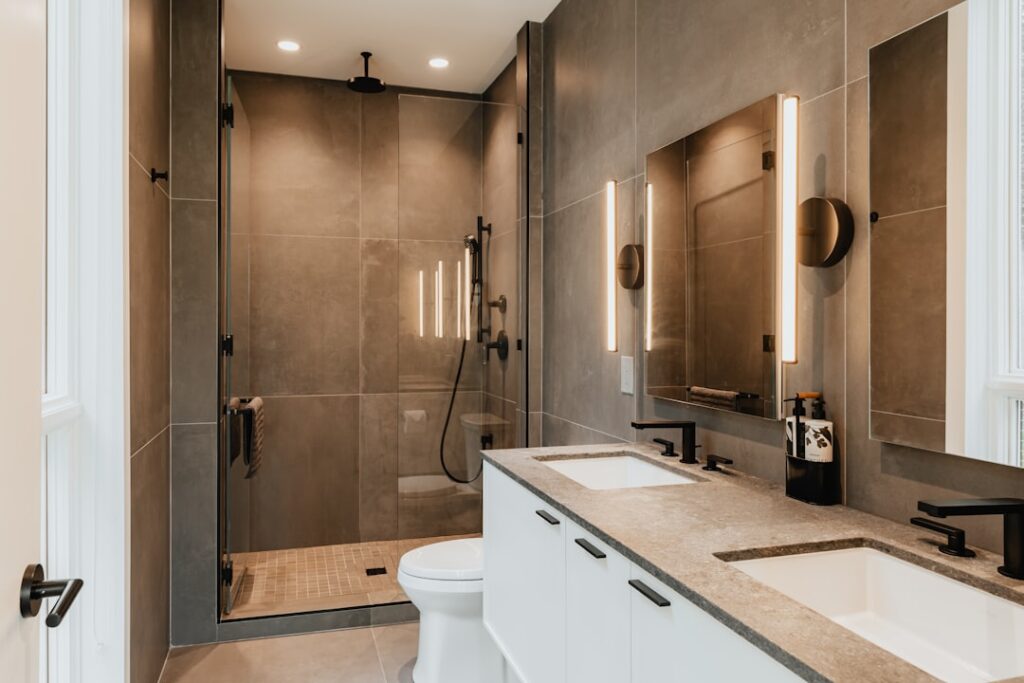
A prefab walk in shower is a ready-made shower unit, molded in a factory from acrylic or fiberglass, that installs far faster and cheaper than a custom tile shower. Instead of waterproofing, setting tile, and grouting on site, you assemble a few pre-formed panels and a base, then connect the plumbing. For many homeowners, it is the most practical way to add or replace a shower.
Part of our Bathroom Remodeling & Flooring guide — explore the full guide →
These units have come a long way in looks and quality, and modern kits offer clean lines, low or no thresholds, and finishes that rival tile at a fraction of the effort. This guide covers the types, sizes, installation, and cost so you can decide if a prefab unit fits your bathroom.
- What a Prefab Walk-In Shower Includes
- Types of Prefab Shower Units
- Common Sizes
- Advantages Over Tile
- Installation Overview
- Prefab vs. Custom Tile: Making the Choice
- Accessibility Features to Consider
- Cost Expectations
- Materials: Acrylic vs. Fiberglass
- Maintenance and Cleaning
- Common Installation Mistakes to Avoid
- Is a Prefab Shower Right for You?
What a Prefab Walk-In Shower Includes
A typical kit arrives as a shower pan (the base) plus two or three wall panels that fit together. Some come as a single seamless piece, while others are multi-piece systems designed to fit through doorways and into existing bathrooms. A prefab walk in shower usually pairs with a glass panel or door you add, or it can be left open in a wet-room style.
Because the surfaces are molded as smooth, non-porous panels, there is no grout to scrub and far less chance of hidden water leaks compared with a tiled surround.
Types of Prefab Shower Units
- One-piece units — a single molded shell; extremely leak-resistant but too large for many remodels since they will not fit through doors.
- Multi-piece kits — a base plus separate wall panels that assemble on site, ideal for replacing an existing shower.
- Barrier-free (curbless) models — a low or zero threshold for easy, accessible entry.
- Corner units — angled or neo-angle designs that fit efficiently into a corner.
- Alcove units — built to slot into a three-wall recess, the most common bathroom layout.
Common Sizes
Prefab units come in standard footprints that match typical bathroom framing, which is part of what keeps them affordable:
- 32 by 32 inches — a compact corner or small-bathroom option.
- 36 by 36 inches — a comfortable standard walk-in size.
- 48 by 34 inches — a roomier rectangular layout.
- 60 by 32 inches — fits a standard tub alcove, popular for tub-to-shower conversions.
Measure your rough opening carefully, including wall-to-wall width and depth, before ordering, since prefab units are sized to fit specific framing.
Advantages Over Tile
- Faster installation — often a one or two day job versus a week or more for tile.
- Lower cost — less labor and no tile, thinset, or grout expense.
- Fewer leaks — molded, seamless surfaces resist water intrusion.
- Easy cleaning — no grout lines means less scrubbing and mildew.
- Predictable results — factory-molded quality with no craftsmanship gamble.
Installation Overview
Installing a prefab walk in shower is within reach for a confident DIYer, though the plumbing rough-in is the tricky part. The general sequence is:
- Remove the old shower or tub and inspect the framing for rot or damage.
- Confirm the drain location matches the new pan and adjust plumbing if needed.
- Set the shower base level in a mortar bed for solid, quiet support, then connect the drain.
- Fasten the wall panels to the studs, sealing seams with the manufacturer’s recommended adhesive and caulk.
- Install the valve, showerhead, and glass door or panel.
- Caulk all joints and let everything cure before use.
A level base and properly sealed seams are the two details that determine whether the shower stays dry for years.
Prefab vs. Custom Tile: Making the Choice
The decision between a prefab unit and a custom tile shower comes down to priorities. Prefab wins on speed, cost, and low maintenance, delivering a leak-resistant shower in a day or two with no grout to scrub. Custom tile wins on design freedom, letting you choose any size, shape, and material for a fully bespoke, high-end result, at the cost of more money, more time, and more ongoing upkeep.
- Choose prefab if — you want fast, affordable, low-maintenance results in a standard-sized space.
- Choose tile if — you want a custom look, unusual dimensions, or a luxury statement and have the budget.
Many homeowners find that a quality acrylic prefab unit delivers the look they want for a fraction of the cost and effort of tile.
Accessibility Features to Consider
Prefab units are an excellent way to build accessibility into a bathroom, and many kits are designed with this in mind. A barrier-free, curbless model removes the trip hazard of a threshold and allows a wheelchair or shower chair to roll in. Adding a built-in bench, grab bars anchored to the reinforced walls, a handheld showerhead, and slip-resistant flooring makes the space safe and comfortable for all ages and abilities. Because these features are molded or mounted into a manufactured unit, they integrate cleanly rather than looking like afterthoughts, supporting aging in place while keeping the bathroom attractive.
Cost Expectations
Prefab is the budget-friendly path. The unit itself typically costs $400 to $1,500 depending on size and material, with premium solid-surface kits higher. Professional installation adds roughly $500 to $2,500, so a complete prefab shower often lands between $1,200 and $4,000 total, compared with $5,000 to $15,000 for a comparable custom tile shower.
Acrylic units cost a bit more than fiberglass but resist scratches and stains better and hold their shine longer, which is usually worth the small upcharge.
Materials: Acrylic vs. Fiberglass
The two most common materials behave quite differently over time, and the choice affects both looks and longevity. Fiberglass is the most affordable option, formed from layered glass fibers and resin with a gel-coat surface. It is light and easy to install, but the gel coat is relatively thin and can crack, fade, or scratch after years of use.
Acrylic is molded from a solid sheet reinforced with backing, giving it a thicker, more durable surface. It resists scratches and stains better, holds its glossy finish longer, and is easier to clean. A few higher-end kits use solid-surface or cultured-stone materials that mimic natural stone and offer excellent durability at a premium price. For most homeowners, acrylic hits the best balance of cost and long-term performance.
Maintenance and Cleaning
One of the strongest selling points of a prefab unit is how little upkeep it demands compared with tile and grout. Keeping it looking new is simple:
- Wipe the walls with a soft cloth and a non-abrasive cleaner; skip scouring pads that dull the finish.
- Squeegee the panels after showering to reduce hard-water spots and soap film.
- Run the exhaust fan to control moisture and discourage mildew.
- Re-caulk the seams and base every few years to keep the waterproof seal intact.
Because there is no grout to scrub or reseal, the cleaning routine is far lighter than a tiled shower, which is a major reason many homeowners choose prefab.
Common Installation Mistakes to Avoid
Most prefab shower failures trace back to a handful of avoidable errors. Setting the base without a full mortar bed leaves it flexing underfoot, which cracks the pan and breaks seals over time. Failing to shim the walls plumb leaves gaps that let water escape. Using the wrong adhesive or caulk, rather than the manufacturer’s specified products, leads to seam failures. And skipping a check of the framing for existing rot means building a new shower over a hidden problem. Taking the time to set a level, well-supported base and seal every seam correctly is what makes the difference between a shower that lasts decades and one that leaks in a year.
Is a Prefab Shower Right for You?
Choose a prefab unit when you want a durable, leak-resistant shower installed quickly and affordably, when you are converting a tub to a shower, or when low-maintenance cleaning matters to you. Choose custom tile instead if you want a fully bespoke design, unusual dimensions, or a high-end luxury look and have the budget for it.
For most bathrooms, a quality prefab walk-in shower delivers reliable performance, easy upkeep, and a clean modern look without the cost and time of tile. Measure carefully, set the base dead level, seal the seams well, and you will have a shower that serves you reliably for many years.