When a basement floods, it almost always happens during the exact storm that also knocks out the power, which is why so many homeowners upgrade to a system with backup protection. A Pro Series sump pump is a popular line built around that scenario, pairing a dependable primary pump with a battery backup so your basement stays dry even when the grid goes down. If you are researching whether this system is right for your home, here is a clear look at what it offers, how to size it, and how to keep it running for years.
What Makes a Pro Series System Different
The Pro Series name is best known for its combination units, which put a primary pump and a battery backup pump together in one integrated package. Instead of buying and cobbling together separate components, you get a matched system engineered to work as one. The primary pump handles everyday groundwater, and the backup pump automatically takes over if the primary fails, if the water rises faster than the primary can handle, or if the power goes out. That redundancy is the whole selling point.
Many models also include a controller with alarms and status lights that tell you the battery charge, whether the backup has run, and if anything needs attention. That monitoring turns a silent basement corner into a system you can actually keep tabs on.
Key Features to Look For
Not every model is identical, so focus on the features that matter for real storm protection:
- Battery backup capacity: how many gallons the backup can pump on a single charge, which determines how long you are protected during an outage.
- Pumping rate (GPH): gallons per hour at a given lift height, telling you how much water the system can move.
- Dual float switches: separate reliable switches for the primary and backup so one failure does not sink both.
- Audible and visual alarms: alerts when the backup activates or the battery runs low.
- Cast iron versus thermoplastic: cast iron cores dissipate heat better and tend to last longer under heavy use.
- Maintenance-free battery options: AGM batteries that do not require topping off with water.
Sizing the Pump to Your Home
Buying more pump than you need wastes money, and buying too little risks a flood, so sizing matters. Two factors drive it: how much water enters your pit and how high the pump must lift it. Homes with high water tables, frequent heavy rain, or a history of a hard-working sump need higher gallons-per-hour capacity. The vertical distance from the pit to where the discharge exits, plus friction in the pipe, is called total dynamic head, and pump ratings drop as that lift increases.
For most homes, a 1/3 to 1/2 horsepower primary pump moves plenty of water. Deeper pits, longer discharge runs, or areas with severe groundwater lean toward 1/2 horsepower or more. When in doubt, size up modestly, since a pump that cycles less often under normal loads has reserve capacity for the worst storms.
The Value of the Battery Backup
The battery backup is the reason to choose a combination system in the first place. Sump pumps run on household electricity, and severe storms routinely cause outages right when groundwater is surging. Without a backup, an outage during a downpour means your primary pump sits dead while the pit overflows. The backup pump runs off a deep-cycle battery, kicking in automatically to keep pumping through the outage.
How long it protects you depends on the battery’s amp-hour rating and how hard the pump is working. A larger battery, or a second battery wired in, extends runtime. Some homeowners in flood-prone areas run dual batteries for extended coverage. Keep the battery charged and replace it every three to five years, since a dead backup battery gives you a false sense of security.
Installation Overview
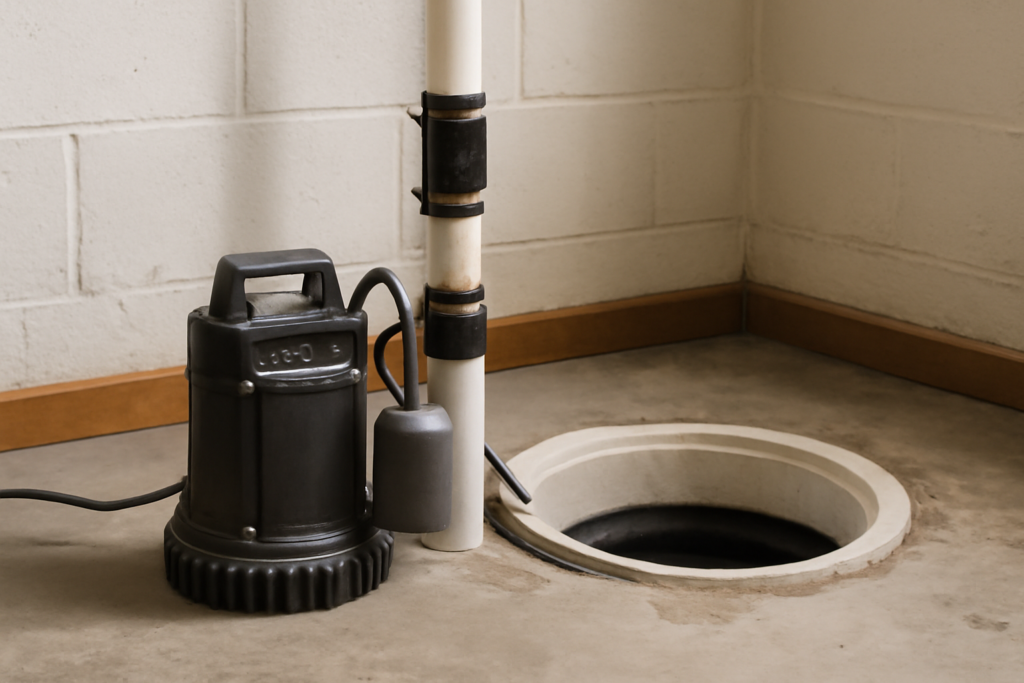
Installing a combination system follows the same fundamentals as any sump setup, with the backup integrated in. Place the primary pump in the pit sitting flat on a solid base so the float can swing freely. Mount the backup pump slightly higher so it only activates when water rises above the primary’s normal range. Both pumps tie into the discharge line, and each needs its own check valve so one pump cannot push water back through the other.
Run the discharge well away from the foundation, keep the pipe full-sized, and mount the control unit and battery on a shelf or bracket above any potential water line so a flood cannot drown the electronics. Plug the primary and the charger into a GFCI outlet, and test the whole system by pouring water into the pit until both pumps cycle.
Maintenance to Keep It Reliable
A sump pump is the one appliance you never think about until it fails during a flood, so proactive maintenance is essential. Build these habits:
- Test quarterly by pouring a bucket of water into the pit and confirming both the primary and backup activate and pump it out.
- Clean the pit of gravel, silt, and debris that can jam the float or clog the intake.
- Check the check valves for leaks and proper one-way flow.
- Inspect the battery charge and terminals, and replace the battery on schedule.
- Verify the discharge line is clear and not frozen or blocked in winter.
Ten minutes a few times a year is cheap insurance against the thousands of dollars a flooded basement costs.
Is It Worth the Cost?
A combination Pro Series sump pump costs more up front than a bare primary pump, typically several hundred dollars for the system plus the battery. Weighed against the cost of tearing out soaked drywall, flooring, and ruined belongings, the math favors the backup for any home with a finished basement or a history of water. If you live somewhere with reliable power and a rarely-active sump, a quality primary pump with a simple backup alarm may be enough. But for storm-prone regions, the integrated redundancy is money well spent.
Understanding the Alarm and Monitoring Features
One of the quiet advantages of a combination system is the controller that watches over everything. A good Pro Series controller monitors the battery charge, tracks when the backup pump activates, and sounds an audible alarm paired with indicator lights when something needs attention. That means you learn about a problem, a low battery, a stuck float, or a backup that has kicked in, before it becomes a flooded basement rather than after.
Take time to learn what each alarm and light means when you install the system, and do not ignore them when they sound. A beeping controller in the middle of the night is annoying, but it is warning you of exactly the situation you bought the system to handle. Some newer models add Wi-Fi connectivity that pushes alerts to your phone, which is invaluable if you travel or own a second home, letting you know the moment your backup engages so you can act before you return to a disaster.
Battery Care and Replacement
The backup is only as reliable as its battery, and a neglected battery is the most common reason a backup system fails when it is finally needed. Most systems use a deep-cycle marine battery or a sealed AGM battery, and the sealed AGM type is worth the extra cost because it requires no topping off with water and vents fewer fumes, making it safer in a finished basement. Whatever type you choose, keep the terminals clean and the connections tight.
Batteries lose capacity as they age, so plan to replace yours every three to five years even if it still seems to work, because a battery that tests fine on a trickle charger can still collapse under the heavy load of actually pumping water. Mark the installation date on the battery with a marker so you never lose track. The cost of a replacement battery is trivial next to the cost of a flooded basement, and a fresh battery is the single best thing you can do to keep your backup ready for the storm that finally tests it.
Final Thoughts
A Pro Series sump pump earns its keep by protecting your basement during the exact conditions, heavy storms and power outages, when a single pump most often fails. Size the primary to your home’s water load and lift, keep the backup battery fresh, install each pump with its own check valve, and test the system a few times a year. Do that, and you turn the anxious question of whether your basement will flood into a problem you have already solved.