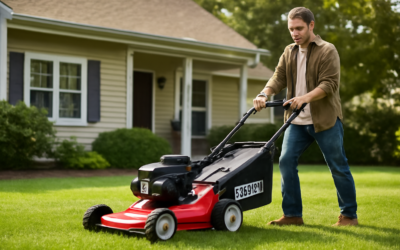
Walk into a warehouse club or scroll an online marketplace and you’ll find a Pulsar lawn mower priced hundreds below the Honda and Toro units sitting next to it. That gap raises the obvious question: is a budget mower a smart buy or a false economy? I’ve spent enough seasons around small engines to give you a straight answer, along with the specs, the trade-offs, and who this brand actually fits.
Pulsar Products built its name on affordable generators, and that reputation carries over to their outdoor power equipment. The mowers follow the same playbook: familiar specs, no-frills construction, and a price designed to undercut everyone.
The Lineup and Core Specs
Pulsar’s mower range centers on 21-inch gas walk-behind models, both push and self-propelled. The two you’ll see most often:
- PTG1221S: 21-inch steel deck, roughly 200cc gas engine, self-propelled single-speed, 3-in-1 mulch, bag, and side discharge.
- PTG1221T2GC / push variants: 21-inch deck, smaller 144cc to 173cc engines, manual push, same 3-in-1 cutting system.
Standard features across the line include a 21-inch cutting width, which is the sweet spot for most quarter-acre yards, and multi-position height adjustment, typically covering roughly 1.5 to 4 inches. The 3-in-1 deck is the headline value: you can mulch clippings back into the lawn, bag them, or side-discharge, and that flexibility usually costs more on name-brand mowers.
Cutting Performance in the Real World
On a flat, regularly mowed yard, a Pulsar cuts cleanly and does the job. The 200cc engine on the self-propelled model has adequate torque for dry grass at normal heights. Where budget mowers reveal themselves is in tough conditions: tall wet grass, thick St. Augustine, or a lawn you let get away from you. The engine bogs sooner than a premium Honda GCV, and you’ll take narrower bites or a second pass.
Self-propelled drive on the PTG1221S is single-speed, so you get one pace rather than a variable-speed trigger. It’s fine for flat and gently rolling yards. On steep slopes or heavy, sticky turf the drive can feel underwhelming. For the typical suburban lot, though, performance lands right where the price suggests it should.
Bagging performance is the other place to set expectations. The 3-in-1 system works, but on tall or damp grass the chute can pack and the bag fills unevenly, so you’ll stop to clear it more often than with a premium mower’s tuned airflow. Mulching is the mode I’d lean on with a Pulsar. Keep the blade sharp, cut no more than the top third of the grass height at a pass, and mulching returns nitrogen to the lawn while sidestepping the bagging weakness entirely.
Build Quality: Where Corners Get Cut
Be clear-eyed about what a $200 mower is. The deck is stamped steel, which is standard, but the wheels, height-adjust levers, and cable hardware use more plastic than a premium unit. Those plastic components are the parts most likely to wear or crack after a few seasons of rough handling.
The engines are generic overhead-valve designs rather than a Honda or Briggs powerplant. They start reliably when new and run fine, but they don’t carry the decade-long reputation of the name brands. My honest take from handling these: the cut quality is respectable out of the box, and the weak points are the peripheral parts, not the fundamental cutting job. Treat it gently, store it dry, and it holds up better than its price implies.
Warranty and Parts Availability
Pulsar typically backs these mowers with a limited warranty in the one-to-two-year range on the engine and components. Read the specific card in the box, because coverage and terms shift between models and retailers.
Parts availability is the area to think hardest about. Because Pulsar is a smaller brand, you won’t find blades, belts, and air filters on every hardware store shelf the way you would for Toro or Honda. Blades are often universal 21-inch replacements you can source generically, which helps. But model-specific items like drive cables, self-propel gears, or a carburetor may mean ordering through the manufacturer or an online supplier and waiting. If you need a mower running the same afternoon it breaks, that lag matters.
Maintenance That Stretches Its Life
A budget mower rewards basic care more than an expensive one does, because you’re leaning on the parts that wear. The single biggest thing you can do is manage the fuel. Small generic engines are sensitive to stale, ethanol-blended gas that gums the carburetor over a winter. Run the tank near empty at season’s end or add fuel stabilizer, and use ethanol-free gas if you can find it. A gummed carb is the most common reason these mowers end up at the curb, and it’s entirely preventable.
Beyond fuel, keep to a simple rhythm: change the oil after the first five hours and then once a season, replace or clean the air filter yearly, and sharpen or swap the blade every spring. A dull blade tears grass instead of cutting it, which stresses the engine and leaves brown tips. Store the mower dry, hose the deck underside after mowing wet grass, and don’t tip it on the wrong side, which floods the air filter with oil. Do these five things and a $200 Pulsar will outlast the low expectations its price sets.
The Generator Reputation Context
It’s worth understanding where Pulsar comes from, because it frames what you’re buying. The company earned a following with budget portable generators, products bought by people who wanted backup power without paying Honda or Generac money. Those generators built a reputation as acceptable value: not the quietest or most refined, but they run and they cost less.
The mowers inherit that exact positioning. This is a value-first brand for buyers who prioritize upfront cost over long-term pedigree. Knowing that helps set expectations: you’re getting functional, competent equipment at a low entry price, not a heirloom tool.
Pricing and Value Positioning
Most Pulsar mowers land between $150 and $280. A push model sits near the bottom, the 200cc self-propelled PTG1221S near the top. For comparison, a comparable self-propelled Honda or Toro runs $400 to $600-plus. That’s a meaningful gap, and for a lot of homeowners it’s the difference between buying a mower this weekend and putting it off.
The value equation is straightforward: you save roughly $200 to $300 upfront, and you accept more plastic, a generic engine, and slower parts access. Over a small flat yard mowed regularly, most people never feel the downside.
There’s a hidden cost worth naming, though: resale and longevity. A used Honda or Toro holds value and often sells for half its original price years later, while a budget mower has almost no resale market. Factor that in and the real gap over a decade narrows more than the sticker suggests. For a homeowner who mows the same easy yard and runs a mower into the ground rather than trading up, that resale difference is irrelevant, and the Pulsar wins the cost fight cleanly. For someone who upgrades gear every few years, the depreciation math tilts back toward a name brand.
Who Should Buy, and the Alternatives
A Pulsar lawn mower makes sense if you have a small-to-medium flat yard, you mow on schedule so grass never gets out of hand, and you’re stretching a tight budget. It’s also a reasonable pick for a rental property or a secondary yard where you don’t want to risk an expensive machine.
Look elsewhere if you have a large lot, steep slopes, or thick grass, or if you plan to keep one mower for 10-plus years. In that case consider these:
- Toro Recycler: Proven engine, excellent bagging, strong parts network, around $400.
- Honda HRN (where still available used): Best-in-class engine longevity and cut quality.
- A quality battery mower (Ego, Ryobi): No gas, low maintenance, great for small flat yards.
My bottom line: a Pulsar delivers exactly what the price promises. Go in knowing it’s a budget tool, match it to an easy yard and regular upkeep, and it’ll cut grass season after season without drama. Ask it to tame a rough acre and you’ll wish you’d spent more.
Frequently Asked Questions
How do you replace the blade on a Pulsar lawn mower?
Disconnect the spark plug wire first. Tip the mower with the air filter and carburetor facing up, wedge a block of wood to stop the blade turning, and remove the center bolt. Fit a 21-inch blade that matches the center hole shape, with the cutting edges facing the direction of rotation and the fins pointing up toward the deck. Tighten the bolt to the manual’s torque setting.
What oil does a Pulsar lawn mower use?
Most small air-cooled walk-behind mower engines use SAE 30 in warm weather or 10W-30 where temperatures vary, but confirm the exact grade and capacity in the owner’s manual. Fill slowly and check the dipstick as you go, since overfilling can cause smoking and hard starting. Change the oil after the first five hours and then once a season.
Why won’t a Pulsar lawn mower start?
Stale fuel and a gummed carburetor are the most common causes, especially after winter storage. Also check that the choke or primer is used correctly, the spark plug is clean and gapped, the air filter is not clogged, and the safety bail is fully held against the handle. Fresh fuel and a carburetor cleaning fix most no-start problems.