For more than a decade, quartz counter tops have been the fastest-growing surface in American kitchens, and for good reason. Engineered quartz combines the beauty of natural stone with toughness and a non-porous surface that never needs sealing. This guide explains how quartz is made, why it performs so well, what it costs, and how it stacks up against granite and marble so you can decide if it belongs in your home.
Part of our Countertops guide — explore the full guide →
How Quartz Counter Tops Are Made
Despite the name, quartz countertops are not cut from solid quartz the way granite slabs are quarried. They are engineered, built from roughly 90 percent ground natural quartz crystals blended with about 10 percent resins, polymers, and pigments. That mixture is compacted under intense pressure and heat, then cured into dense, uniform slabs.
This manufacturing process is the source of quartz’s biggest advantages. Because the surface is bound and sealed at the factory, it is completely non-porous, which means no sealing, no staining from spills, and no harboring of bacteria. The added pigments also let manufacturers create consistent colors and realistic marble-look veining.
Durability and Everyday Performance
Quartz is one of the toughest countertop surfaces available, registering around 7 on the Mohs hardness scale. It resists scratches, chips, and the dents that softer materials show, standing up to the daily abuse of a working kitchen. Since it never needs sealing, you do not have to track maintenance schedules the way you would with porous natural stone.
The one weakness to respect is heat. The resins that bind the quartz can scorch or discolor if exposed to direct high temperatures, so never set a hot pan straight onto the surface. Keep a trivet handy and that single limitation becomes a non-issue.
Popular Looks and Styles
Modern quartz offers something for every kitchen aesthetic:
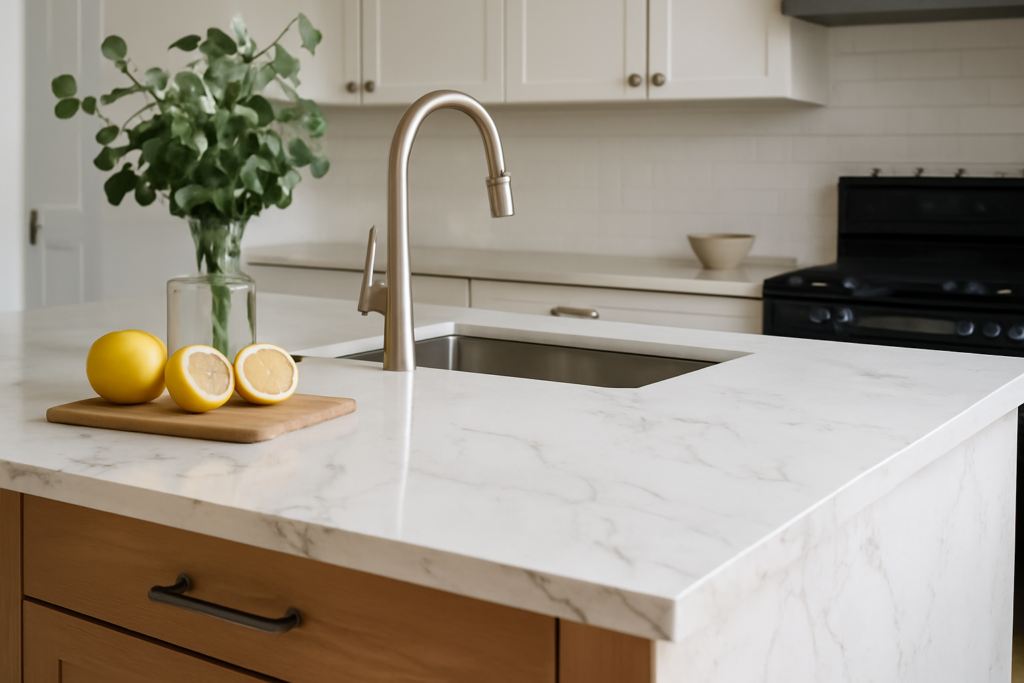
- Marble-look — white bases with flowing gray veins that mimic Calacatta and Carrara without the upkeep.
- Solid colors — clean whites, grays, and blacks for minimalist and contemporary designs.
- Speckled and granite-look — flecked patterns that hide crumbs and disguise everyday wear.
- Concrete and matte finishes — softer, low-sheen surfaces for an industrial or modern feel.
Always view full slabs in a showroom rather than judging from a small sample, since veined patterns flow differently across a large counter.
Cost per Square Foot
Quartz spans a wide price range depending on brand and design. Installed, it commonly runs from about $50 to $120 per square foot, with entry-level imports at the low end and premium designer patterns at the top. A typical kitchen with 40 to 50 square feet of counter often totals between $2,500 and $6,000 installed.
Your final cost depends on edge profiles, the number of cutouts, slab thickness, and local labor rates. Request itemized quotes from two or three fabricators so you can compare the slab, fabrication, and installation costs directly rather than a single lump figure.
Caring for Quartz
Daily maintenance could hardly be simpler. Wipe the surface with warm water and a few drops of mild dish soap, then dry with a soft cloth. A non-abrasive surface cleaner handles tougher spots. Avoid bleach, oven cleaners, abrasive pads, and any high or low pH chemicals, which can dull the finish over time.
You never need to seal quartz. If something sticky hardens on the surface, scrape it gently with a plastic putty knife rather than a metal blade. Those few habits keep the counter looking new for the life of the kitchen.
Edge Profiles and Thickness
The edge profile shapes the personality of your counter. A straight or eased edge looks clean and modern, a beveled edge adds a crisp angle, and a bullnose creates a soft, rounded corner. Decorative ogee and waterfall edges make a statement but cost more in fabrication. Quartz is most often installed in a 3-centimeter thickness, which is sturdy and reads as premium, though a 2-centimeter slab can be used with a laminated edge to mimic a thicker look while reducing weight. Ask to see physical edge samples before deciding, since the profile changes how light and shadow play across the counter.
Choosing a Fabricator
The fabricator matters as much as the brand of quartz you select. Look for an experienced shop with strong reviews and quartz-specific expertise, and ask about their templating method, seam placement, and timeline, which typically runs one to three weeks from template to install. A skilled fabricator hides seams in less visible areas and matches veined patterns where slabs meet. Request an itemized quote covering the slab, fabrication, edge work, cutouts, and installation so you can compare bids fairly between shops.
Common Quartz Brands and What Sets Them Apart
Several manufacturers dominate the engineered quartz market, and while the core technology is similar, design libraries and warranties differ. Caesarstone, Silestone, Cambria, MSI Q, and Vadara are among the names you will encounter on showroom floors. Cambria is American-made and known for dramatic marble-look veining, while Silestone and Caesarstone offer huge color ranges and long histories. Budget-friendly imports cover the lower price tiers and have improved dramatically in realism.
When you compare brands, look past the slab name to the warranty terms, the thickness offered, and whether the pattern carries through the slab or sits only on the surface. A lifetime residential warranty is common on premium lines, but it usually requires professional installation by a certified fabricator. Ask which collection a sample comes from, since the same brand sells entry-level and designer tiers at very different prices.
It also pays to confirm the slab is certified for food contact and low chemical emissions, which most reputable lines are. If you care about the realism of marble-look veining, request to see a full slab rather than a chip sample, because the more convincing patterns reveal their continuous veining only at full scale. Matching the brand to your budget and the look you want, rather than chasing a name, is what leads to a counter you stay happy with.
Quartz Versus Granite and Marble
Against granite, quartz wins on consistency and maintenance, since it never needs sealing and offers more predictable patterning, while granite offers a unique natural look and superior heat resistance. Against marble, quartz delivers a similar high-end appearance with vastly better stain and scratch resistance. For homeowners who want beauty with minimal upkeep, quartz remains one of the smartest surfaces on the market today.