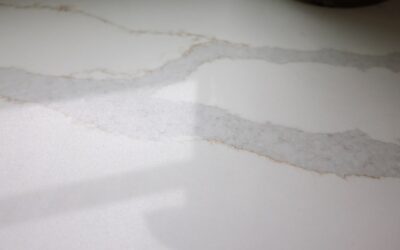
The most common way people ruin a quartz counter isn’t a dropped pan, it’s a bottle of the wrong cleaner used every day for a year. Quartz countertop cleaning is genuinely easy, but the resin that binds engineered quartz reacts badly to harsh chemicals and abrasives that natural stone shrugs off. Use the right approach and a quartz surface stays glossy and stain-free for decades with almost no effort.
Part of our Countertops guide — explore the full guide →
This guide covers everyday cleaning, tackling stubborn spots, the products and habits that will damage the surface, and how to keep that factory shine looking new.
- Why Quartz Needs Its Own Rules
- Everyday Cleaning
- Removing Stubborn Spots and Dried Gunk
- Dealing With Tougher Stains
- What to Never Use on Quartz
- Protecting the Surface From Heat and Scratches
- Keeping the Shine Looking New
- Cleaning Different Quartz Finishes
- Handling Specific Household Stains
- The Bottom Line
Why Quartz Needs Its Own Rules
Engineered quartz is roughly 90 to 94 percent ground natural quartz bound with about 6 to 10 percent polymer resins and pigments. That resin is what makes quartz nonporous and stain-resistant, unlike granite or marble, which is a huge advantage for cleaning. It also means the surface is sensitive to strong solvents, high pH cleaners, and prolonged heat, all of which can dull, discolor, or etch the resin.
Because it’s nonporous, quartz never needs sealing, and bacteria and moisture can’t soak in. Your only real job is wiping it down correctly and avoiding a short list of damaging products.
Everyday Cleaning
Daily care couldn’t be simpler. For routine cleanup, all you need is:
- A soft microfiber or dishcloth
- Warm water
- A few drops of mild dish soap
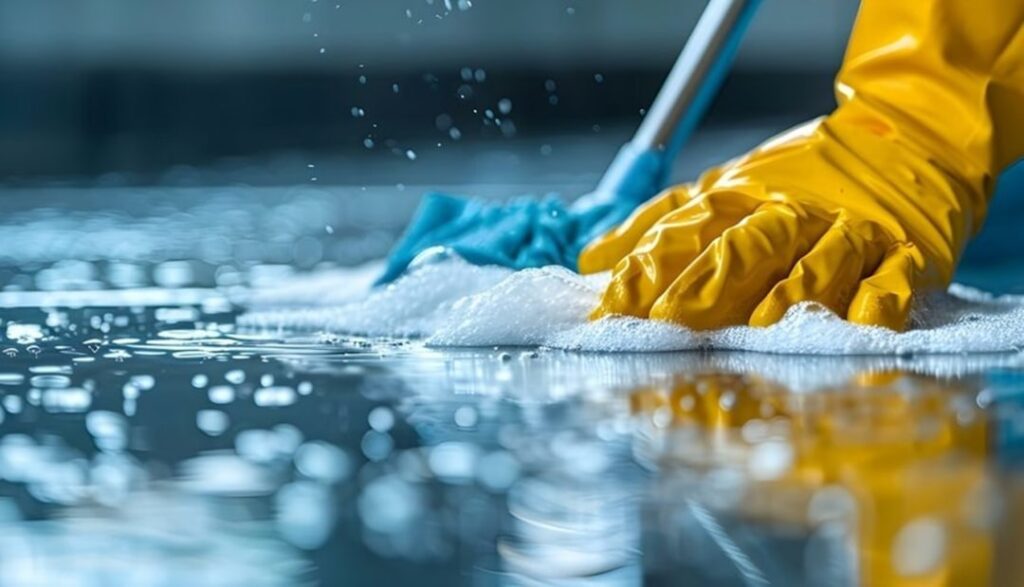
Wipe the counter with the soapy cloth, then follow with a clean damp cloth to rinse and a dry towel to buff away streaks. Do this after cooking and before bed and your quartz will rarely need anything more aggressive. For a quick disinfecting wipe-down, a diluted mix of one part isopropyl alcohol to three parts water is safe and evaporates clean, leaving no film.
Wipe up spills promptly even though quartz resists stains. Wine, coffee, turmeric, and colored juices won’t soak in, but letting them sit lets pigment cling to the surface and makes cleanup harder than it needs to be.
Removing Stubborn Spots and Dried Gunk
Dried food, sauce splatters, and sticky residue happen. Handle them without scratching:
- Soften the spot with a warm, wet cloth laid over it for a few minutes.
- Gently scrape with a plastic putty knife or the edge of a credit card, never a metal blade that can scratch the polish.
- Wipe clean with dish soap and water.
For grease and adhesive residue, a small amount of a degreasing spray designed for quartz, or a dab of isopropyl alcohol on a cloth, cuts it fast. Sticky glue or gum lifts easily after you scrape it with plastic and wipe with alcohol.
Dealing With Tougher Stains
True staining is rare in quartz, but certain culprits leave a mark if left too long. For a stubborn stain, make a paste of baking soda and water, spread it over the spot, cover with plastic wrap, and let it sit for several hours before wiping away with a soft cloth. The mild abrasion of baking soda is gentle enough for the surface when used sparingly.
For hard-water film and mineral spots near the sink, wipe with a cloth dampened in the alcohol-and-water mix rather than reaching for a lime scale remover, which is often too acidic. Never resort to a scouring pad or bar-keeper-style powder cleanser, which will scratch the finish permanently.
What to Never Use on Quartz
This is the part that actually protects your investment. Keep these away from quartz entirely:
- Bleach and ammonia — High-pH cleaners and undiluted bleach can discolor the resin and dull the finish over time.
- Abrasive pads and powders — Steel wool, scouring pads, and gritty cleansers scratch the polished surface.
- Strong solvents — Paint thinner, nail polish remover, acetone, oven cleaner, and drain cleaner can eat into the resin. If one contacts the counter, rinse immediately with plenty of water.
- Acidic and high-alkaline cleaners — Products with high concentrations of citric acid, vinegar used constantly, or CLR-type descalers can etch the surface with repeated use.
- Permanent markers and dyes — Wipe these off immediately; if set, remove with a little alcohol.
When in doubt, plain dish soap and water is always safe. There’s rarely a reason to reach for anything stronger.
Protecting the Surface From Heat and Scratches
Cleaning is only half of keeping quartz looking new. The resin binder softens under high heat, so a hot pan straight from the burner can leave a scorch mark or a dull spot that no cleaner will fix. Always use trivets and hot pads under pots, pans, slow cookers, and hot styling tools.
Quartz is very hard and scratch-resistant, but it isn’t scratch-proof. Use a cutting board rather than slicing directly on the counter, since a slipped knife can leave a fine scratch and will certainly dull your blade. These two habits, heat protection and cutting boards, prevent the two kinds of damage that cleaning simply can’t undo.
Keeping the Shine Looking New
To maintain that just-installed gloss, dry and buff the counter with a clean microfiber cloth after your final rinse each day. This removes water spots and soap film that build up into a hazy look over weeks. Once a week, a full wipe with the alcohol-water solution refreshes the shine and disinfects at the same time.
If your matte or honed quartz shows fingerprints and smudges more than a polished finish, a dedicated quartz cleaner spray formulated for engineered stone keeps it looking uniform. Avoid oily “surface polish” sprays that promise shine, since they leave a film that attracts dust and dulls the natural finish.
Cleaning Different Quartz Finishes
Quartz comes in polished, honed (matte), and textured or leathered finishes, and each shows dirt a little differently. Polished quartz is the easiest to keep looking clean because its glossy surface hides fine smudges and buffs to a shine quickly. Honed and matte quartz, on the other hand, reveal fingerprints, grease marks, and water spots more readily, so they benefit from more frequent wipe-downs.
For matte and leathered finishes, a slightly damp microfiber cloth with a drop of dish soap lifts the smudges that a dry wipe misses. Avoid oily “polish” sprays entirely on these surfaces, since they leave a residue that highlights every fingerprint. If your matte counter develops a hazy film over time, a wipe with the isopropyl-alcohol-and-water solution restores the even, uniform look better than soap alone.
Handling Specific Household Stains
Certain everyday substances need a targeted approach even on nonporous quartz. Here’s how to handle the common ones:
- Dried candle wax or gum: Harden it with an ice cube, then scrape gently with a plastic putty knife and wipe with a little alcohol.
- Grease and oil splatter: A degreasing dish soap or a dab of isopropyl alcohol cuts it without dulling the finish.
- Ink and permanent marker: Blot, don’t rub, with a cloth dampened in alcohol, working from the outside in.
- Dried tomato sauce or turmeric: Soften with a warm wet cloth, scrape with plastic, then clean with soap and water.
- Nail polish: Never use acetone remover; instead scrape gently with plastic once dry and clean the residue with dish soap.
The theme across all of these is the same: soften or scrape with plastic first, then clean with the gentlest product that works, and never reach for abrasives or harsh solvents that can permanently dull the surface.
The Bottom Line
Good quartz countertop cleaning comes down to a simple routine: warm water, mild dish soap, and a microfiber cloth for daily wipe-downs, plus a baking-soda paste for the occasional stubborn spot. Keep bleach, abrasives, and harsh solvents far away, protect the surface from direct heat and knife blades, and buff dry to hold the shine. Follow that and your quartz will look factory-fresh for as long as you own it.