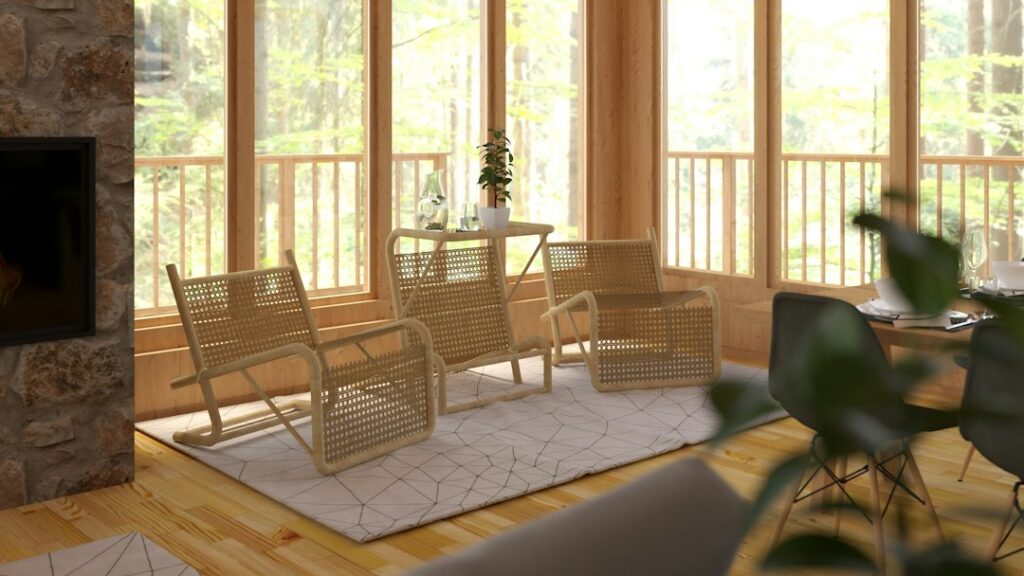
Here is the mistake that ruins a lot of patio sets in a single summer: buying natural rattan for an open deck. Real rattan is a climbing palm stem that looks beautiful, but sun dries it out and rain swells, softens, and eventually splits it. Most rattan outdoor furniture sold for patios today is actually synthetic resin wicker woven to look like the natural material, and for open-air use that is almost always the better buy.
Part of our Windows & Doors guide — explore the full guide →
Natural rattan belongs on covered porches, sunrooms, and screened spaces where it stays dry and out of direct sun. All-weather resin wicker, usually high-density polyethylene (HDPE) woven over an aluminum frame, handles rain, UV, and temperature swings for years with little more than a rinse. Cheaper PVC-based weaves look similar in the store but tend to crack and fade in two or three seasons.
- Rattan Outdoor Furniture: What the Label Really Means
- Natural Rattan Outdoors: Strengths and Limits
- All-Weather Resin Wicker: Why It Dominates Patios
- Frames: The Part You Cannot See
- Weave Types and Styles
- Comfort and Cushions
- Climate Matters More Than Style
- Lifespan and Care
- Cost Ranges and Choosing Well
- Frequently Asked Questions
We compare the two materials on weather resistance, frames, weave styles, comfort, cost, and lifespan, so you can pick a set that fits where it will actually live.
Rattan Outdoor Furniture: What the Label Really Means
“Rattan” and “wicker” get used interchangeably, but they are different things. Rattan is a material: the solid, flexible stem of a tropical climbing palm. Wicker is a weaving technique, which can use rattan, cane, willow, reed, paper fiber, or plastic strands.
When a listing says rattan patio furniture or rattan garden furniture, check the specifications. If it lists PE, HDPE, or polyethylene, it is synthetic resin wicker. If it lists PVC or vinyl, it is a cheaper synthetic. If it names natural rattan, cane, or rattan core, it is the real plant material and should be kept under cover.
Natural Rattan Outdoors: Strengths and Limits
Natural rattan is light, strong for its weight, and has a warm, organic texture that synthetic weaves only imitate. It is comfortable because the fibers flex slightly under you. Rattan chairs and a rattan sofa set can give a covered porch a relaxed, coastal or bohemian feel.
The limits are all about moisture and sun. Rattan absorbs water, which makes it swell and soften. Repeated wet and dry cycles lead to cracking, loosened wraps, and mildew. UV light bleaches and dries the surface, and the protective finish breaks down. In practice, natural rattan left fully outdoors may look worn within one or two seasons.
Where natural rattan works
- Deep covered porches that stay dry during storms
- Screened porches and three-season rooms
- Sunrooms with UV-filtering glass
- Indoor spaces that open to a patio
All-Weather Resin Wicker: Why It Dominates Patios
HDPE resin wicker is a synthetic strand, often extruded with UV inhibitors and color mixed all the way through. It does not absorb water, so rain simply runs off and the weave dries fast. Good HDPE stays flexible across hot summers and cold winters, and color-through strands hide small scratches.
The best sets weave these strands over a powder-coated aluminum frame, which will not rust. That combination makes a rattan dining set or outdoor wicker sectional that can stay outside year-round in most climates. A resin wicker patio set is the practical choice for open decks, pool areas, and any spot that sees direct sun and rain.
HDPE versus PVC weave
PVC wicker costs less but tends to stiffen, crack, and chalk after a few seasons of UV. It can also feel harder and less pliable. If a listing does not specify the strand material, assume it is the cheaper option and look closer.
Frames: The Part You Cannot See
The frame decides how long a piece lasts. The weave is just the skin.
- Aluminum: The top choice for outdoor wicker. Light, rust-proof, and strong when welds are solid. Check that joints are welded rather than just screwed.
- Powder-coated steel: Heavier and cheaper, but rust can creep under the weave where you cannot see it, especially near the coast.
- Wood or natural rattan poles: Traditional under natural rattan pieces. Fine indoors or under cover, poor in the rain.
Press on the arms and backrest in the store. A solid frame feels rigid with no rocking at the joints. Tip a chair and check the feet: good sets have plastic glides that keep the frame off wet decking and protect the surface underneath.
Weave Types and Styles
Weave width and pattern change both the look and how comfortable a piece feels.
- Flat weave: Wide, flat strands with a clean, modern look. Easy to wipe.
- Half-round weave: Closest to the look of natural rattan, with a rounded profile.
- Round weave: Chunky and textured, popular on lounge chairs and a rattan sofa set.
- Open or loose weave: Airy and decorative, but it can catch debris and snag easily.
Color matters too. White wicker furniture gives a classic cottage porch look but shows dirt and needs more frequent cleaning. Gray, brown, and multi-tone weaves hide dust and pollen well. Dark weaves can get hot in full sun, so use cushions or covers on south-facing patios.
Comfort and Cushions
Most outdoor wicker sofa and sectional pieces rely on cushions for comfort. Look for solution-dyed acrylic or polyester covers, removable zippered cases, and quick-dry foam cores that let water drain through. Wicker furniture cushions with ties or non-slip backing stay in place on smooth weaves.
When comparing a rattan furniture set, sit in it. Seat depth varies from about 20 to 26 inches, and deep lounge seats can feel awkward for shorter people without back pillows. Dining chairs should sit at about 18 inches with a table height near 29 to 30 inches.
Climate Matters More Than Style
Where you live changes which material makes sense. In hot, sunny regions like the Southwest, UV is the main enemy. Even good synthetic weave benefits from shade or a cover in the afternoon, and dark weaves can get uncomfortably hot to the touch by midday. Light gray or tan strands stay cooler.
Humid Southeast and Gulf Coast climates are hard on anything that holds moisture. Natural rattan can grow mildew in weeks on an open porch, and cushions need fast-drying foam. Salt air near the ocean also attacks steel frames, so aluminum is worth the extra cost within a few miles of the coast.
In cold northern states, freeze and thaw cycles are the issue. HDPE handles cold well, but cheaper PVC weaves turn brittle and can snap when bumped in freezing weather. Store cushions indoors, cover the set, or move smaller pieces into a garage or shed for winter. Natural rattan should always come inside before the first frost.
Wherever you are, check any rattan outdoor furniture for standing water after storms. Tilt chairs so seats drain, and lift a sofa’s cushions so the weave underneath can dry.
Lifespan and Care
Quality HDPE wicker on aluminum commonly lasts 10 years or longer outdoors. PVC-based sets may last three to five years. Natural rattan kept dry and out of direct sun can last decades, but fully exposed pieces may fail in a year or two.
Caring for resin wicker
- Brush off leaves and dust with a soft brush every few weeks.
- Wash with mild soap and water, then rinse with a garden hose at low pressure.
- Let it dry fully before replacing cushions.
- Cover or store the set during long winters to slow UV wear.
Caring for natural rattan
Dust regularly, wipe with a barely damp cloth, and dry immediately. Keep it out of rain and direct sun. Every few years, a fresh coat of a clear finish made for wicker helps protect the surface. Loose binding wraps can be reglued with wood glue and clamped with tape until dry.
Cost Ranges and Choosing Well
Budget PVC wicker sets start low, but replacement costs add up. Mid-range HDPE sets on aluminum frames cost more upfront and usually deliver the best value over time. Premium sets with thick HDPE, heavy welded frames, and high-end fabrics can cost several thousand dollars for a sectional. Natural rattan pieces range widely, with handmade pieces at the top.
For rattan outdoor furniture that will face open sky, pick HDPE on aluminum. For a sheltered porch or sunroom where you want the authentic feel, natural rattan is a lovely choice. Rattan chairs outdoor on a fully exposed deck should always be synthetic.
Frequently Asked Questions
Can natural rattan furniture be left outside?
Only under a solid cover where it stays dry and out of direct sun. Rain and UV quickly crack and weaken natural rattan.
How long does resin wicker last outdoors?
Quality HDPE wicker on an aluminum frame often lasts 10 years or more with basic cleaning and winter covering.
How do I tell HDPE wicker from PVC wicker?
Check the specifications for the strand material. HDPE feels softer and more flexible, while PVC tends to feel stiffer and cheaper.
Does rattan outdoor furniture fade in the sun?
Natural rattan fades and dries out quickly. Color-through HDPE with UV inhibitors resists fading far better, though covers still help.
Is white wicker furniture hard to keep clean?
It shows pollen and dirt faster than darker colors, so plan on rinsing it more often, but it cleans easily with mild soap.