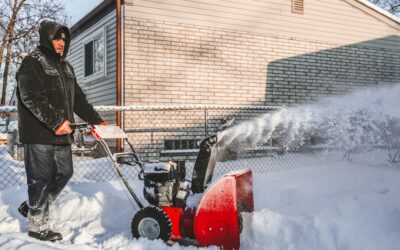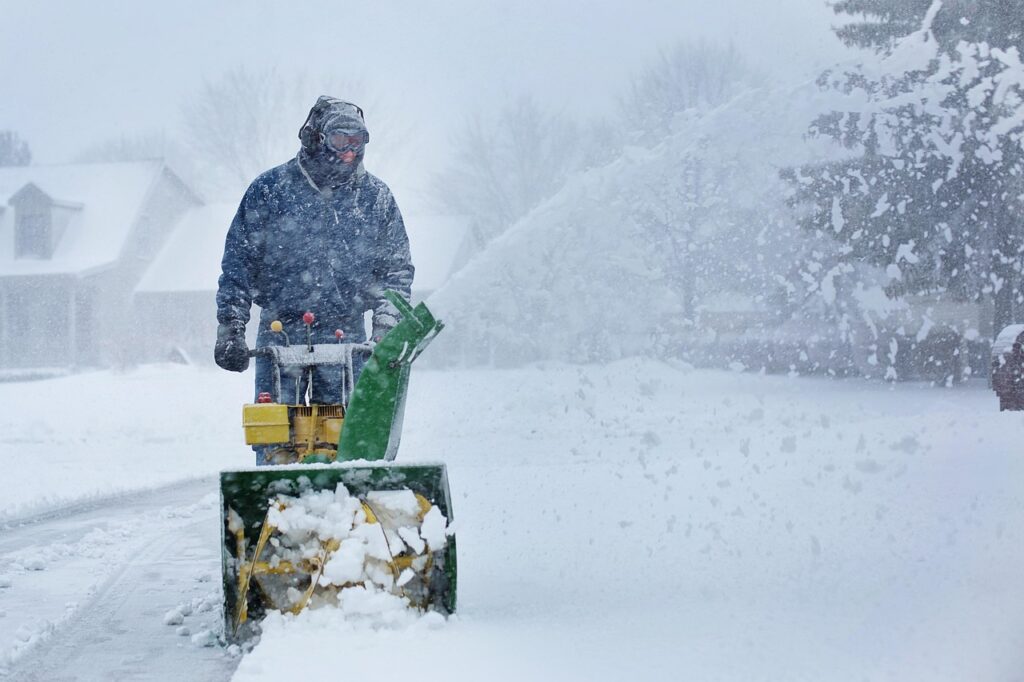
The idea of standing on a warm porch with a controller while a machine clears your driveway sounds like science fiction, but it is real and available now. An rc snow blower is a remote-controlled or fully robotic snow removal machine built for actual driveways and walkways, not the toy-scale novelties you find near the checkout aisle. These units range from tracked remote plows to autonomous robots that map your property and clear it on a schedule. This guide separates the capable machines from the gimmicks and explains what to look for.
What Counts as a Real RC Snow Blower
The category splits into two meaningful groups. Remote-control units put you in charge with a handheld transmitter while you stand out of the cold, typically within 100 to 300 feet. Robotic units operate autonomously, using GPS, boundary wires, or cameras to clear a defined area without you touching a control at all.
Both differ from toy RC blowers, which cannot move meaningful snow. A genuine machine clears a path 20 to 34 inches wide, throws snow 20 to 40 feet, and handles accumulations of 8 inches or more. If a product cannot state a clearing width and throw distance in real numbers, it is a toy.
Remote-Control Snow Blowers
Tracked remote machines dominate the true RC segment because tracks grip icy, sloped driveways far better than wheels. Models built on the Power Wagon and similar industrial platforms carry a two-stage auger and impeller assembly identical to a walk-behind blower, but driven by an electric or gas powertrain you command remotely.
- Clearing width: commonly 24 to 34 inches per pass.
- Throw distance: 25 to 40 feet with an adjustable chute.
- Control range: 150 to 330 feet line of sight.
- Power: gas engines from 208cc to 420cc, or high-voltage battery packs.
These machines are not cheap, often running $3,000 to $8,000, but for homeowners with mobility limitations or very long driveways, the ability to clear snow without exposure to cold and exertion is worth the price. Heart-attack risk during manual shoveling is a documented winter hazard, and remote operation eliminates it entirely.
Robotic Snow Blowers
The autonomous segment is younger but advancing fast. Products such as the Yarbo snow module and the WISA and Snowbot units use GPS-RTK positioning, LiDAR, or vision systems to navigate a pre-mapped driveway. You set boundaries once, then the robot clears on a snowfall trigger or a schedule.
Battery robots typically run 60 to 120 minutes per charge and clear paths 20 to 24 inches wide. They excel at repeated light snowfalls, waking up automatically at 2 a.m. so your driveway is clear by morning. They struggle with heavy wet dumps over 12 inches, where a two-stage remote machine still wins.
Setup and Mapping
Robotic units require an initial mapping session where you drive or walk the boundary. Expect 30 to 60 minutes of setup, plus a clear GPS signal. Tree cover and tall buildings can degrade RTK accuracy, so test signal quality before committing to an autonomous machine.
Most RTK systems need a fixed base station or antenna with an unobstructed view of the sky, mounted on a roof edge or a pole. Once mapped, boundaries are stored in a phone app where you set no-go zones around flower beds, the car, and the mailbox. The better systems hold accuracy to within an inch or two, which is what keeps the machine off the lawn and inside the driveway edges. Budget an afternoon for the first setup and plan to re-verify the map after any landscaping changes.
Notable Models and What They Cost
A handful of machines define the current market, and their prices tell you this is still a premium category. Match the platform to your snowfall pattern.
- Yarbo S1 with snow-blower module: a modular autonomous robot; the core plus snow attachment lands in the $4,000 to $7,000 range depending on accessories, clearing roughly 20 inches wide.
- Superhandy or Power Wagon-style remote tracked blowers: gas two-stage machines with remote transmitters, commonly $3,000 to $6,000, clearing 24 to 34 inches.
- Snowbot S1 and similar robots: vision- and GPS-guided units around $4,000 to $6,000, best on repeated light snows.
By comparison, a capable manually operated two-stage walk-behind such as a 24-inch 208cc machine costs $600 to $900. The remote and robotic premium buys you distance from the cold and the labor, not more raw clearing power.
Key Specs to Compare
Whatever type you consider, judge it on the same core numbers a walk-behind buyer would use, plus the control system.
- Clearing width and intake height: wider and taller means fewer passes and bigger drifts handled.
- Throw distance: longer throw keeps snow off already-cleared areas.
- Traction system: rubber tracks beat wheels on ice and grades over 10 degrees.
- Runtime or fuel capacity: match it to your driveway size.
- Control range and latency: responsive steering matters near garage doors and cars.
Batteries, Power, and Cold Weather
Cold is the enemy of battery-powered machines. Lithium-ion capacity drops noticeably below 32°F, so a robot rated for 90 minutes at room temperature may deliver 60 in a 15°F storm. Look for units with heated battery compartments or swappable packs so you can keep a spare warm indoors.
Gas-powered remote machines avoid the cold-capacity problem but demand the usual winter fuel care: fresh stabilized gasoline, a charged starting battery, and the correct oil viscosity such as 5W-30 synthetic for reliable cold starts down to minus 20°F.
Is an RC Snow Blower Right for You?
These machines make the most sense in three situations. First, long or steep driveways where walking behind a blower is exhausting or dangerous. Second, homeowners with health conditions that make shoveling risky. Third, anyone who simply values not standing in a blizzard for 45 minutes.
For a short suburban driveway that sees light snow, the cost is hard to justify against a $600 two-stage walk-behind. But for a 200-foot rural driveway in a snow-belt region, the convenience and safety payoff is genuine, and prices are falling each season as more brands enter the market.
Safety Considerations
Removing the operator from behind the machine changes the safety picture rather than eliminating it. A remote or robotic blower still hides a spinning auger and impeller that will destroy anything they ingest, so the same rules apply from a distance.
- Keep children, pets, and bystanders well outside the throw zone; the discharge can fling ice and gravel dozens of feet.
- Set robotic no-go zones around anything the machine must never contact, and verify them before the first snowfall.
- Maintain line of sight with remote units near garage doors, parked cars, and drop-offs, where a control lag of even a fraction of a second matters.
- Never clear a jam by hand while the engine or motor is live; shut it down fully first, even on a remote machine.
Frequently Asked Questions
Do robotic snow blowers work in deep snow?
Not well. Most battery robots top out around 8 to 12 inches and clear paths 20 to 24 inches wide. For a heavy wet dump, a two-stage remote or manual machine still wins.
How long do the batteries last per charge?
Roughly 60 to 120 minutes at room temperature, but cold cuts that sharply, so a machine rated for 90 minutes may deliver 60 in a 15 degree Fahrenheit storm.
Are they worth it for a small driveway?
Rarely. For a short suburban driveway seeing light snow, a $600 two-stage walk-behind is the smarter buy. The payoff appears on long, steep, or rural driveways and for owners for whom shoveling is genuinely risky.
Maintenance and Storage
Treat an rc snow blower like any serious outdoor machine. After each storm, clear packed snow and ice from the auger and chute so nothing freezes solid overnight. Inspect shear pins on two-stage models and keep spares on hand, since hitting buried gravel or ice can shear them.
At season’s end, charge batteries to about 50 percent for storage, drain or stabilize gas engines, and store the unit indoors away from road salt. Update robotic firmware during the off-season so your machine starts winter with the latest navigation improvements. With basic care, these machines last many seasons and turn the worst chore of winter into a spectator sport.
Pay particular attention to the traction system, since it is what makes these machines usable on icy grades. Rubber tracks should be checked for cracking and correct tension; a loose track slips on slopes and a dry-rotted one fails mid-storm. On robotic units, clean the camera lenses and RTK antenna after each use so packed snow does not blind the navigation. A quick pre-storm test run, done before the first real snowfall each year, confirms that batteries hold charge, augers spin freely, and the control link is solid, so you discover any problem in your driveway on a clear day rather than in a blizzard.