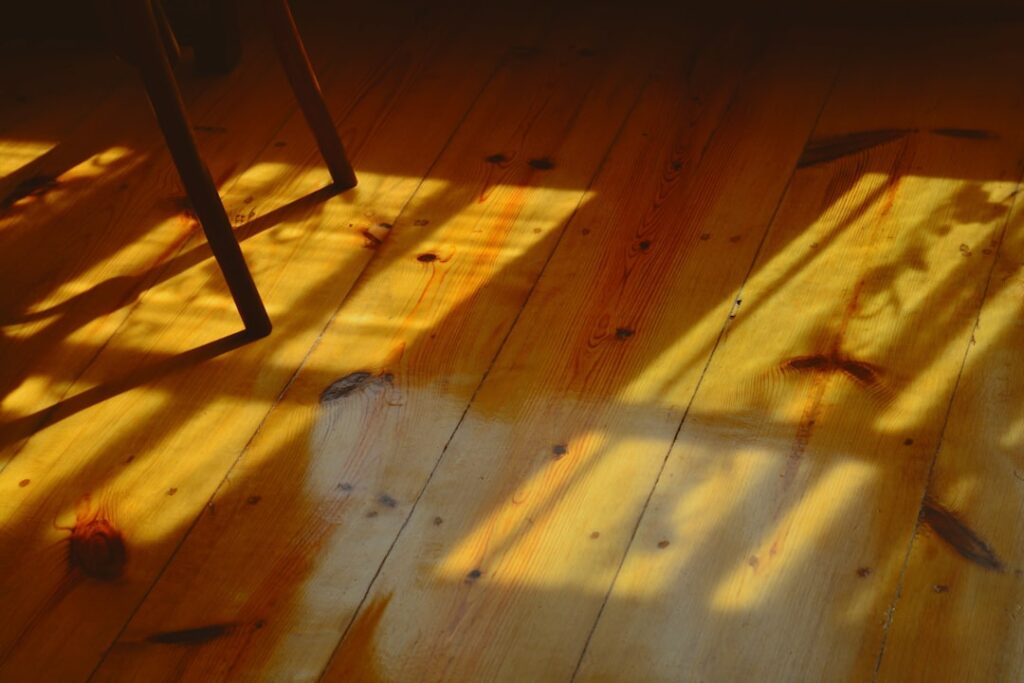
Refinishing hardwood floors is one of the most cost-effective ways to transform a room. Instead of tearing out old flooring and installing new material, refinishing sands away years of scratches, stains, and wear, then applies fresh stain and protective coats to restore the wood to like-new condition — or even give it an entirely new colour.
But how much does refinishing actually cost? The answer depends on your floor’s condition, the size of the project, the finish you choose, and whether you hire a professional or tackle it yourself. This guide breaks down every cost component so you can budget accurately.
Average Cost to Refinish Hardwood Floors
In 2026, the national average cost to professionally refinish hardwood floors falls between $3.00 and $8.00 per square foot, with most homeowners paying around $4.50 to $6.00 per square foot when staining and applying polyurethane.
For a typical project:
- Small room (150 sq ft): $450 to $1,200.
- Average room (300 sq ft): $900 to $2,400.
- Whole house (1,000 sq ft): $3,000 to $8,000.
- Large home (2,000 sq ft): $6,000 to $16,000.
These ranges include sanding, staining (if applicable), and two to three coats of finish. Additional work like repairs, board replacements, and custom colours adds to the total.
Cost Breakdown by Component
Sanding
Sanding removes the old finish and the top layer of wood to create a smooth, bare surface. This is the most labour-intensive step and typically costs $1.50 to $3.00 per square foot as part of a professional job. The cost depends on the floor’s condition — floors with thick old finishes, paint, or deep scratches take more passes and more time.
Staining
Staining is optional. If you want to change the colour of your hardwood — from natural to dark walnut, for example — staining adds $1.00 to $2.50 per square foot. Custom stain colours that require mixing or multi-step application (like grey tones on oak) cost more than single-coat standard colours.
Finishing
The finish coat protects the wood from scratches, moisture, and wear. Two to three coats of polyurethane are standard. Finishing typically costs $1.00 to $2.50 per square foot. The type of finish significantly affects the price:
- Water-based polyurethane: $1.00 to $2.00 per square foot. Dries fast, low odour, clear appearance.
- Oil-based polyurethane: $1.00 to $2.00 per square foot. Adds amber warmth, extremely durable, longer dry time.
- Hardwax oil: $2.00 to $3.50 per square foot. Natural matte look, European style, spot-repairable.
- Conversion varnish (Swedish finish): $3.00 to $5.00 per square foot. Hardest professional finish, strong fumes during application.
Repairs
If the floor has damaged boards, deep gouges, or water stains, repairs add $50 to $200 per area or $10 to $20 per board replacement. Extensive repairs — replacing a full section of flooring or fixing subfloor damage — can add several hundred dollars to the project.
Factors That Affect Cost
Floor Condition
A floor in fair condition with surface scratches and fading is the easiest and cheapest to refinish. A floor with deep gouges, pet stains soaked into the wood, old paint layers, or structural damage requires more work and materials.
Wood Species
Softer species like pine and fir require more careful sanding (lower grit progression) and may need extra coats of finish for adequate protection. Harder species like oak, maple, and hickory sand efficiently and take finish well.
Room Complexity
Open rectangular rooms are the easiest to sand and finish. Stairs, closets, tight hallways, and rooms with lots of built-in furniture or fixtures increase labour time. Stair refinishing typically adds $20 to $50 per step.
Geographic Location
Labour rates vary significantly by region. Major metro areas and high-cost-of-living regions charge more than rural areas. Expect to pay 20 to 40 percent more in cities like New York, San Francisco, and Boston compared to the Midwest or Southeast.
Furniture Moving
Most contractors expect the rooms to be cleared before they arrive. If you need them to move furniture, add $50 to $200 per room. Doing it yourself saves money but requires planning — all furniture, rugs, and window treatments should be out of the space.
DIY vs. Professional Refinishing
DIY Costs
Renting sanding equipment and buying materials yourself can bring the cost down to $1.00 to $3.00 per square foot:
- Drum sander rental: $60 to $100 per day.
- Edge sander rental: $40 to $70 per day.
- Sandpaper: $30 to $80 total.
- Stain: $30 to $60 per gallon (covers 400 to 600 sq ft).
- Polyurethane: $40 to $70 per gallon (covers 400 to 500 sq ft per coat).
- Supplies (brushes, rollers, tape, tack cloths): $30 to $60.
For a 500-square-foot project, DIY materials and rentals typically run $500 to $1,200.
DIY Risks
Drum sanders are aggressive. An inexperienced user can sand through the wear layer, create visible drum marks, or leave an uneven surface in minutes. Staining requires consistent, fast application — hesitation creates lap marks and blotching. Finishing demands dust-free conditions and proper technique to avoid bubbles, drips, and brush marks.
If a DIY refinish goes wrong, hiring a professional to fix it costs more than having them do it from the start. DIY is best suited for small rooms and homeowners who have researched the process thoroughly.
Professional Advantages
Professional floor refinishers have commercial-grade equipment, years of experience, and dustless sanding systems that keep your home clean. They can achieve consistent, flawless results in a fraction of the time it would take a homeowner. For most projects, professional refinishing is worth the premium.
Refinish vs. Screen and Recoat
A screen and recoat — also called a buff and coat — is a lighter, cheaper alternative to a full refinish. Instead of sanding down to bare wood, the existing finish is lightly abraded (screened) and a new coat of polyurethane is applied on top.
- Cost: $1.50 to $3.00 per square foot.
- Best for: Floors with surface wear but no deep scratches, stains, or colour changes.
- Not suitable for: Floors with pet stains, deep gouges, flaking finish, or floors that need a colour change.
A screen and recoat extends the life of your finish by 3 to 5 years and costs roughly half of a full refinish. It is an excellent maintenance strategy between full refinishing cycles.
Refinish vs. Replace
Sometimes refinishing is not the best option. Consider replacement when:
- The wood is too thin to sand again (solid boards sanded past 1/2 inch total thickness, or engineered wood with a veneer under 2 mm).
- Extensive water damage has warped or rotted the wood and subfloor.
- You want to change to a completely different flooring type (tile, vinyl, etc.).
- The cost of repairs plus refinishing approaches the cost of new flooring.
In most cases, refinishing is significantly cheaper than replacement. New hardwood flooring installed costs $8 to $18 per square foot, while refinishing the existing floor costs $3 to $8 per square foot.
How to Save Money on Refinishing
- Clear the room yourself: Moving furniture out before the crew arrives saves labour charges.
- Skip the stain: Natural-finish floors (clear coat only) cost less because the staining step is eliminated.
- Choose water-based poly: It dries faster, allowing the crew to apply multiple coats in one day, reducing total labour time.
- Bundle rooms: Refinishing the whole house at once is more cost-effective per square foot than doing one room at a time.
- Get multiple quotes: Prices vary 20 to 40 percent between contractors for the same scope of work. Get at least three written estimates.
- Time it right: Late fall and winter are off-season for many floor refinishers. You may negotiate better rates during slower months.
Timeline and Disruption
A professional refinishing job for a typical room takes 3 to 5 days from sanding to final cure:
- Day 1: Sanding and edge work.
- Day 2: Staining (if applicable).
- Day 2-3: First and second coats of finish.
- Day 3-5: Final coat and initial curing.
Light foot traffic is usually possible 24 to 48 hours after the final coat. Full cure takes 7 to 14 days — avoid heavy furniture, area rugs, and high-heel shoes during this period. Water-based finishes cure faster than oil-based ones.
Frequently Asked Questions
How often should hardwood floors be refinished?
Every 7 to 10 years in a busy household, or whenever the finish shows visible wear, scratches, and dull spots. With screen-and-recoat maintenance every 3 to 5 years, you can push full refinishing to every 12 to 15 years.
Can engineered hardwood be refinished?
Engineered wood with a veneer of 2 mm or more can usually be sanded and refinished once or twice. Thinner veneers cannot be refinished — only screened and recoated.
Is it worth refinishing old hardwood floors?
Almost always yes. Original hardwood — especially old-growth oak, maple, or heart pine — is often superior in quality to new wood. Refinishing restores its beauty at a fraction of the replacement cost.
Do I need to leave my house during refinishing?
For oil-based finishes and conversion varnishes, the fumes are strong enough to warrant vacating the space for 24 to 48 hours. Water-based finishes have much lower odour and VOCs, so staying in the home is feasible if the work area is sealed off from living spaces.
Final Thoughts
Refinishing hardwood floors is one of the best-value home improvement projects you can undertake. At $3 to $8 per square foot, it is far cheaper than replacement and delivers transformative results. Budget carefully, choose a finish that matches your lifestyle and aesthetic, and hire a reputable professional unless you have hands-on experience with drum sanders. A well-refinished hardwood floor can look brand new — and add real value to your home for another decade or more.
Prefer to explore on your own?
See how new flooring looks in your actual room in seconds — free, no signup.
Try the free Floor Studio →