A dripping relief valve is usually telling you something about the rest of the heating system, not just about the valve. Before replacing a pressure relief valve on a boiler, find out why it opened. In most residential hot-water systems, a valve that weeps is reacting to pressure that climbs toward its 30 psi rating, and the usual culprits are a waterlogged expansion tank or a fill valve that lets too much city water in. Swap the valve without fixing those, and the new one will drip too.
When the valve itself is the problem, because it is old, crusted with scale, or keeps leaking at normal pressure, replacement is straightforward in concept. The system must be powered off, fully cooled, isolated, and depressurized, then the old valve is unthreaded and a new one with the same pressure rating and capacity goes in, with its discharge pipe routed safely toward the floor. The catch is that you are working on a pressurized, hot, water-filled appliance, so most homeowners are better served by a licensed heating professional.
- Before Replacing a Pressure Relief Valve on a Boiler, Find the Cause
- Safety First: Burns, Pressure, and Fuel
- Tools and Materials
- The Safe Shutdown, Cool-Down, and Depressurize Sequence
- Step-by-Step Valve Replacement
- Troubleshooting After the Swap
- General Cost Ranges
- When to Call a Licensed Professional
- Frequently Asked Questions
This guide explains how to read the warning signs, what the safe shutdown sequence looks like, how the swap is done, and when to hand it off.
Before Replacing a Pressure Relief Valve on a Boiler, Find the Cause
A residential hot-water boiler normally runs around 12 to 15 psi cold and rises into the low 20s when hot. The relief valve, which on most homes is rated at 30 psi, should stay closed through that whole range. If it opens, look at the pressure-temperature gauge on the boiler while it is at full temperature.
- Pressure approaching 30 psi when hot: The valve is doing its job. Something else is driving pressure up.
- Pressure normal but the valve still drips: The seat is likely fouled or worn. Replacement is reasonable.
- Pressure spikes only when the boiler fires: Classic sign the expansion tank has lost its air charge.
- Pressure creeps up even when the boiler is cold: The pressure-reducing fill valve may be passing too much water.
The expansion tank
Water expands as it heats. The expansion tank has an air cushion behind a diaphragm that absorbs that growth. When the diaphragm fails or the air charge leaks away, the tank fills with water, and pressure jumps every time the boiler fires. Tap the tank: a hollow sound on top and a solid sound at the bottom is normal; solid all the way often means it is waterlogged. A heating pro can check the air pre-charge with a tire gauge after isolating and draining the tank.
The fill valve
The pressure-reducing valve on the cold-water feed keeps the system topped up at a set pressure. If its internals fail, supply pressure leaks through and pushes the system past the relief setting. A pro will usually test it by closing the feed and watching whether pressure stops climbing.
A reminder that matters here: pressure relief valve leaks are a symptom, never something to stop by force. Do not cap the discharge pipe, plug the outlet, or tie the lever shut. The valve is the last line of defense against a dangerous overpressure event.
Safety First: Burns, Pressure, and Fuel
Water inside a running boiler can be well above 150°F, and discharge from a relief valve can come out as scalding water or steam. Even a small weep can burn skin quickly. Never put your hand or face in front of the valve outlet, and never lift the test lever on a hot system without the discharge pipe in place.
If the boiler is gas-fired and you smell gas at any point, stop, leave the house, and call your gas utility from outside. Gas valves, burners, and gas lines are for licensed professionals only. Make sure you have working carbon monoxide alarms near sleeping areas and on the level with the boiler, since any combustion appliance can produce CO if something is out of adjustment.
Tools and Materials
- A new 30 psi boiler pressure relief valve matching the old valve’s inlet size and BTU rating (check the tag or the boiler manual)
- Two pipe wrenches or an adjustable wrench plus a pipe wrench for backing up the fitting
- Pipe thread sealant or PTFE tape rated for hot water
- Garden hose for the boiler drain valve
- Bucket, rags, and a shallow pan
- Discharge pipe material (copper or approved pipe the same size as the valve outlet) and fittings
- Heat-resistant gloves and safety glasses
The Safe Shutdown, Cool-Down, and Depressurize Sequence
This is the part that separates a routine job from an injury. Whether you do the work or a technician does, the order should look like this.
- Turn off power to the boiler. Switch off the service switch near the unit and the breaker that feeds it. For a gas boiler, a pro will also turn the gas control to off; leave gas valve work to them.
- Let the system cool completely. Wait until the gauge temperature falls near room temperature. That often takes several hours. Touching pipes is not a reliable test; read the gauge.
- Close the cold-water feed. Shut the isolation valve ahead of the fill valve so fresh water cannot refill the system while you work.
- Isolate if possible. Close any service valves that let you isolate the boiler from the rest of the piping to reduce how much water you need to drain.
- Depressurize. Attach a hose to the boiler drain and run it to a floor drain or outside. Open the drain slowly and let pressure fall to zero on the gauge. Opening a high air vent or bleeder on an upper radiator helps the water drain below the valve.
- Confirm zero pressure. The gauge should read 0 psi and flow from the drain should stop before any fitting is loosened.
Step-by-Step Valve Replacement
- Disconnect the discharge pipe. Unthread or cut the pipe attached to the valve outlet.
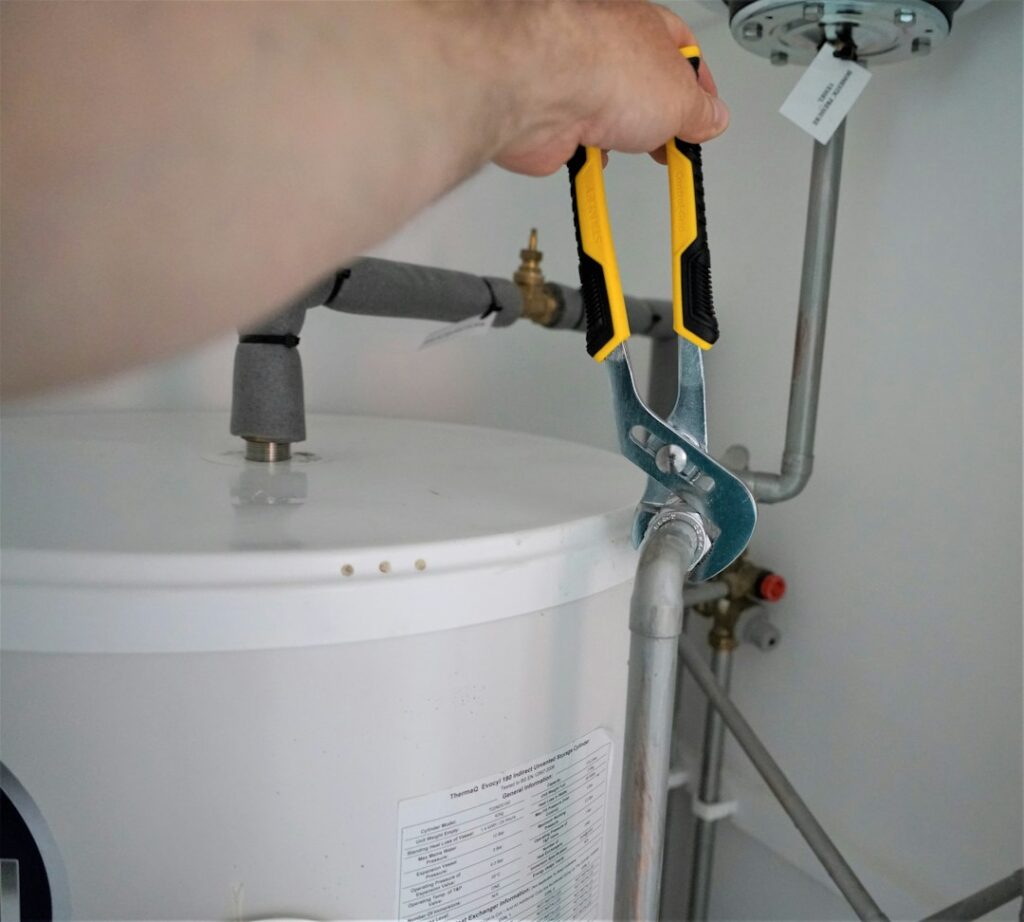
- Back up the fitting and unscrew the old valve. Hold the tapping or tee with one wrench and turn the valve counterclockwise with the other. This avoids twisting the boiler fitting.
- Clean the threads. Brush out old sealant and scale. Inspect the tapping for cracks or heavy corrosion; if you find any, stop and call a pro.
- Prepare the new valve. Confirm it is rated 30 psi (or whatever the boiler’s data plate specifies) and that its capacity equals or exceeds the boiler’s output. Apply sealant to the male threads only, keeping it off the first thread.
- Install upright. Thread the valve in by hand, then snug with a wrench, finishing with the outlet pointing the right way. The valve spindle should be vertical unless the maker allows otherwise.
- Route the discharge pipe. Run a pipe the full size of the outlet down to within several inches of the floor or to an approved drain. No valves, caps, or threads on the open end, no reductions in size, and no upward runs where water could collect. Follow local code for exact termination height.
- Refill slowly. Close the drain, open the feed valve, and let the fill valve bring the system back to cold pressure. Bleed air from radiators or baseboard vents.
- Restore power and watch. Turn the boiler on and watch the gauge through a full heating cycle. The valve should stay dry.
Troubleshooting After the Swap
- New valve drips immediately: Debris may be on the seat. A pro may flush it by briefly operating the test lever on a cold, low-pressure system, but repeat drips mean pressure is still too high.
- Pressure climbs past 25 psi when hot: Have the expansion tank checked or replaced.
- Pressure rises when cold: Suspect the fill valve.
- Gurgling and cold radiators: Air in the system. Bleed the high points.
- Leak at the threads: Depressurize again and reseal. Never tighten a fitting under pressure.
General Cost Ranges
The valve itself is inexpensive, typically in the range of a few tens of dollars for a standard residential unit. A heating technician’s service call to replace it, including drain-down and refill, commonly lands in the low hundreds of dollars depending on region and access. If the expansion tank also needs replacement, expect the combined job to cost more, and a failed fill valve adds another part and labor. These fixes are far cheaper than water damage or a boiler that keeps tripping.
When to Call a Licensed Professional
For most homeowners, replacing a pressure relief valve on a boiler is a job for a licensed heating contractor or plumber. Call one if you are not comfortable draining and refilling a hydronic system, if your boiler is gas- or oil-fired and any burner or fuel component must be touched, if the tapping is corroded, if you cannot confirm the correct pressure and capacity rating, or if pressure keeps rising after the new valve is in. A pro can test the expansion tank and fill valve at the same visit, which is usually the real fix. Steam boilers operate very differently, at much lower pressures with their own safety controls, and should always be handled by a professional.
Handled correctly, replacing a pressure relief valve on a boiler is quick. Handled carelessly, it involves hot water, stored pressure, and fuel. Choose the route that keeps you safe.
Frequently Asked Questions
Why does my boiler pressure relief valve keep dripping?
Usually because system pressure is reaching the valve’s 30 psi setting, most often from a waterlogged expansion tank or a leaking fill valve. A worn or scaled valve seat can also cause drips at normal pressure.
Is it safe to cap a leaking relief valve temporarily?
No. Capping, plugging, or disabling a relief valve removes the protection against overpressure and can lead to a dangerous failure. Turn the boiler off and call a heating pro instead.
How often should a boiler relief valve be replaced?
Many manufacturers suggest inspection annually and replacement every several years or whenever it weeps at normal pressure. Your technician can advise based on water quality and valve condition.
Can I use a higher psi relief valve to stop the leak?
No. The valve rating must match the boiler’s data plate, which is typically 30 psi for residential hot-water boilers. A higher-rated valve could let pressure exceed what the boiler is built for.