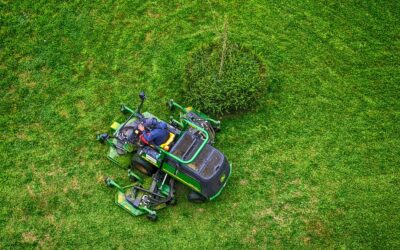
Walking behind a 36-inch or 48-inch commercial-style mower for two hours wears out your legs long before the engine needs fuel. A sulky changes that. It is a small platform on one or two wheels that hitches to the back of a wide walk-behind, so you stand and ride instead of walk. The result is a ride behind mower that keeps the maneuverability of a walk-behind while covering ground noticeably faster.
Sulkies are simple and affordable compared with buying a new rider, but they only work well with the right mower, the right terrain and a careful operator. Compatibility, speed, slope safety and the point where a stand-on mower becomes the better investment are all covered here.
- How a Ride Behind Mower Sulky Works
- Which Mowers Work With a Sulky
- Speed and Productivity Gains
- Installing and Setting Up a Sulky
- Slope and Operator Safety
- Fuel, Fire and Carbon Monoxide Precautions
- Sulky vs Stand-On Mower: When to Upgrade
- Troubleshooting Common Sulky Problems
- General Cost Ranges
- When to Call a Pro
- Frequently Asked Questions
How a Ride Behind Mower Sulky Works
A sulky bolts to a hitch bracket on the rear frame of a walk-behind mower, usually below the handlebars. It has a deck plate for your feet and one or two caster wheels that swivel as the mower turns. You stand on the plate, hold the handlebars as usual and steer with the mower’s controls. The mower pulls you along.
Most sulkies fold up or swing out of the way on a spring-loaded arm, so you can step off and walk in tight areas, on slopes, or when trimming along beds. That flexibility is the main appeal. You ride on the open stretches and walk everywhere else.
Single-wheel vs two-wheel designs
Single-wheel sulkies are lighter and track well on flat turf. Two-wheel sulkies are more stable, spread your weight over a wider base and are easier for new operators to balance on. Some units have a seat option, but a standing platform is the most common style because it lets you shift your weight and step off quickly.
Which Mowers Work With a Sulky
Sulkies are designed for self-propelled, commercial-style walk-behinds with decks of about 32 inches and wider. These mowers have hydrostatic or gear drives strong enough to pull an adult plus the sulky, and their frames include mounting points for a hitch.
They are generally not suitable for standard residential push or self-propelled mowers in the 21-inch class. Those mowers lack the power, the frame strength and the handlebar geometry to tow a rider safely. Adding weight to a light mower can overload its drive, and the handle position leaves you in an awkward stance.
Before buying, check:
- Hitch compatibility: the mower maker’s accessory list or the sulky maker’s fit chart for your model.
- Drive capacity: whether the mower’s manual permits towing a sulky and lists a maximum operator weight.
- Handle height: you should stand upright with a slight bend in your elbows.
- Controls: the operator presence controls must still work normally when you are standing on the platform.
Some people search for a ride along mower when they really want a small rider. If your mower is a residential walk-behind, a compact rear-engine rider or a lawn tractor is the practical upgrade, not a sulky.
Speed and Productivity Gains
A typical walking pace behind a mower is around 3 miles per hour, and most people slow down as they tire. On a sulky you can run the mower closer to its rated ground speed on open turf and hold that pace for the whole job. Many operators report finishing large, open areas noticeably faster, with far less fatigue at the end of the day.
The speed gain depends on layout. Open lawns with long straight passes benefit the most. Lawns broken up by beds, trees and tight corners see smaller gains because you will step off or slow down often. Always follow the mower maker’s speed and slope limits when riding. Higher ground speed also means a rougher cut if the blades are dull or the grass is tall, so sharp blades and a reasonable mowing height matter more when you ride.
Installing and Setting Up a Sulky
Installation is usually a bolt-on job that takes under an hour. Always follow the instructions supplied with your kit.
- Shut down the mower. Turn off the engine, remove the key, let it cool and disconnect the spark plug wire.
- Mount the hitch bracket to the rear frame using the supplied hardware and the holes specified for your model. Torque bolts to the listed spec.
- Attach the sulky arm to the bracket and confirm the pivot moves freely without binding.
- Adjust the platform height so the deck plate sits a few inches off the ground and level with the turf.
- Set the spring tension on the fold-up arm so it stays up when stowed and down when riding.
- Check tire pressure on the sulky wheels if they are pneumatic.
- Reconnect the plug and test on flat ground at low speed before mowing.
Practice turning, stopping and stepping off on a flat, open section of lawn. Get used to how the sulky swings during turns before you ride near obstacles.
Slope and Operator Safety
Slopes are where sulkies become risky. When you ride behind the mower, your weight sits low and behind the drive wheels. Going downhill, the mower can push faster than you expect. Going across a slope, the sulky can slide sideways. Going uphill, a heavy operator can lift the front casters and reduce steering control.
- Follow the mower maker’s speed and slope limits and any separate limits listed for sulky use.
- Step off and walk on slopes, wet grass, loose soil and near drop-offs, retaining walls, ditches and water.
- Wear sturdy boots with good tread, long pants and eye and hearing protection.
- Keep both hands on the controls and never disable operator presence levers.
- Look behind before reversing. Many operators fold the sulky up before backing to avoid jackknifing it.
- Keep kids and pets indoors and never let anyone ride with you.
Fuel, Fire and Carbon Monoxide Precautions
A sulky does not change the basic hazards of a gas mower, but riding tends to mean longer sessions and more refueling.
- Refuel outdoors with the engine off and cool, using approved fuel cans with secure caps.
- Store fuel away from water heaters, furnaces, dryers and anything with a pilot light or spark.
- Never run the mower in a garage or shed. Engine exhaust contains carbon monoxide, which is odorless and can build up fast in enclosed spaces. Keep CO alarms in the home on every level and near sleeping areas.
- Clean grass and debris off the engine, muffler and deck after each use once everything has cooled. Packed clippings near hot parts can ignite.
- Keep a fire extinguisher rated for flammable liquids where you store the mower.
Sulky vs Stand-On Mower: When to Upgrade
A stand-on mower is a purpose-built machine with a platform integrated into the frame, a low center of gravity and zero-turn steering. It is faster and more stable than a walk-behind with a sulky, but it costs far more.
A sulky makes sense when:
- You already own a good commercial-style walk-behind.
- Your property is mostly flat with some tight spots where walking is easier.
- You mow a large lawn occasionally rather than daily.
- Budget is a priority.
A stand-on mower makes more sense when:
- You mow several acres regularly or run a small mowing business.
- You want zero-turn maneuverability and higher sustained speeds.
- Your walk-behind is worn out and needs replacing anyway.
- Operators find balancing on a trailing sulky uncomfortable.
If you mostly have a small residential yard, neither option is ideal. A compact rider or a quality self-propelled walk-behind will fit better.
Troubleshooting Common Sulky Problems
The sulky fishtails in turns
Slow down before turning and check that the caster pivots are clean and greased. Worn caster bearings let the wheel wobble. Shift your weight slightly toward the inside of the turn.
The mower bogs down when you ride
Your combined weight may exceed what the drive handles comfortably, or the drive belt may be worn. Check the mower manual for towing limits and inspect the belt and tension. Tall, wet grass also adds load, so raise the deck or mow more often.
The platform scrapes the ground
Raise the platform height adjustment, check sulky tire pressure, and avoid riding over sharp dips or curbs.
The arm will not stay folded up
Increase spring tension or replace a fatigued spring. Check the latch for bent tabs.
Rattles and loose mounting
Re-torque hitch bolts after the first few hours of use and at every service. Vibration loosens hardware over time.
General Cost Ranges
A basic single-wheel sulky is one of the least expensive ways to speed up mowing, often costing a small fraction of a new rider. Two-wheel and seated designs cost more, and model-specific hitch kits can add to the total. A stand-on mower, by contrast, costs several thousand dollars or more. Used sulkies are common and usually fine if the pivots, springs and wheels are in good shape.
When to Call a Pro
Take the mower to a dealer or small-engine shop if the drive slips, the hydrostatic system leaks or overheats, the operator controls do not stop the blades and drive reliably, or you are unsure whether your mower is rated for a sulky. A dealer can also confirm the correct hitch kit and install it if you prefer.
Frequently Asked Questions
Can I put a sulky on a regular self-propelled mower?
Generally no. Sulkies are designed for commercial-style walk-behinds with decks around 32 inches and wider. Residential 21-inch mowers lack the drive power and frame strength to tow a rider safely.
Is a ride behind mower faster than walking?
On open, flat lawns, yes. You can run closer to the mower’s rated ground speed and hold that pace longer. Gains shrink on lawns with many obstacles where you step off often.
Are sulkies safe on hills?
Only on gentle slopes within the mower maker’s limits. Step off and walk on steeper ground, wet grass and near drop-offs or water.
Should I buy a sulky or a stand-on mower?
A sulky is the budget choice if you already own a capable walk-behind and mow mostly flat ground. A stand-on mower is better for frequent large-acreage mowing or commercial use.