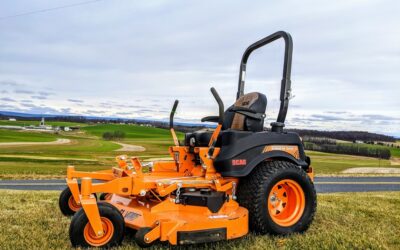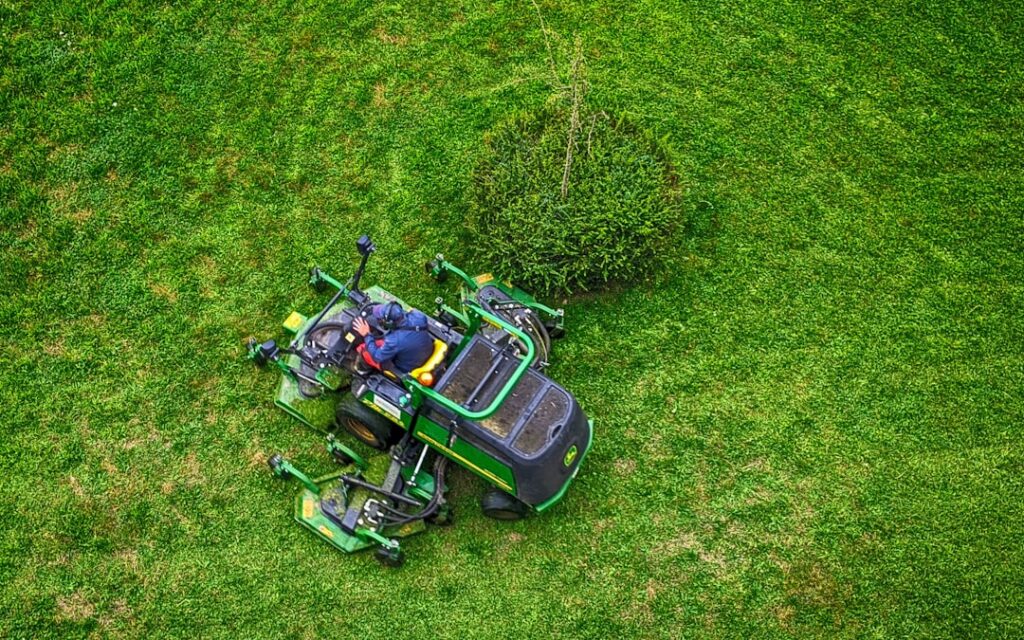
Ask any full-time landscaping crew what they run, and Scag comes up fast. A Scag lawn mower isn’t a big-box purchase; it’s a commercial-grade machine built in Mayville, Wisconsin, to cut for thousands of hours without flinching. If you’re a homeowner with acreage, a property manager, or a lawn-care pro trying to justify the price, this guide covers the models, engines, deck sizes, and what you’re actually paying for.
I’ve spent years around these machines, and the short version is this: Scag costs more up front because it’s engineered to outlast the machines that cost less. Whether that math works for you depends on how much grass you cut.
- Who Scag Mowers Are Really For
- The Zero-Turn Lineup
- Stand-On and Walk-Behind Options
- Engines: Kawasaki, Kohler, and Vanguard
- Deck Construction: Where the Money Goes
- Durability and Long-Term Value
- Scag vs the Homeowner Zero-Turns
- Choosing the Right Deck Size and Model
- Maintenance Schedule to Protect Your Investment
- The Bottom Line on Scag
Who Scag Mowers Are Really For
Let me be honest early. If you have a flat quarter-acre lawn, you do not need a Scag, and buying one would be like commuting to work in a dump truck. These machines start around $8,000 and climb past $16,000. They earn that price on large properties and paid work.
The typical Scag owner falls into one of these camps:
- Commercial landscapers mowing dozens of properties a week who need durability and uptime.
- Homeowners with 3-plus acres who want a machine that’ll last 20 years instead of 5.
- Municipalities, schools, HOAs, and farms maintaining large open turf.
If that’s you, the value proposition makes sense. If it’s not, a quality homeowner zero-turn at a third of the price will serve you fine.
The Zero-Turn Lineup
Scag’s reputation rests on its zero-turn riders, and the range steps up from capable to overbuilt.
Tiger Cat 2: The entry point into Scag’s riders and the sweet spot for smaller commercial operators and serious homeowners. It comes with 48, 52, or 61-inch fabricated Velocity Plus decks and Kawasaki or Kohler engines in the 22-27 horsepower range. Expect roughly $9,000-$11,000.
Cheetah II: Built for speed and comfort on open ground, the Cheetah hits ground speeds up to 16 mph, rides on a suspension platform, and runs deck sizes from 52 to 72 inches. Engines climb to 37 horsepower. This is a $13,000-$16,000 machine for crews that cover a lot of acreage fast.
Turf Tiger II: The flagship and the tank of the lineup. It uses a heavy tubular steel frame, a 61 or 72-inch deck, and engine options from Kawasaki, Kohler EFI, and Briggs Vanguard up into the mid-30s in horsepower. Built to run all day, every day, it typically lands in the $13,000-$17,000 range.
Stand-On and Walk-Behind Options
Not every job suits a big rider. Scag’s V-Ride II is a stand-on mower that trades the seat for a platform you ride standing up. Crews love these because they’re compact, easy to hop on and off between gates, and gentle on hilly or wet turf where a heavy rider might slip. Deck sizes run 32 to 61 inches, and pricing generally sits around $8,000-$11,000.
Scag also builds true walk-behind mowers, both belt-drive and hydro-drive, in 32 to 61-inch cuts. A 32 or 36-inch walk-behind is the tool for tight backyards and narrow gates where nothing wider fits. These are the most affordable way into the brand, often $4,000-$7,000 depending on drive type and deck.
Engines: Kawasaki, Kohler, and Vanguard
Scag doesn’t build its own engines; it bolts on proven commercial power plants and lets you choose. That flexibility is one reason mechanics like the brand.
- Kawasaki FX series: The crew favorite for reliability and easy service. Air-cooled, torquey, and rebuildable.
- Kohler Command Pro and EFI: The EFI (electronic fuel injection) versions cut fuel use noticeably, which adds up over a full season.
- Briggs & Stratton Vanguard: A strong commercial option, often with oil-guard systems that stretch service intervals.
Whichever you pick, these are commercial engines rated for far more run time than a homeowner motor. Regular oil changes every 50-100 hours and clean air filters are what keep them going past 2,000 hours.
Deck Construction: Where the Money Goes
The Velocity Plus cutter deck is a big part of why a Scag lawn mower costs what it does. Instead of a thin stamped deck, Scag uses fabricated 7-gauge steel welded into a deep, high-vacuum shell. That depth lifts grass for a cleaner cut, moves clippings efficiently, and shrugs off the rocks and roots that dent lighter decks.
Deck width directly affects productivity. A 61-inch deck covers roughly a third more ground per pass than a 48-inch, which on a large property is the difference between two hours and three. Match the deck to your gates and your acreage: wider is faster but won’t fit through a 42-inch fence opening.
Durability and Long-Term Value
The case for spending five figures on a mower is longevity. Commercial Scag frames, spindles, and hydraulics are built to log thousands of hours, and it’s common to see 15 to 20-year-old Turf Tigers still cutting daily. Parts stay available for a very long time, and any real dealer can service them.
Run the math on cost per hour. A homeowner zero-turn might last 500-800 hours before it’s worn out. A Scag can run 3,000-plus with proper care. If you cut a lot, the Scag can actually be cheaper per hour of use, even though the sticker is three times higher.
Scag vs the Homeowner Zero-Turns
People shopping a Scag almost always cross-shop the residential zero-turns from brands like Troy-Bilt, Cub Cadet, and the big-box versions of John Deere and Toro. Those machines cost $2,500-$4,500 and cut grass perfectly well. So what does another five thousand dollars actually buy?
- Frame: Scag uses heavy tubular or formed steel; homeowner units use lighter stamped frames that flex under years of hard use.
- Spindles: Commercial cast-iron spindle housings versus lighter assemblies that wear faster.
- Deck steel: Fabricated 7-gauge welded decks versus thinner stamped decks that dent and rust sooner.
- Ground speed and ride: Faster top speeds and, on models like the Cheetah, real suspension.
- Run-time rating: Engines and hydraulics rated for thousands of hours instead of hundreds.
If you cut two hours a week on a flat suburban lawn, none of that justifies the premium and I’d point you to a homeowner machine. If you cut for a living or maintain acreage, every one of those upgrades earns its keep.
Choosing the Right Deck Size and Model
Getting the deck width right is the single most important sizing decision. Measure your narrowest gate first; a 61-inch deck won’t fit through a 48-inch opening, and no amount of horsepower fixes that. As a rough guide, a 48-inch deck suits properties up to about 2 acres, a 52 or 61-inch deck handles 2 to 5 acres efficiently, and a 72-inch deck is for large open turf where speed matters more than tight maneuvering.
Terrain matters too. On slopes and wet ground, a stand-on V-Ride keeps your weight better placed and is easier to bail off of than a big seated rider. For wide-open flat acreage, the Cheetah’s speed pays off. For mixed properties with obstacles, the Tiger Cat 2 or Turf Tiger is the versatile middle ground most buyers land on.
Maintenance Schedule to Protect Your Investment
- Grease the spindles and pivot points every 25 hours; this is the single most-skipped task that kills mowers.
- Change engine oil and filter every 50-100 hours per the engine maker’s spec.
- Sharpen or replace blades regularly; dull blades tear grass and strain the engine.
- Service the hydro drive system and change hydraulic fluid at the recommended interval, usually a few hundred hours.
- Keep the deck clean underneath to preserve airflow and prevent rust.
The Bottom Line on Scag
A Scag lawn mower is a professional-grade investment that rewards heavy use. For a commercial crew or a homeowner with real acreage, the durability, choice of engines, and deep fabricated decks translate into years of dependable cutting and a strong cost-per-hour. Start with the Tiger Cat 2 or a V-Ride if you’re stepping up from a homeowner machine, and move to the Turf Tiger or Cheetah when your workload demands it. Buy the deck size your property and gates allow, keep up the grease schedule, and this is a mower you may hand down before you replace it.