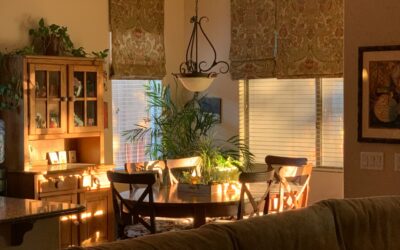
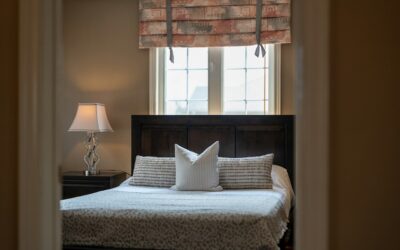
The kitchen is the hardest room in the house on window treatments. Steam from pasta water, grease drifting off a skillet, and splashes from the sink all land on whatever hangs at the window. The best roman shades for kitchen windows solve that with the right fabric, a lift system you can reach over a counter, and enough clearance from the faucet and cooktop to stay clean.
Part of our Kitchen Remodeling guide — explore the full guide →
In short: choose a polyester, poly-blend, or solution-dyed outdoor fabric rather than silk or loose linen, pick a cordless or motorized lift so nobody has to lean across the sink to tug a cord, and mount the shade so its lowest fold sits well above the backsplash. Kitchen roman blinds done this way look soft and tailored without turning into a greasy, water-spotted rag after a year.
Renters and anyone who dislikes drilling into tile or window trim also have options. Tension-mounted and adhesive-bracket no drill roman shades work on many kitchen windows, as long as the shade is light and the frame is deep enough.
Choosing Roman Shades for Kitchen Windows: Fabric Comes First
Fabric decides whether a kitchen shade lasts. Natural fibers look beautiful but absorb moisture and oils. Cotton and linen can shrink, wrinkle, and hold cooking odors, and silk water-spots and fades. Synthetic fibers shed moisture and clean up far better.
| Fabric | Steam and Grease | Best Placement |
|---|---|---|
| 100% polyester | Resists moisture, wipes clean | Over sinks, near cooktops |
| Solution-dyed acrylic (outdoor) | Very moisture and fade resistant | Sunny windows, over sinks |
| Poly-linen blend | Moderate; look of linen, less shrink | Breakfast nooks, away from stove |
| Faux woven wood or vinyl-coated | Wipeable surface | High-splash areas |
| Cotton, linen, silk | Absorbs moisture and odor | Avoid near sink or range |
Look for fabrics labeled moisture resistant, stain resistant, or suitable for outdoor use. A tighter weave also traps less grease than an open, slubby texture. Mid-tone colors and small patterns hide the occasional spot far better than pure white or pale solids.
Lining Choices
A light-filtering lining protects the face fabric from sun and adds body to the folds. Blackout lining is rarely needed in a kitchen and can hold humidity against the window. If your kitchen gets strong afternoon sun, a thermal or light-filtering liner reduces fading while still letting daylight through. Make sure the lining is also a synthetic so it does not shrink at a different rate than the face fabric.
Cord Safety and Over-Sink Reach
Corded window coverings pose a strangulation hazard to young children, and the U.S. Consumer Product Safety Commission recommends cordless or inaccessible-cord products in homes with kids. That advice fits kitchens especially well, because dangling cords near the sink also get wet and grimy, and kids spend a lot of time in the kitchen.
Reach is the other problem. Most kitchen windows sit behind a sink or counter 24 to 30 inches deep, so pulling a cord means leaning across wet surfaces. Two lift systems solve both issues:
- Cordless lift: You push up or pull down on the bottom rail. Cordless roman shades are the simplest and most affordable safe option, and they work well when you can reach the bottom rail from the counter edge.
- Motorized lift: A battery or hardwired motor raises and lowers the shade by remote, wall switch, app, or voice assistant. Motorized shades suit wide or deep counters and windows you cannot comfortably reach.
If you inherit corded shades, retrofit kits and cord cleats reduce risk, but replacing them with cordless versions is the safer long-term choice.
Measuring and Splash Clearance
Decide between inside mount and outside mount first. Inside mount sits within the window frame for a clean, built-in look and needs enough frame depth, often at least 1.5 to 2 inches for a flush fit. Outside mount installs on the wall or trim above the window and covers more glass, which helps with light control and makes a small window look larger.
- For an inside mount, measure the width at the top, middle, and bottom of the frame and use the narrowest number. Measure height at the left, center, and right and use the longest.
- For an outside mount, add about 1.5 to 3 inches on each side and mount a few inches above the frame.
- Check the stack height, the folded bundle at the top when the shade is raised. Roman shades stack deeper than blinds, often 6 to 10 inches depending on length and fabric.
- Confirm the fully lowered shade ends at the sill and does not dip into the faucet’s path or rest on a deep windowsill where water collects.
- Look at what is under the window: a tall gooseneck faucet, a soap dispenser, or a window-mounted herb shelf can interfere with the bottom rail.
Near a cooktop, keep fabric well away from open flames and hot burners. A window directly beside a gas range is a better spot for a wipeable faux wood shade than a fabric roman.
No Drill Roman Shades for Rentals
You can install no drill roman shades in three main ways:
- Tension-mount shades: A spring-loaded headrail presses against both sides of an inside-mount window frame. Best for lightweight fabrics and frames with square, sturdy sides.
- Adhesive brackets: Heavy-duty adhesive mounting brackets hold light shades on smooth, clean trim. Degrease surfaces first; kitchen trim often carries a film of cooking oil that ruins adhesion.
- Clamp-on brackets: Some brackets clamp onto the top of window trim without screws, working on many standard casings.
No-drill mounts carry less weight than screwed brackets, so choose a lighter, unlined or lightly lined shade and avoid very wide windows. Check the product’s weight limit against the shade.
Installation Tools and Steps
For a standard screw-mount installation you need a tape measure, pencil, level, drill with bits, screwdriver, and the included brackets. Use a sturdy step stool rather than kneeling on the counter.
- Mark bracket positions a few inches in from each end, plus a center bracket for wider shades.
- Level the marks and pre-drill. Use anchors if you are mounting into drywall rather than wood trim.
- Screw in the brackets and snap the headrail into place.
- Lower and raise the shade several times so the folds train evenly.
- For motorized shades, charge or connect power and pair the remote per the maker’s instructions.
Cleaning and Troubleshooting
Dust or vacuum with a brush attachment every week or two, and spot-clean splashes promptly with a damp cloth and mild soap. Test any cleaner on the lining side first. Most roman shades should not go in a washing machine unless the label specifically allows it.
- Folds uneven: Leave the shade fully lowered for a day, then raise it slowly while dressing each fold by hand.
- Shade drifts down: A cordless tension spring may need adjusting, usually from the headrail end; check the maker’s instructions.
- Yellowing or odor: Grease buildup. Improve range hood use and spot-clean more often.
- Water spots at the bottom: The shade is hanging too low over the sink; raise the mounting height or shorten it.
Cost Ranges and When to Call a Pro
Ready-made cordless roman shades are the most budget-friendly, often costing a modest amount per window in standard sizes. Custom roman shades for kitchen windows cost considerably more, and motorization adds a meaningful premium on top. Professional measuring and installation adds a service fee that varies by region.
Call a window treatment pro for bay or corner windows, extra-wide spans, windows over deep islands, or hardwired motorized systems that need a new switch or outlet. Any new wiring should be done by a licensed electrician.
Frequently Asked Questions
Are roman shades a good idea in a kitchen?
Yes, if you choose a moisture-resistant synthetic fabric and mount the shade clear of the sink and stove. Polyester and outdoor-grade fabrics handle steam and grease far better than cotton or silk.
What is the best fabric for kitchen roman blinds?
Polyester and solution-dyed acrylic are top choices because they resist moisture, fading, and stains. A poly-linen blend works well away from the sink if you want a natural texture.
Do no drill roman shades really stay up?
They do when the shade is lightweight and the surface is clean and sound. Tension mounts need a square, sturdy inside frame, and adhesive brackets need degreased trim.
Should kitchen roman shades be cordless?
Yes. Cordless or motorized shades remove the strangulation hazard that cords pose to young children and make it easy to operate a shade over a sink without leaning across wet counters.
How do I clean grease off a fabric roman shade?
Blot with a damp cloth and a drop of mild dish soap, working gently from the outside of the spot inward, then blot with plain water. Test on a hidden area first and avoid soaking the fabric.