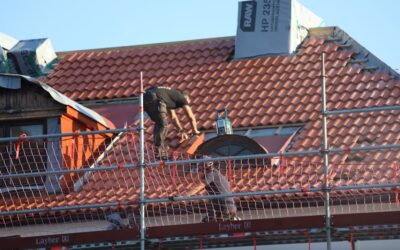
Most people never look up at the edge of their roof until water is dripping inside the house, but the components that make up the roofing eaves are what keep the structure dry, ventilated, and free of ice damage every winter. The eave is the lower edge of the roof that projects beyond the exterior wall, and it includes a stack of parts each with a specific job: drip edge, fascia, soffit, vent, and gutter. Failing any one of these triggers a chain reaction that ends in rotted rafter tails and a four-figure repair bill.
Part of our Roofing guide — explore the full guide →
The Anatomy of an Eave
Working from the inside out, the eave includes the rafter tails (the projecting ends of the roof framing), the fascia board (typically a 1×6 or 1×8 nailed to the rafter ends, running horizontally), the soffit panel (the underside surface enclosing the eave), the drip edge metal (an L-shaped flashing along the roof edge), and the gutter system mounted to the fascia. Ventilation occurs through perforated soffit panels or continuous soffit vents that allow attic intake air, balanced by ridge or roof vents at the top.
The IRC (International Residential Code) Section R806 requires net free attic ventilation of 1 sq ft per 150 sq ft of attic floor, with at least 40 percent of that ventilation in the lower half of the roof (the eaves). Skip this calculation and you risk condensation damage that shows up as black mold on the underside of the roof deck.
Common Eave Materials
- Wood fascia (pine, cedar, or redwood): Traditional, paintable, but rots when paint film fails. Typical lifespan 15-25 years.
- PVC fascia (Azek, Versatex): Cellular PVC trim board that resists rot and insects entirely. Costs 2-3x wood but lasts the life of the house. About $3-$5 per linear foot for 1×6.
- Aluminum fascia wrap: Coil stock formed over existing wood fascia. Inexpensive but traps moisture if installed over decayed wood.
- Vinyl soffit: Most common new construction choice. Panels 12 ft long, $1-$2 per sq ft.
- Aluminum soffit: Stiffer, more durable, paint friendly. $2-$3.50 per sq ft.
- Wood beadboard soffit: Premium look, requires paint maintenance every 8-10 years.
The Drip Edge Detail
Drip edge is the most overlooked piece of an eave assembly. This is a small piece of bent aluminum or galvanized steel flashing that sits on top of the roof deck at the eave, kicks water away from the fascia, and protects the wood underneath from capillary draw. The IRC has required drip edge on all asphalt shingle roofs since the 2012 edition (Section R905.2.8.5). Reroofers who skip drip edge to save the $0.85 per linear foot in material are setting up the homeowner for fascia rot within 5-7 years.
Specify drip edge in either Type C (3-inch face) or Type D (3-inch face with hemmed edge). Type D is the better choice; the hemmed lower edge breaks surface tension cleanly and stops water from wicking back up the fascia.
Ice Dams and Eave Protection
In Climate Zones 4-7 (most of the northern US), ice and water shield membrane must be installed along the eaves under the asphalt shingles. The IRC requires this membrane to extend from the eave edge to a point at least 24 inches inside the warm wall of the building. In practice, that usually means at least one 36-inch-wide course of self-adhered membrane like GAF WeatherWatch or Grace Ice & Water Shield. This is the only defense against an ice dam pushing water back under the shingles and into the soffit.
If you live in a snow-belt area and have repeating ice dam damage, plan on a second course of membrane (totaling 72 inches up the slope) and a proper ventilation balance to keep the roof deck cold enough to prevent snowmelt at the eaves.
Signs Your Eaves Need Attention
Look for these warning signs annually, ideally in early spring after winter pulls everything apart:
- Peeling paint or staining on the fascia board
- Soft spots in the fascia when pressed with a screwdriver
- Sagging or detached gutters
- Soffit panels pulling away from the J-channel or showing daylight gaps
- Wasp or bird nests behind torn soffit material
- Black streaking on the soffit (often from algae or roof runoff)
- Wet insulation visible through soffit vents
Repair Costs and Scope
Spot fascia replacement for a single 8-foot board runs $250-$450 with a handyman or $400-$650 with a licensed contractor. Full perimeter fascia and soffit replacement on a typical 2,000 sq ft single-story home runs $4,500-$9,000 in PVC and aluminum, or $6,500-$12,000 in wood with paint. Add $1,200-$2,200 for new gutter runs in 5-inch K-style aluminum, more for copper or seamless half-round.
If the rafter tails themselves are rotted, the scope expands significantly. Sistering new tail extensions to existing rafters and re-decking the eave perimeter typically runs $80-$140 per linear foot. This is where DIY ends; the structural connection at the rafter tail is load-bearing and most jurisdictions require a permit and inspection for any framing repair.
DIY vs Hiring a Pro
Painting fascia and replacing aluminum or vinyl soffit panels is well within the skill of a careful homeowner with an extension ladder. Replacing rotted wood fascia and re-flashing drip edge requires removing the first course of shingles, which exposes the roof to weather; this work should be scheduled around forecast and ideally done by a licensed roofer with a $1 million general liability policy. Expect contractor labor at $75-$110 per hour in most markets.
Maintenance That Extends Eave Life
Clean gutters twice yearly: late spring and late fall. Clogged gutters overflow behind the fascia and rot the wood from the back side where you cannot see it. Repaint wood fascia every 8 years using a high-quality acrylic exterior paint like Sherwin-Williams Emerald or Benjamin Moore Aura. Caulk seams between fascia boards and corner joints with a paintable polyurethane like Sika 1A. Confirm that gable end soffit vents are not painted shut, which happens often during exterior repaints.
Properly built and maintained, roofing eaves should match the lifespan of the roof itself. The components are inexpensive individually but failure of any single piece accelerates damage to everything around it, so think of the eave as a system rather than a stack of independent parts.