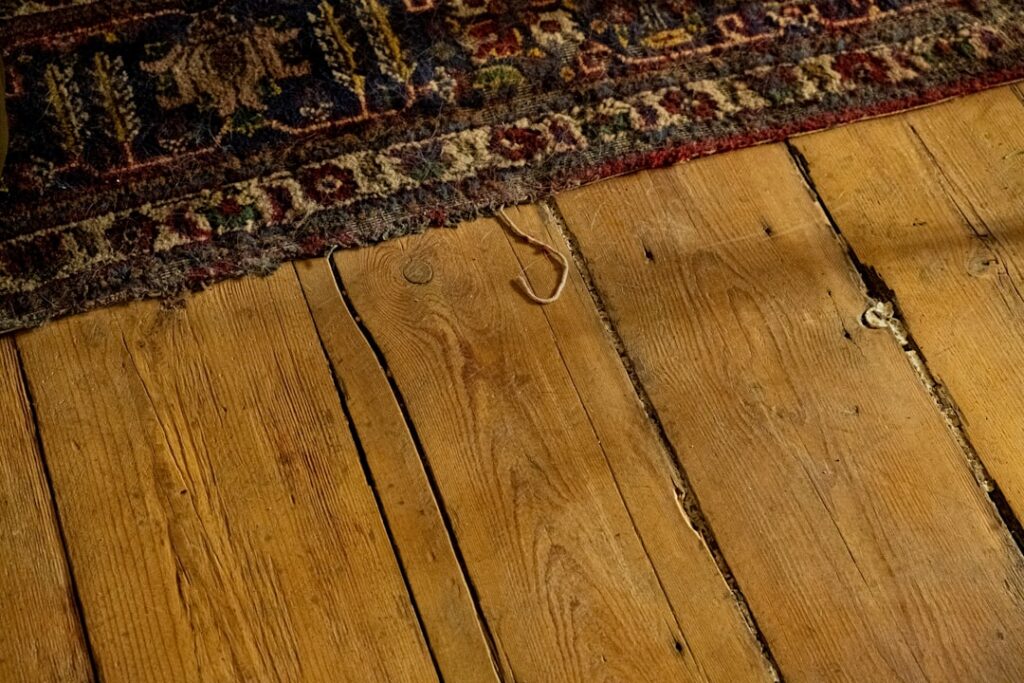
The cheap rug pad you grabbed to stop a rug from sliding could be quietly bonding to your $8-per-square-foot hardwood right now. Rug pads for wood floors are one of the most misunderstood accessories in a home — the wrong one leaves a sticky, cloudy haze or a checkerboard imprint that no mopping removes, while the right one protects the finish for decades. The difference comes down to a single question: what is the pad actually made of?
This guide breaks down which pad materials are genuinely safe for a hardwood finish, which ones cause the damage homeowners blame on the rug itself, and exactly what to look for on the label before you buy.
- Why the Wrong Rug Pad Damages Hardwood
- Safe Rug Pad Materials for Wood Floors
- Rug Pad Materials That Damage Wood Floors
- How to Choose the Right Pad for Your Situation
- Buying Checklist and Care Tips
- Grip Pads vs. Cushion Pads: Know the Difference
- Common Mistakes That Ruin Floors and Rugs
- The Bottom Line
Why the Wrong Rug Pad Damages Hardwood
Wood floors are sealed with a finish — usually polyurethane, oil-modified urethane, or a penetrating oil. That finish is a soft, slightly reactive surface, not an inert one. The trouble with cheap pads is a class of chemicals called plasticizers, added to PVC and low-grade “latex” backings to keep them flexible. Over months, warmth and pressure cause those plasticizers to migrate out of the pad and react with the floor finish.
The result is predictable and expensive. You get discoloration — a yellow or milky haze under the rug — and a tacky, gummy residue that grips the finish. In bad cases the pad’s waffle or grid texture stamps itself permanently into the polyurethane. Because the reaction chemically bonds the pad to the finish, the only fix is often sanding and refinishing the affected boards. This is why a $15 pad can trigger a $1,500 repair.
Safe Rug Pad Materials for Wood Floors
Three material types have a proven track record on sealed hardwood. Look for these and you’ll avoid nearly all finish damage.
Natural Rubber
Genuine natural rubber — not synthetic PVC pretending to be rubber — provides excellent grip without plasticizers. It holds a rug in place on slick hardwood and won’t off-gas the chemicals that attack finishes. The keyword on the label is “100% natural rubber.” Solid or open-weave natural rubber pads are the gold standard for anti-slip performance under lower-pile rugs and runners.
Natural Felt
Wool or recycled-fiber felt is soft, inert, and adds meaningful cushion underfoot. Felt-only pads are ideal under heavy furniture and large area rugs where you want padding and sound dampening more than aggressive grip. Because it’s dense and breathable, felt won’t trap moisture against the boards the way a solid plastic sheet can.
Felt Plus Natural Rubber (Combination)
For most living rooms and dining rooms, the felt-and-natural-rubber combination is the best all-around choice. The felt top layer cushions and protects the rug from wear, while the natural rubber bottom grips the floor. You get slip resistance and comfort in one pad, and neither layer contains the plasticizers that ruin finishes. Expect to pay more — roughly $0.75 to $2 per square foot — but it’s cheap insurance against a refinishing bill.
Rug Pad Materials That Damage Wood Floors
Avoid these backings entirely on sealed hardwood, no matter how attractive the price.
- PVC and vinyl (plastic) backings: The most common offender. These waffle-textured, rubbery-feeling pads are usually PVC loaded with plasticizers. They off-gas, discolor the finish, and can weld themselves to polyurethane. If it smells strongly of chemicals out of the package, that’s a warning.
- Adhesive or “sticky” latex-coated pads: Any pad marketed as adhesive-backed or coated in synthetic latex tends to leave residue. Synthetic latex breaks down and turns gummy over time, transferring to the floor.
- Foam and memory-foam pads: Comfortable, but many foams contain plasticizers and additives, and their closed surface traps moisture against the wood. Trapped humidity under a foam pad can cloud or even cup boards over time.
- Cheap “non-slip” sheeting: The dollar-store open-grid rolls are almost always PVC. They’re the classic cause of the grid-imprint stain.
A quick field test: press a corner of the pad against the floor for a day. If it feels tacky when you lift it, or leaves any film, it does not belong on your hardwood.
How to Choose the Right Pad for Your Situation
Match the pad to how the rug is used. Under a dining table where chairs slide, prioritize grip — a natural rubber or felt-and-rubber combination keeps the rug from creeping. In a low-traffic bedroom under the bed, thick felt adds plush comfort and grip is less critical. On a runner in a hallway, thin natural rubber prevents dangerous slipping without creating a trip lip at the edges.
Thickness matters for feel and for doors. A 1/4-inch felt-and-rubber pad adds real cushion but may catch a door that clears the floor by a hair. A 1/8-inch pad is safer under doors and in high-traffic paths. Whatever you choose, cut the pad about 1 inch smaller than the rug on all sides so it stays hidden and the rug edges taper cleanly to the floor.
Buying Checklist and Care Tips
When shopping for rug pads for wood floors, scan the label for these specifics before you pay:
- Look for the explicit phrase “100% natural rubber” or “natural felt.” Vague terms like “eco” or “green” mean nothing on their own.
- Avoid anything listing PVC, vinyl, or “synthetic rubber/latex” in the backing.
- Confirm it’s labeled safe for hardwood or “non-staining” — reputable makers state this plainly.
- Match the pad size to your rug and choose the right thickness for your doors and comfort.
Care is simple. Lift and air out the rug and pad a couple of times a year so no moisture gets trapped. Vacuum both sides of the pad occasionally. Even safe pads can trap dust and grit that abrades a finish underneath, so a periodic cleaning keeps the floor pristine. Rotate the rug every six months to even out wear and sun fading.
Grip Pads vs. Cushion Pads: Know the Difference
Homeowners often shop for “a rug pad” as if it’s one product, but there are really two jobs and the best pads balance both. A grip pad’s main task is anti-slip — it keeps a rug from sliding on a smooth finish and stops the edges from curling into trip hazards. Natural rubber excels here. A cushion pad’s job is comfort and protection — it softens each step, muffles sound, and shields the rug’s underside from the abrasion of grit ground against a hard floor. Dense felt wins on cushion.
The reason the felt-and-natural-rubber combination dominates recommendations is that it does both jobs without compromise, and it does them using only floor-safe materials. If you buy a grip-only or cushion-only pad, be honest about which job you’re skipping. Under a dining table, skipping grip means a rug that constantly needs straightening. In a bedroom, skipping cushion means a thin rug that feels every board seam underfoot. For most rooms, paying a little more for a combination pad solves both problems for years.
Common Mistakes That Ruin Floors and Rugs
Even people who buy the right pad sometimes undo the benefit with a few avoidable errors. Sizing the pad flush to the rug edge is the most common — the pad should sit about an inch in from every edge, or it peeks out and the rug corners lift. Buying a pad far larger than the rug and folding the excess under creates lumps that wear the rug from beneath.
Layering a new pad over an old sticky one is another mistake; if a previous PVC pad already left residue, clean the floor first with a wood-safe cleaner before you place the good pad. And skipping the pad entirely under an “anti-slip backed” rug is risky, because many rug backings are themselves made of the same plasticized latex that stains hardwood. When in doubt, a natural felt pad between a rubber-backed rug and your floor acts as a protective barrier so the questionable backing never touches the finish.
The Bottom Line
Choosing the right pad is the single most important decision you make for a rug on hardwood, and it’s an easy one once you know the rule. Stick to natural rubber, natural felt, or a felt-and-natural-rubber combination, and refuse anything built on PVC, adhesive latex, or foam. The safe options cost a little more up front, but they protect both your rug and a floor that’s far more expensive to replace. Well-chosen rug pads for wood floors quietly do their job for years — no haze, no sticky residue, no imprinted grid — which is exactly what you want from something you’ll never see.
Prefer to explore on your own?
See how new flooring looks in your actual room in seconds — free, no signup.
Try the free Floor Studio →