The Safavieh Cambridge rug collection has become a go-to option for homeowners who want the look of a traditional or transitional wool rug without paying hand-knotted prices. Safavieh is one of the largest and longest-running rug companies selling through major retailers, and the Cambridge line specifically is built around hand-tufted 100 percent wool construction, offering a plush, substantial pile in both classic ornamental patterns and simpler solid or ombre designs. If you’re shopping this collection, it helps to understand what hand-tufted wool actually means in practice, because that construction method shapes almost everything about how the rug looks, feels, and ages.
What “Hand-Tufted” Actually Means
Hand-tufted is a mid-tier construction method, positioned between a hand-knotted rug, which is entirely hand-woven strand by strand and can take months to make, and a machine-made rug, which is produced on power looms in a fraction of the time. To make a hand-tufted rug, a craftsperson punches wool yarn through a fabric backing using a handheld tufting gun, following a printed or stenciled pattern, and then a second layer of fabric — usually canvas or cotton scrim — is glued to the back to lock the tufts in place. The pile is then hand-sheared to create an even surface.
This process is faster and more affordable than hand-knotting, which is why hand-tufted wool rugs like the Cambridge line can offer a genuinely plush wool feel at a price point most homeowners can actually work into a budget. The trade-off is that a hand-tufted rug typically isn’t reversible, since the backing fabric and latex adhesive layer are visible underneath, and the fringe you sometimes see on these rugs is usually sewn on separately rather than being part of the woven structure the way it is on a hand-knotted piece.
The Feel Underfoot
Wool is one of the most comfortable natural fibers for flooring, and a hand-tufted construction like the Cambridge collection typically delivers a dense, cushioned pile that feels noticeably plusher than a flatweave or a lower-pile synthetic rug. The wool used in tufted rugs tends to have a soft yet resilient hand-feel — it compresses under your foot and then springs back, which is part of why wool rugs are often recommended for living rooms and bedrooms where people walk barefoot regularly.
Pile height on hand-tufted wool collections generally runs in the range of half an inch to just under an inch, giving enough cushioning to feel substantial without being so deep that furniture becomes difficult to position or vacuum around. The exact pile height can vary by specific design within a collection, since some patterns use more sculpted or carved detailing that changes the surface texture from spot to spot.
Traditional and Solid Design Options
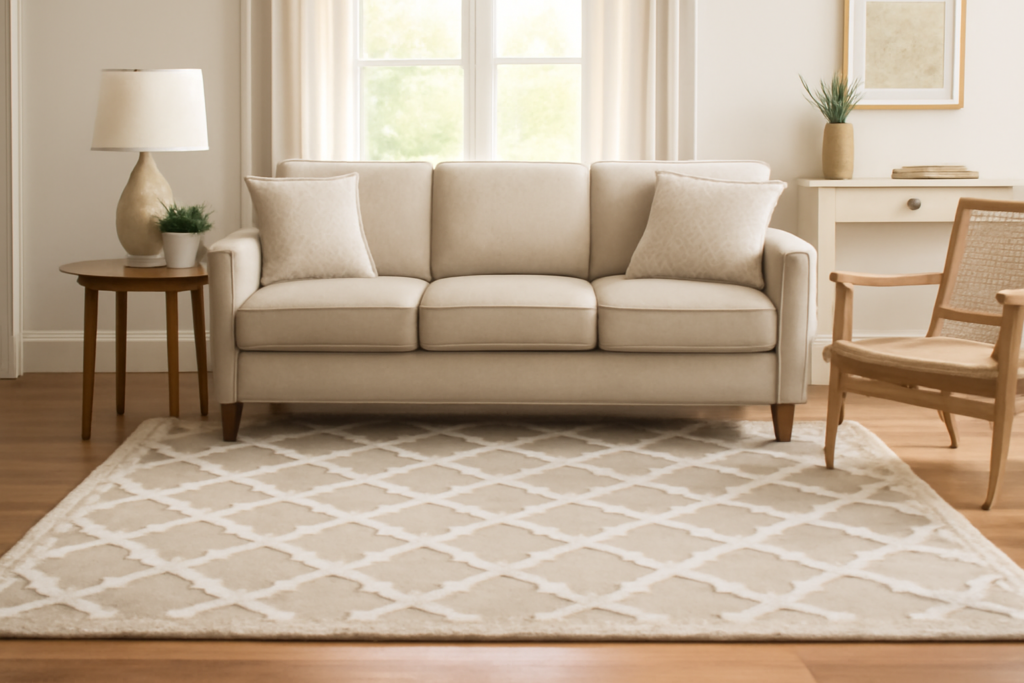
What sets a collection like Cambridge apart from many budget wool lines is the range of patterns available within a single collection. Traditional Persian-inspired medallions and border patterns are common, aimed at buyers who want a classic, formal look in a dining room or living room. At the same time, many collections in this style also offer solid-color and ombre options, which give a more contemporary, minimalist look while keeping the same plush wool construction. This range matters if you’re trying to match an existing room, since it means you’re not locked into one aesthetic just because you want the wool quality and feel.
Border treatments are also a notable design feature in traditional-style collections, often using a distinct contrast color to frame the central field, which helps the rug read as a finished, tailored piece rather than a plain expanse of pattern or color.
Durability and What to Expect Over Time
Wool is naturally durable, stain-resistant compared to many other natural fibers, and somewhat flame-resistant, all of which make it a solid choice for a rug that needs to hold up to daily household use. Hand-tufted wool rugs generally perform well in moderate to moderately high traffic areas, though they’re not typically rated for the same heavy commercial-level wear that a low-pile machine-loomed rug or an outdoor-grade synthetic would handle.
One thing every buyer of a hand-tufted wool rug should expect, regardless of brand, is initial shedding. New wool rugs shed loose fiber for the first several weeks to a few months of regular use — this is completely normal for the fiber and construction type and isn’t a sign of a defective rug. Regular vacuuming with a suction-only or adjustable-height setting during this period helps the shedding taper off. Over the following years, a well-maintained hand-tufted wool rug should hold its color and shape reasonably well, though like any tufted rug, it can be prone to the backing loosening or tufts pulling out if snagged by pet claws, sharp furniture feet, or vacuum brush rollers set too aggressively.
Sizes Typically Offered
Large rug collections in this traditional wool style are usually produced across a wide size range to fit almost any room, generally including options such as:
- Runners around 2×8 feet or 2.5×8 feet for hallways
- Small accents around 4×4 feet (square) or 4×6 feet
- Mid-size options at 5×8 feet, popular for smaller bedrooms or dens
- Living room standards at 6×9 feet and 8×10 feet
- Larger formats at 9×12 feet and 10×14 feet for great rooms and larger dining spaces
- Round versions in select patterns, often 6 feet or 8 feet in diameter
Availability of every size in every specific pattern and color can vary, since not every design within a large collection is produced in the full size run, so it’s worth checking the specific pattern you like before assuming your preferred size is in stock.
Cleaning and Spot Care for Wool
Wool rugs require a gentler cleaning approach than synthetic fibers, and that holds true for any hand-tufted wool rug regardless of brand. For routine care, vacuum weekly, ideally with a setting that doesn’t dig too aggressively into the pile, since wool fibers can be pulled loose by an overly aggressive beater bar, especially while the rug is still in its early shedding phase.
For spills, blot immediately with a clean, dry cloth to absorb as much liquid as possible before it sets. Avoid rubbing, which pushes the stain deeper into the pile and can distort the fibers. For spot cleaning, use a wool-safe cleaner or a mild solution of dish soap and cool water, testing on a hidden corner first, then blot the area dry rather than saturating it. Wool is naturally somewhat stain-resistant because the fiber’s outer layer repels liquid initially, which gives you a short window to blot before a spill fully absorbs.
Avoid steam cleaning or fully saturating a hand-tufted wool rug, since excess moisture can weaken the latex backing that holds the tufts in place, potentially causing the backing to separate or the tufts to loosen over time. For a deeper annual or biannual clean, a professional rug cleaner experienced with tufted wool construction is generally the safer route than an at-home wet extraction machine.
Price Ranges
Hand-tufted wool rugs in this style and quality tier are generally priced well below hand-knotted equivalents while still costing more than synthetic or power-loomed alternatives, reflecting the labor-intensive tufting process and the cost of genuine wool fiber. As a general guide for a well-known hand-tufted wool collection of this type:
- Small accents and runners (2×8 to 4×6 feet): roughly $60 to $180
- Mid-size rugs (5×8 feet): roughly $180 to $350
- Living room sizes (6×9 to 8×10 feet): roughly $350 to $700
- Large formats (9×12 to 10×14 feet): roughly $700 to $1,400 or more
Prices fluctuate with retailer, sale timing, and the specific pattern’s complexity, so it’s worth comparison shopping across a few authorized retailers before purchasing, particularly around major sale periods when wool rug collections are frequently discounted.