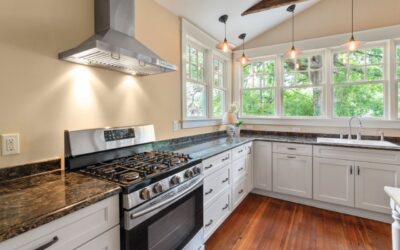
Most kitchen renovations budget carefully for the range and the counters, then treat ventilation as an afterthought, which is exactly why so many kitchens smell like last night’s dinner. A Samsung range hood pulls smoke, grease particles, steam, and combustion byproducts up and out before they settle on your cabinets and coat your walls. Samsung builds hoods across several formats, from under-cabinet units to bold wall-mount chimney styles, and matching the right one to your cooktop and duct layout matters far more than the finish you pick. This guide walks through the decisions that actually affect performance.
Part of our Kitchen Remodeling guide — explore the full guide →
Why Ventilation Deserves Real Attention
Cooking releases more than odor. Searing meat and stir-frying throw airborne grease that lands on surfaces and turns sticky. Gas burners produce moisture and combustion gases you do not want lingering. A properly sized hood captures this at the source, protects your finishes, and keeps the room comfortable. Skimp on capture and you will scrub cabinet fronts far more often and repaint sooner than you planned.
Samsung positions ventilation as part of its broader kitchen lineup, so many buyers choose a hood to match an existing Samsung range or wall oven in the same finish. That visual consistency is a legitimate reason to shop the brand, but the technical fit still comes first.
Matching CFM to Your Cooktop
CFM, or cubic feet per minute, measures how much air a hood moves. Too little and the hood cannot keep up with a hard sear; too much in a tight, airtight house can create makeup-air problems. A widely used starting rule for electric cooktops is roughly 100 CFM per linear foot of cooktop width. A 30 inch cooktop, or 2.5 feet, points you toward around 250 CFM as a baseline, with more headroom welcome for heavy cooking.
Gas ranges are rated differently. A common guideline is to divide the total BTU output of all burners by 100 to estimate the CFM you want. A gas range totaling 40,000 BTU suggests roughly 400 CFM. High-output or professional-style gas ranges push those numbers higher and can trigger local requirements for dedicated makeup air, so check the specific model’s documentation and your local code before committing.
- Light cooking, small kitchen: lower CFM is fine and quieter.
- Frequent frying or wok cooking: lean toward higher CFM with a strong boost setting.
- Island installation: size up, since an island hood has no walls to help contain rising air.
Always confirm the exact CFM rating and specifications on Samsung’s current product page for the model you are considering, since ratings vary across the lineup and change between model years.
Ducted vs Recirculating
How the hood handles captured air is the single biggest performance decision. A ducted hood vents through rigid metal ductwork to the outdoors, removing heat, moisture, grease, and odor completely. This is the gold standard whenever your layout allows a duct run. Keep runs as short and straight as possible, use smooth rigid duct rather than flexible foil, and minimize elbows, since each turn cuts effective airflow.
A recirculating setup filters the air through charcoal filters and returns it to the room. It removes some odor and grease but does nothing for heat and humidity, and the charcoal filters need periodic replacement. Many Samsung hoods can be configured either way, but choose ducted whenever an exterior wall or roof path exists. If you truly cannot duct, budget for replacement charcoal filters on a regular schedule and clean the metal grease filters often.
Choosing the Right Style and Size
Samsung offers hoods in the formats most kitchens use. Under-cabinet hoods tuck beneath upper cabinets and suit standard layouts. Wall-mount chimney hoods mount to the wall with a decorative stack covering the duct and make a design statement above a slide-in range. Some layouts call for an island or downdraft solution. Whatever the format, the hood should be at least as wide as the cooktop, and ideally 3 inches wider on each side. For a 30 inch cooktop, a 30 inch hood is the minimum and a 36 inch hood captures spatter better.
Mounting height affects capture too. As a general range, wall and under-cabinet hoods are typically installed 24 to 30 inches above an electric cooktop and often a bit higher for gas, but follow the exact mounting height in the installation manual for your specific model. Mount too high and rising smoke spreads before it reaches the filters; too low and you crowd tall pots and risk heat exposure.
Features Worth Understanding
Across the lineup you will see LED task lighting, multiple fan speeds with a high boost mode, dishwasher-safe metal grease filters, and on some models auto and connectivity features. Bright, even LED lighting genuinely improves how you cook, since a dim cooktop hides browning. Multiple speeds let you run quiet during simmering and ramp up for searing. Confirm which specific features and any smart-home compatibility apply to the model you want directly on Samsung’s product listing rather than assuming they carry across every unit, because feature sets differ by tier and model year.
Installation and When to Call a Pro
A like-for-like swap of an existing ducted under-cabinet hood is within reach for a confident DIYer, but it involves both electrical connection and ductwork. If you are running a new duct through a wall or roof, altering wiring, or dealing with a gas range that may need makeup air, hire a licensed electrician and, where applicable, an HVAC pro. They will size the duct correctly, seal penetrations against leaks, and verify the circuit is safe. Always shut off the breaker before touching any wiring and follow Samsung’s installation manual step by step, since clearances and connections are model specific.
Common Buying and Sizing Mistakes to Avoid
The mistakes people make with range hoods repeat themselves, and knowing them saves money and rework. The first is buying a hood no wider than the cooktop and expecting it to catch spatter from the front burners; the plume of steam and grease spreads as it rises, so a hood that overhangs the cooktop by a few inches on each side captures far more. The second is choosing a high-CFM unit without planning for the air it removes. In a tightly sealed modern home, pulling several hundred CFM out of the kitchen can create negative pressure that backdrafts other combustion appliances, which is why powerful hoods sometimes require a dedicated makeup-air system. If you are chasing a high number, discuss makeup air with your installer and check local code.
A third frequent error is undersizing the duct or using flexible foil duct with lots of bends. A hood is only as strong as its exhaust path, so a 6 inch rigid smooth duct running straight to the exterior will outperform a stronger blower choked by a crushed, twisty flex run. Finally, people forget noise. Airflow and sound go together, and a hood that is quiet on low but roars on high boost may annoy you if your kitchen opens to living space. Look for the sound rating, often given in sones, and pick a unit whose high setting you can tolerate. Confirm the specific duct size, CFM, and sound ratings for your chosen Samsung model on the product page, since these vary across the lineup.
Cleaning and Everyday Care
A hood only works when air can move through it. Pull the metal grease filters every few weeks and wash them, either in hot soapy water or on the top rack of the dishwasher if the manual permits. Wipe the hood exterior with a soft cloth and a mild cleaner suited to the finish; on stainless, wipe with the grain and avoid abrasive pads. If your model uses charcoal filters for recirculating mode, replace them on the schedule the manual specifies, since a saturated charcoal filter stops absorbing odor.
Beyond the metal grease filters, keep the blower housing and fan blades clean, since grease accumulates there over months and both dulls performance and creates a fire risk if it is allowed to build up heavily. Wipe reachable interior surfaces when you clean the filters, and follow the manual for any deeper cleaning it recommends. Replace the LED lights per the manual when they eventually dim or fail, using the specified type. A hood that is cleaned on a regular rhythm moves air the way it did when new, whereas a neglected one with clogged filters and greasy blades quietly loses much of its capture over time even though the fan still runs.
Done right, a well-sized and well-vented Samsung range hood keeps your kitchen air clean, protects your finishes, and makes cooking more pleasant. Match the CFM to your cooktop, duct to the outside when you can, mount it at the height the manual calls for, and keep the filters clean, and the hood will quietly earn its keep for years.