Dogs, kids, dining chairs, and grit tracked in from the driveway all wage a quiet war on your floors. If you want scratch resistant wood flooring that shrugs off daily abuse instead of showing every claw mark, the answer comes down to three things working together: the hardness of the wood species, the toughness of the factory finish, and the way light hits the surface texture. Get all three right and you can have real wood underfoot that still looks good after a decade of traffic. Here is what actually holds up.
- Why Wood Scratches in the First Place
- The Hardest Wood Species for Scratch Resistance
- Factory Finishes That Make the Real Difference
- Engineered Wood Often Wins for Durability
- Texture and Color Hide What Finishes Cannot Stop
- What to Avoid If Scratches Worry You
- Simple Habits That Extend the Finish
- How Scratch Resistant Wood Compares to Other Floors
- Repairing Scratches When They Do Happen
- Choosing the Right Floor for Your Home
Why Wood Scratches in the First Place
Every scratch you see is really damage to the finish, not always the wood beneath it. The clear topcoat takes the hit first, and only deeper gouges reach the timber. That means finish quality matters as much as the species you choose.
Hardness gets measured on the Janka scale, which records the force needed to press a steel ball halfway into a board. Red oak, the American benchmark, sits at 1,290 pounds-force. Anything meaningfully above that resists dents better, and dents are what let surface scratches turn into visible pits. Species below oak, like walnut at 1,010 or pine near 870, dent and mark far more easily.
The Hardest Wood Species for Scratch Resistance
If raw density is your priority, a handful of species stand out. Keep in mind that harder woods can be less forgiving on installation and a little louder underfoot.
- Brazilian walnut (Ipe) — around 3,680 Janka, one of the toughest woods sold as flooring
- Brazilian cherry (Jatoba) — roughly 2,350 Janka, rich color and legendary durability
- Hickory — about 1,820 Janka, the hardest common domestic species, great for busy households
- Hard maple — near 1,450 Janka, tight grain that hides fine marks well
- White oak — 1,360 Janka, slightly harder than red oak and very water tolerant
Hickory deserves special mention for family homes. Its high hardness plus a naturally busy grain pattern means small scratches simply disappear into the visual noise of the wood.
Factory Finishes That Make the Real Difference
A moderately hard wood with an elite finish often outperforms a super-hard wood coated on site. Prefinished planks are cured in the factory under conditions you cannot match in a home.
Aluminum oxide is the workhorse of scratch resistance. Suspended in the urethane topcoat, these ceramic particles create a surface so hard that many manufacturers back it with 25- to 50-year finish warranties. Look for coatings that advertise multiple layers, sometimes seven to nine passes of UV-cured urethane. Ceramic-infused and nano-titanium finishes push durability even further on premium engineered lines.
- Aluminum oxide urethane — best all-around scratch defense on prefinished floors
- UV-cured acrylic with ceramic beads — common on high-traffic commercial-grade planks
- Oil finishes — beautiful and easy to spot-repair, but softer and better for lower-traffic rooms
Engineered Wood Often Wins for Durability
Do not overlook engineered flooring in the search for a tough surface. The wear layer is what scratches, and a quality engineered plank carries the same aluminum-oxide finish as solid wood over a dimensionally stable plywood or HDF core.
Engineered boards with a 3- to 6-millimeter veneer of hickory or white oak give you a hard species, a factory finish, and better resistance to the humidity swings that cause gaps and cupping. Expect to pay $4 to $9 per square foot for a durable engineered floor, versus $6 to $14 for comparable solid hardwood. For basements and slab-on-grade homes, engineered is often the only smart wood choice.
Texture and Color Hide What Finishes Cannot Stop
No floor is truly scratch-proof, so choosing a look that camouflages wear is a practical strategy. Two boards with identical hardness can show damage very differently.
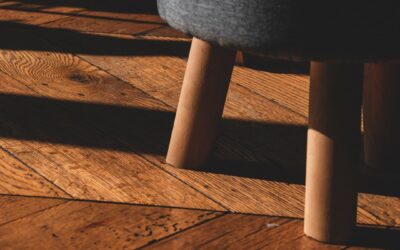
Wire-brushed and hand-scraped textures break up light and bury minor scratches in the intentional grain. A distressed hickory floor can take a beating for years before anyone notices. Color helps too: medium browns and gray-toned finishes hide scratches better than very dark espresso or high-gloss surfaces, which reveal every scuff and every speck of dust. Matte and satin sheens, rated around 10 to 25 on the gloss scale, are far more forgiving than semi-gloss.
What to Avoid If Scratches Worry You
Some popular choices simply are not built for abuse. Soft species and shiny finishes look great in the showroom and rough within a year in a real home.
- Solid American walnut, pine, or cherry in high-traffic entryways and kitchens
- High-gloss finishes that broadcast every hairline scratch under raking light
- Very dark stains in homes with pets, since scratches expose the pale wood underneath
- Cheap engineered planks with wear layers thinner than 2 millimeters that cannot be refinished
Simple Habits That Extend the Finish
Even the toughest floor lasts longer with a little care. Grit is the real enemy, acting like sandpaper under every footstep.
Place walk-off mats at every exterior door to trap sand and salt. Stick felt pads under all furniture legs and replace them twice a year. Sweep or dry-vacuum a few times a week, keep pet nails trimmed, and lift heavy furniture rather than dragging it. Do these things and a hickory or aluminum-oxide engineered floor will stay handsome long after cheaper flooring would have been replaced.
How Scratch Resistant Wood Compares to Other Floors
It helps to know where tough wood lands against the alternatives homeowners often weigh. Wood is not the single most scratch-proof flooring on the market, but it offers a balance others cannot match.
Luxury vinyl plank and laminate can post higher surface scratch resistance thanks to their aluminum-oxide wear layers and photographic print films, and they cost less, often $2 to $5 per square foot. What they cannot do is be sanded and refinished when the wear layer finally fails, and they will never carry the resale value or authentic feel of real wood. Porcelain tile beats everything for hardness but is cold, hard, and unforgiving to dropped dishes. A hard hickory or white oak floor with an aluminum-oxide finish splits the difference: genuine wood that resists daily scratching and can be restored decades later rather than replaced.
Repairing Scratches When They Do Happen
No floor stays flawless forever, so knowing how to fix marks keeps your investment looking sharp. Most scratches are shallow and repair easily at home.
- Light surface scuffs — buff out with a soft cloth and a hardwood floor cleaner, or a walnut rubbed along the scratch to fill it with natural oils
- Medium scratches in the finish — use a color-matched wax filler stick or a blend pen, about $8 to $15, working it into the groove and wiping the excess
- Deep gouges reaching the wood — fill with matching wood putty, let it cure, then dab on a compatible finish; on oil-finished floors, spot-sand and reoil the board
- Widespread wear — a screen-and-recoat every 7 to 10 years refreshes the topcoat without a full sanding, provided the wear layer allows it
The ability to spot-repair is exactly why many homeowners still choose wood over vinyl. A scratched plank can be made nearly invisible in ten minutes; a scratched vinyl wear layer is permanent.
Choosing the Right Floor for Your Home
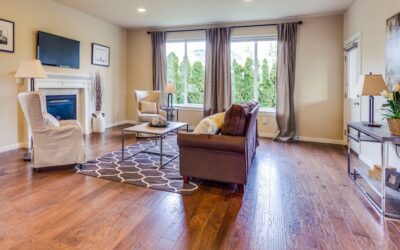
For the toughest possible surface, pair a hard species with a factory aluminum-oxide finish and a textured, mid-tone look. Hickory or white oak engineered planks check every box for a busy household with pets and kids. If budget is tight, a wire-brushed white oak with a matte urethane finish still delivers excellent real-world durability. The best scratch resistant wood flooring is not about one magic product; it is about stacking hardness, finish, and texture so the floor forgives the life you actually live on it.
Prefer to explore on your own?
See how new flooring looks in your actual room in seconds — free, no signup.
Try the free Floor Studio →