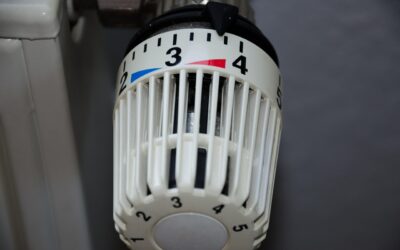
Most American households waste 8 to 15 percent of their annual heating budget by setting the thermostat 2 to 4 degrees higher than necessary, and many do it without ever realizing the small adjustments would barely change comfort. Learning how to set thermostat in winter the right way can save $180 to $450 per heating season for a typical 2,200 sq ft home in the northern US, with no measurable comfort sacrifice. This guide walks through the ideal temperatures for daytime, sleeping, and away periods, the actual savings math, and the smart-thermostat features that pay for themselves in one winter.
The Ideal Daytime Temperature
The Department of Energy recommends 68 degrees Fahrenheit during winter daytime hours when the home is occupied and people are awake. This number balances reasonable comfort against meaningful energy savings versus higher setpoints. ENERGY STAR research confirms that each degree above 68F adds approximately 3 percent to heating costs.
For households accustomed to 72 or 74 degrees, dropping to 68 takes about 1 to 2 weeks of acclimation. Wearing layers, using throws on couches, and keeping socks on indoors makes the adjustment manageable. By mid-winter, most households stop noticing the difference.
Sleeping Temperatures
Bedrooms benefit from cooler temperatures than living spaces. The National Sleep Foundation recommends 60 to 67 degrees for optimal sleep, with 65 degrees identified as the most commonly preferred setpoint. Cooler bedrooms support natural circadian rhythms and reduce nighttime wakings.
Programming a thermostat to drop to 62 to 65 degrees between 11 pm and 6 am saves 5 to 10 percent on heating costs compared to maintaining 68 degrees overnight. Quality bedding and a wool or down comforter compensate fully for the cooler air temperature.
Away Temperatures
When the house is unoccupied for 8 hours or more, dropping the thermostat to 55 to 60 degrees produces significant savings. The DOE estimates 10 to 15 percent annual heating savings from a consistent 10-degree daytime setback while at work.
The old myth that turning down the heat costs more in reheating than it saves has been thoroughly debunked. Heat loss is proportional to the difference between indoor and outdoor temperature. A cooler home loses heat more slowly while you are away, and warming back up uses less energy than maintaining the higher temperature the entire time.
How Setback Savings Work
The math is straightforward. For every 1 degree of setback maintained for 8 hours, expect roughly 1 percent of daily heating cost savings. A 10-degree setback for 8 hours at work plus a 5-degree setback overnight produces compound savings of 12 to 18 percent on monthly heating bills.
In a household spending $250 per month on winter heating, that translates to $30 to $45 monthly savings, or roughly $150 to $225 per heating season. The math improves further in older homes with poor insulation because the absolute heat loss is larger.
Smart Thermostat Programming
Modern smart thermostats from Nest, Ecobee, and Honeywell handle setback scheduling automatically once configured. The basic four-period weekday schedule covers wake (5:30 am to 7 am: 68F), away (7 am to 5 pm: 60F), evening (5 pm to 11 pm: 68F), and sleep (11 pm to 5:30 am: 64F).
Weekend schedules typically need different programming because occupancy patterns differ. Many smart thermostats use motion sensors and phone location to auto-detect occupancy, eliminating manual schedule management. This feature alone justifies upgrading from older programmable thermostats.
Humidity Matters as Much as Temperature
Winter air feels colder when humidity drops below 30 percent because dry air pulls moisture from skin faster. A 68-degree room at 45 percent humidity feels warmer than a 70-degree room at 20 percent humidity. Adding a whole-house humidifier or running portable units in main living areas often lets you set the thermostat 2 to 3 degrees lower without comfort loss.
Target 35 to 45 percent relative humidity in winter. Higher humidity can cause condensation on windows in older homes with single-pane glass. Lower humidity dries out skin, hardwood floors, and wood furniture.
Common Programming Mistakes
Several mistakes neutralize the benefits of programmable thermostats. Setting the away temperature too close to the home temperature (only 2 to 3 degrees lower) eliminates most savings. Programming the warm-up to start too early defeats the setback. Manually overriding the schedule frequently retrains adaptive thermostats away from the energy-saving pattern.
Another common issue is treating the thermostat as a faucet, cranking it to 80 degrees to warm up faster. Heating systems run at a single output rate regardless of setpoint. A higher target temperature just runs the system longer, not harder.
Heat Pump Considerations
Heat pumps behave differently than furnaces and require different thermostat strategies. Large setbacks (over 6 degrees) can trigger inefficient auxiliary electric resistance heating during warm-up, eliminating savings. Modern variable-speed heat pumps tolerate setbacks better, but many manufacturers recommend smaller 3 to 5-degree setbacks rather than aggressive 10-degree programs.
If you have a heat pump, choose a thermostat designed for heat pump use (look for “heat pump compatible”) and follow the manufacturer’s recommended setback range. Mini-split systems often work best when left at a steady setpoint with minor adjustments.
When Comfort Matters More
Some households legitimately need warmer temperatures. Infants, elderly residents, and people with circulatory conditions may need 70 to 72 degrees for health reasons. Home offices with hours of sedentary work benefit from slightly warmer settings.
The savings math still favors zone control. Adding smart room sensors (Ecobee) or running mini-split heads in occupied rooms keeps the rest of the house cooler without comfort loss in the spaces that need warmth. This approach delivers most setback savings while accommodating individual needs.