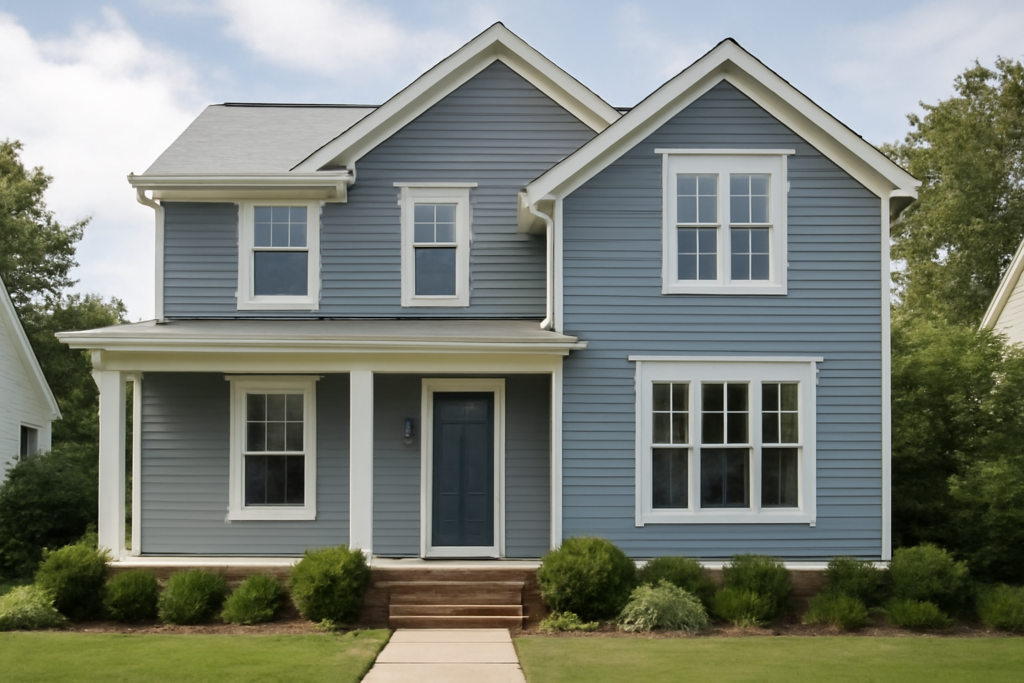
Blue-gray hits a sweet spot no other exterior color quite matches — it reads as a sophisticated neutral from the curb, yet up close it reveals a cool, calming blue that gives a home real character. The Sherwin Williams exterior paint colors blue gray range is deep, and that’s exactly the problem: with dozens of contenders that all look similar on a two-inch chip, picking the right one for your siding, roof, and light is genuinely hard. This guide narrows it to the shades that actually perform outdoors, with the LRV numbers and trim pairings that separate a great result from a muddy one.
- Why Blue-Gray Works So Well Outside
- The Top Blue-Gray Shades to Consider
- Understanding LRV Before You Commit
- Trim and Accent Pairings
- Matching Blue-Gray to Your Roof
- Testing Blue-Gray the Right Way
- Finish Recommendations
- Light vs. Deep Blue-Gray: Which Suits Your Home?
- Blue-Gray on Different Home Styles
- Maintaining a Blue-Gray Exterior
- The Bottom Line
Why Blue-Gray Works So Well Outside
Blue-gray flatters more architecture than almost any other exterior color. It complements the gray and black roofs that dominate American homes, plays beautifully against white or cream trim, and looks equally at home on a coastal cottage, a colonial, or a modern farmhouse. Because it’s a cool color, it recedes slightly, making a house feel calm and settled rather than loud.
The key is undertone. Some Sherwin-Williams blue-grays lean genuinely blue, others tip toward green, and a few are so gray the blue only whispers in shade. Matching that undertone to your fixed elements — roof, stone, landscaping — is the whole game.
The Top Blue-Gray Shades to Consider
These are the Sherwin-Williams blue-grays that consistently deliver outdoors:
- Rocky River (SW 6215): a deep, saturated blue-gray with real presence, LRV around 12. Dramatic on a whole house with crisp white trim.
- Denim (SW 6523): a true, rich blue-gray that leans blue; bold but classic, LRV near 12.
- Slate Tile (SW 7624): a mid-tone, dusty blue-gray that’s endlessly versatile, LRV around 24.
- Foggy Day (SW 6235): a soft, light blue-gray for a breezier coastal look, LRV about 45.
- Krypton (SW 6247): a pale, barely-there blue-gray that behaves almost like a cool neutral, LRV near 55.
- Storm Cloud (SW 6249): a moody mid-to-deep blue-gray for a modern, brooding facade, LRV around 18.
Understanding LRV Before You Commit
Light Reflectance Value, or LRV, is the single most useful number when choosing exterior paint, and most homeowners ignore it. It runs from 0 (pure black) to 100 (pure white) and tells you how much light a color bounces back. Outdoors, this matters more than indoors because sunlight is so intense.
A deep blue-gray like Rocky River (LRV 12) will read much lighter in full sun than its chip suggests, but it still absorbs heat, which matters on vinyl siding. A lighter shade like Foggy Day (LRV 45) stays truer to the chip and reflects more heat. As a rule, pick a darker LRV if your house sits in heavy shade and a lighter one if it bakes in all-day sun, then adjust for the mood you want.
Trim and Accent Pairings
Blue-gray needs the right supporting cast. For trim, crisp whites make the blue pop and keep the look clean:
- Pure White (SW 7005): a soft, slightly warm white that keeps deep blue-grays from feeling cold
- Extra White (SW 7006): a cooler, brighter white for maximum contrast against darker shades
- Alabaster (SW 7008): a warm, creamy white that softens the whole palette
For the front door, blue-gray loves a bold accent. A black door (Tricorn Black, SW 6258) reads modern and sharp; a natural stained wood door adds warmth; and a deep, contrasting color like a warm mustard or rust pushes the look toward eclectic charm. Black hardware and light fixtures tie a blue-gray palette together almost automatically.
Matching Blue-Gray to Your Roof
Your roof is fixed, so let it steer you. A gray or black roof is the easiest partner — nearly any Sherwin-Williams blue-gray works. A brown or weathered-wood roof is trickier; you’ll want a blue-gray with enough warmth or gray in it to avoid clashing, so a muted option like Slate Tile beats a pure blue like Denim. A green-tinged roof pairs best with the more gray-dominant blues. Always hold your samples against the roof shingles, not just the siding, before deciding.
Testing Blue-Gray the Right Way
Blue-gray is notorious for shifting between the chip and the wall. In shade it deepens and the blue intensifies; in direct sun it can wash out toward gray or even take on a faint lavender or green cast depending on the undertone. That variability makes large-scale testing non-negotiable.
Buy sample quarts and paint 4-by-4-foot patches on at least two walls — one sunny, one shaded. Live with them for a couple of days and check them at 9 a.m., midday, and dusk. Pay special attention to how the color looks under an overcast sky, since that’s when blue-grays reveal their truest character. A shade that looks perfect at noon can turn cold and flat under clouds.
Finish Recommendations
For the main body, a flat or satin exterior finish suits blue-gray best — flat hides siding imperfections and gives the color a rich, matte depth, while satin adds subtle sheen and washes clean more easily. Reserve semi-gloss for trim, doors, and shutters, where it highlights detail and sheds dirt. Invest in a premium exterior acrylic like Sherwin-Williams Duration or Emerald; these hold their color against UV fading far longer than budget lines, and with a color as nuanced as blue-gray, fade resistance keeps that carefully chosen undertone from graying out in a few short years.
Light vs. Deep Blue-Gray: Which Suits Your Home?
One of the biggest decisions within the blue-gray family is how dark to go, and it changes the whole feel of the house. A deep blue-gray like Rocky River or Storm Cloud makes a bold, modern statement and reads as high-end and dramatic, especially with bright white trim. It hides dirt well and gives a home real presence, but it absorbs heat and can feel heavy on a large facade or in a hot climate.
A light blue-gray like Foggy Day or Krypton keeps things breezy and traditional, reflects heat, and makes a smaller home feel larger and more open. The trade-off is that pale shades show dirt sooner and can wash out to near-white in strong sun. A middle-tone like Slate Tile splits the difference and is the safest choice for most homes and most climates. Match the depth to your home’s size, your climate, and how much drama you want at the curb.
Blue-Gray on Different Home Styles
Blue-gray adapts to more architectural styles than almost any other color:
- Modern farmhouse: a deep blue-gray body with crisp white trim and black windows is a signature look
- Coastal/cottage: a soft, light blue-gray like Foggy Day channels a relaxed seaside feel
- Colonial/traditional: a mid-tone blue-gray with white trim and black shutters reads timeless
- Craftsman: a grayed blue-green like Pewter-adjacent tones complements the natural materials
- Contemporary: a dark, moody blue-gray like Storm Cloud with minimal trim looks sleek and current
Maintaining a Blue-Gray Exterior
A carefully chosen blue-gray is worth protecting. Because the color’s nuance depends on its undertone staying true, UV fade is the main enemy — a cheap paint can gray out and lose its blue within a few years, leaving a flat, muddy result. That’s why premium fade-resistant lines like Sherwin-Williams Duration or Emerald are worth the upcharge here. Beyond paint quality, rinse the siding once or twice a year with a garden hose to clear pollen, dust, and mildew that dull the color, paying attention to north-facing walls where mildew grows in the shade. Touch up any chips promptly so moisture doesn’t creep behind the film. With good paint and light upkeep, a blue-gray exterior holds its sophisticated character for a full 10 to 15 years.
The Bottom Line
The best Sherwin Williams exterior paint colors blue gray range from the dramatic depth of Rocky River and Denim to the airy softness of Foggy Day and Krypton, with versatile mid-tones like Slate Tile in between. The right pick depends on your roof, your light, and how much drama you want. Use LRV to gauge how a shade behaves in your specific sun exposure, pair it with a crisp white trim and a bold door, and always test large samples across a full day before you commit. Nail those steps and blue-gray rewards you with a facade that looks refined, timeless, and quietly distinctive.