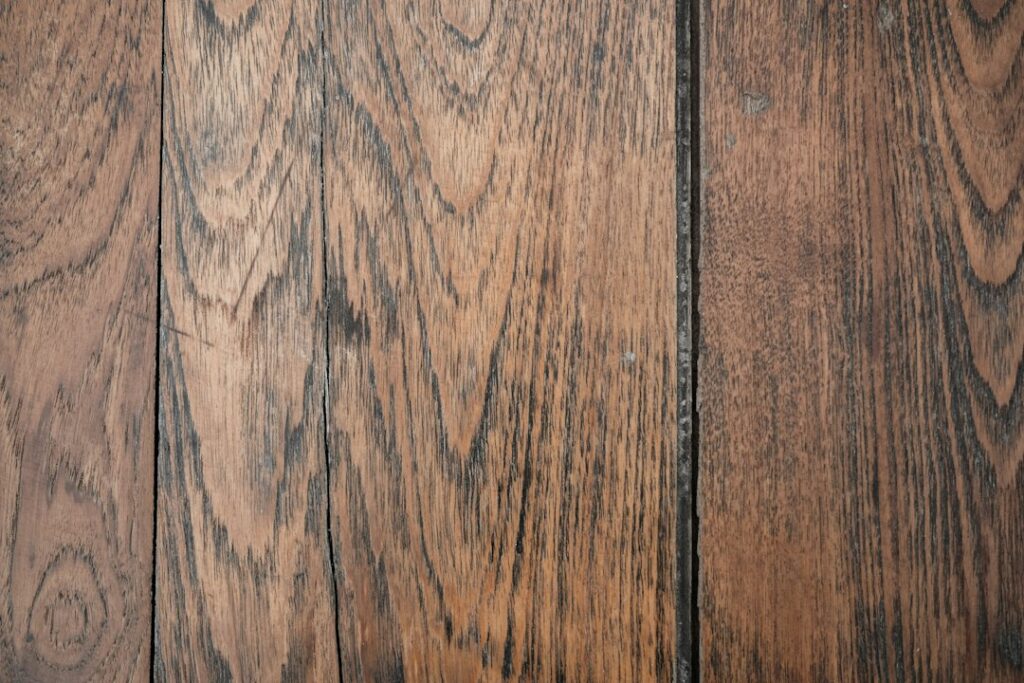
The same color name can mean three different products at a Sherwin Williams stain counter. Cedar, for example, appears with different color numbers in a solid siding stain, a semi-transparent deck stain and a log home stain, and each looks different on wood. Picking a stain is really two decisions: the product and opacity first, then the color within that product.
Indoors, the company’s site lists a 48-color tintable interior wood stain range for furniture, trim, cabinets and floors. Outdoors, it splits stains into its house stain line for siding and its deck line for decks and docks, in opacities that run from transparent to solid. Knowing which family you need narrows hundreds of chips down to a handful.
- Sherwin Williams Stain Options by Opacity
- Interior Stain Colors
- Popular Exterior Stain Colors
- How to Choose a Stain Step by Step
- Prep and Application Tips
- Matching Stain to Flooring and Trim
- Maintenance and Recoat Intervals
- Troubleshooting Stain Problems
- Cost and When to Call a Pro
- Frequently Asked Questions
Sherwin Williams Stain Options by Opacity
The color counts and product names here come from the manufacturer’s stain color and deck pages. Counts change as colors are added or retired, so treat them as a snapshot.
| Opacity | Product line | Colors listed | What it does |
|---|---|---|---|
| Interior tintable | Tintable interior wood stain | 48 | Penetrating color for furniture, trim, cabinets and floors |
| Transparent | SuperDeck transparent deck stain | A few wood tones | Lightest tint; grain fully visible |
| Semi-transparent | SuperDeck semi-transparent deck stain | 102 | Visible grain with richer color |
| Semi-transparent | WoodScapes polyurethane house stain | 24 | Siding stain that shows grain |
| Semi-solid | SuperDeck waterborne semi-solid | 36 | Mostly covers color variation, hints of texture |
| Solid | SuperDeck waterborne solid deck stain | 71 | Paint-like coverage that hides grain |
| Solid | WoodScapes acrylic solid house stain | 48 | Opaque color for siding and fences |
Transparent stains protect the least from UV light but look the most natural. Solid stains block the most UV and hide flaws, but they behave more like paint and can peel on horizontal deck boards if applied too thick. Semi-transparent and semi-solid are the usual middle ground for decks.
Interior Stain Colors
The interior stain colors on the company’s site are its Minwax Performance Series tintable wood stain range (the company owns that wood-finish brand), offered in a standard and a 250 VOC version with the same 48 colors. The palette runs from classic wood tones to modern grays and even saturated colors.
- Classic wood tones: Golden Oak, Provincial, Early American, Special Walnut, Dark Walnut, Red Mahogany and Espresso.
- Chestnut shades: Red Chestnut (MW 232) and English Chestnut (MW 233), warm red-browns popular on cabinets and furniture.
- Ebony: listed as Ebony Color (MW 2718), a near-black stain for floors, tables and contemporary trim.
- Grays and weathered looks: Classic Gray, Grey Elm, Smokewood, Carbon and Whitewash.
- Color stains: Navy, Evergreen and Mulberry for painted-look furniture where grain still shows.
Wood species changes everything. The same stain looks lighter and more even on maple, darker and more contrasting on oak, and blotchy on pine and birch unless you use a pre-stain conditioner. Always test on a scrap of the actual wood, sanded to the same grit as the project.
Popular Exterior Stain Colors
On the exterior side, a handful of colors come up again and again. Several exist in more than one product, each with its own code.
| Color | Code and product | Look |
|---|---|---|
| Riverwood | SW 3507 semi-transparent; SW 3507SS semi-solid | Weathered gray-brown |
| Charwood | SW 3542 semi-transparent; SW 3542SS semi-solid | Deep brown-gray, near charcoal |
| Cedar | SW 3034 solid; SW 3561 semi-transparent | Warm orange-brown wood tone |
| Chestnut | SW 3524 and DB 2316 semi-transparent; SW 3524SS semi-solid | Rich medium brown |
| Redwood | SW 3501 semi-transparent | Classic red-brown |
| Banyan Brown | SW 3522 semi-transparent | Dark chocolate brown |
| Tavern Oak and English Walnut | SW 3573 and SW 3574 semi-transparent | Medium and dark wood browns |
Note that Ebony is an interior stain color. It does not appear in the exterior stain listings, so for a near-black deck or fence look, browse the deep solid colors instead.
Transparent stain colors
The transparent line is the smallest. It comes in a few natural wood tones, typically along the lines of a clear natural, a cedar tone and redwood shades. These add warmth and UV protection while letting the grain show fully, but they need recoating more often than heavier stains.
How to Choose a Stain Step by Step
- Identify the surface. Interior wood, vertical siding and horizontal decking each need different products.
- Assess wood condition. New, smooth wood suits transparent or semi-transparent. Weathered, patched or mismatched boards look better under semi-solid or solid stain.
- Pick opacity. More grain means more maintenance; more pigment means more UV protection and longer intervals between coats.
- Narrow colors within that product. The same name can look different from line to line, so choose from the chart for the product you will actually buy.
- Test on your wood. Apply to a hidden board or scrap and let it dry fully before judging.
- Check compatibility. If the wood already has a stain, ask whether the new product can go over it or whether stripping is needed.
Prep and Application Tips
Stain fails most often because of poor prep, not the wrong color. Exterior wood should be clean, dry and free of mill glaze, mildew and failing old coatings. Use a deck cleaner or brightener, rinse well, and let the wood dry for at least 48 hours before staining.
- Tools: a stain applicator pad on a pole speeds up deck boards; a brush works stain into end grain and gaps.
- Weather: stain in the shade, with mild temperatures and no rain expected for at least 24 hours.
- Technique: work two or three boards at a time along their full length to avoid lap marks.
- Thickness: apply only what the wood absorbs. Excess stain sitting on the surface can peel or stay tacky.
- Interior: wipe off excess within the time on the label, then topcoat with a clear finish for durability.
Read the label for safety. Use good ventilation, wear gloves and eye protection, and lay oil-soaked rags flat to dry outdoors or store them in a sealed, water-filled metal container, because they can self-heat and ignite.
Matching Stain to Flooring and Trim
Indoors, stain choices rarely stand alone. Trim, stair treads, cabinets and furniture all sit next to the floor, and the floor is usually the hardest surface to change. Match or deliberately contrast with it. A close match, such as a warm walnut tone on trim next to a walnut-toned floor, looks unified. A clear contrast, such as a dark espresso stair rail against a light oak floor, looks intentional. Shades that are only slightly different tend to look like a mistake.
If you are refinishing an existing hardwood floor, test several stains on a sanded area inside a closet or under where furniture will sit. Many people find that a lighter stain than they expected looks best once it covers the whole room, because color intensifies across a large surface. Gray and whitewash stains react strongly to oak tannins, so testing is especially important with those.
Outdoors, coordinate deck stain with siding and trim. A gray-brown deck stain suits gray, white and blue houses; warm cedar and redwood tones suit beige, cream and brick homes. Fences can match the deck or step one shade darker to frame the yard.
Maintenance and Recoat Intervals
How often you restain depends on opacity, sun exposure and foot traffic. Transparent deck stains often need attention every year in full sun. Semi-transparent stains typically last 2 to 3 years on decks and longer on vertical siding, where water runs off instead of sitting. Solid stains can last several years on siding but tend to wear faster on deck walking surfaces.
Wash decks once or twice a year to remove dirt and mildew, and look for the first signs of wear on stair treads and the most-used paths. Recoating before the old finish fully fails is easier and cheaper than stripping back to bare wood.
Troubleshooting Stain Problems
Blotchy color indoors. Soft woods absorb unevenly. Use a pre-stain conditioner or a gel stain, and sand evenly.
Peeling deck stain. Usually too much product or a solid stain on worn horizontal boards. Strip, clean and switch to a penetrating semi-transparent.
Color looks too orange. Cedar and redwood tones can read bright on new lumber. A semi-transparent brown or gray-brown, such as Riverwood, tones it down.
Gray, faded deck after a year. Transparent stains wear fast in full sun. Recoat yearly or step up to a heavier opacity.
Cost and When to Call a Pro
Stain generally runs about $35 to $80 per gallon depending on product and opacity, with one gallon covering roughly 150 to 300 square feet on rough or porous wood and more on smooth surfaces. Professional deck staining usually costs $2 to $5 per square foot including cleaning, and siding staining often costs more because of ladders and trim.
Hire a pro for two-story siding, large decks with heavy stripping, or interior floors that need full sanding. If the home was built before 1978, test old coatings for lead before sanding or stripping.
Frequently Asked Questions
What is the most popular Sherwin Williams stain color for decks?
Riverwood, Charwood, Cedar and Redwood are long-running deck colors in the semi-transparent chart. Riverwood is a common pick for a weathered gray-brown look.
Does Sherwin Williams sell transparent stain colors?
Yes. Its deck line includes a transparent wood stain in a small set of natural wood tones, such as natural, cedar tone and redwood shades.
Is Sherwin Williams Ebony stain available for exteriors?
Ebony is listed as an interior stain color. For a near-black exterior look, choose a deep solid deck or siding stain instead.
Why does Cedar have different color numbers?
Cedar exists in several products, such as a solid house stain and a semi-transparent deck stain. Each version has its own code because the pigment and opacity differ.
What is Sherwin Williams Chestnut stain?
Chestnut appears as an exterior stain in the house and deck lines, while the interior range offers Red Chestnut and English Chestnut. All are warm medium browns, so test on your wood.