Choosing the right shop flooring depends heavily on what kind of shop you are outfitting. A woodworking workshop has very different demands than a clothing boutique or an auto repair garage. This guide covers the best flooring options for both workshop/garage environments and retail store applications, with a focus on durability, safety, maintenance, and cost.
Workshop and Garage Flooring
Workshops, garages, and industrial shops need floors that can handle heavy loads, resist chemicals and impacts, and still be reasonably easy to clean. Here are the top options.
Epoxy Flooring
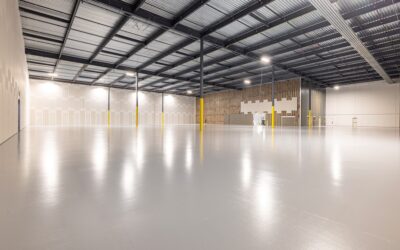
Epoxy flooring is the gold standard for workshop and garage floors. A multi-layer epoxy coating bonds directly to concrete, creating a seamless, chemical-resistant surface that transforms a bare slab into a professional-grade work environment.
Pros: Extremely durable, chemical and stain resistant, seamless surface is easy to clean, available in multiple colors and finishes (including decorative flake and metallic), hides concrete imperfections, and can include non-slip additives for wet environments.
Cons: Requires thorough surface preparation (grinding or acid etching), 2 to 5-day cure time before use, can be slippery when wet without non-slip additive, and professional application costs more than DIY alternatives.
Cost: DIY epoxy kits run $2 to $5 per square foot for materials. Professional application costs $5 to $12 per square foot including surface preparation.
Best for: Auto shops, woodworking shops, general workshops, and any space where chemical resistance and a seamless surface are priorities.
Polished Concrete
If your shop already has a concrete slab in decent condition, polishing it is one of the most cost-effective and durable flooring solutions. The process uses progressively finer diamond grinding to create a smooth, reflective surface. A chemical densifier is applied to harden the surface and reduce dusting.
Pros: Extremely durable and long-lasting, low maintenance, no coatings to peel or wear off, good light reflectivity improves shop visibility, and very affordable if the existing slab is in good shape.
Cons: Hard and unforgiving on feet and joints during long standing sessions, cold in winter without radiant heat, and slippery when wet unless a non-slip treatment is applied. Existing concrete must be in reasonable condition; heavily cracked or damaged slabs may need significant repair first.
Cost: $3 to $8 per square foot for professional grinding and polishing. Less if minimal surface repair is needed.
Best for: Clean workshops, showrooms, and retail spaces where a modern industrial aesthetic is desired.
Interlocking Garage Tiles
Modular interlocking tiles made from PVC or polypropylene snap together to create a floating floor over existing concrete. No adhesive or surface preparation is needed beyond basic cleaning.
Pros: Extremely easy to install (snap together by hand), no surface prep, available in multiple colors and patterns, individual damaged tiles can be replaced, some cushion underfoot, and the floor can be disassembled and moved if you change shops.
Cons: Seams between tiles can collect dust and liquids, not as chemically resistant as epoxy, can shift under heavy rolling loads if not properly secured at edges, and the grid pattern aesthetic is not for everyone.
Cost: $3 to $8 per square foot depending on material quality and brand. Premium brands like RaceDeck and Swisstrax are at the higher end.
Best for: Garage workshops, home gyms, and show car garages where easy installation and visual appeal are important.
Rubber Flooring Rolls and Tiles
Rubber flooring provides excellent cushioning, noise dampening, and impact resistance. Commercial rubber rolls or interlocking rubber tiles are popular in workshops where standing comfort and dropped-tool protection matter.
Pros: Outstanding fatigue relief for long standing sessions, absorbs impacts from dropped tools, excellent noise reduction, slip-resistant surface, and easy to install (rolls lay flat, tiles interlock).
Cons: Not as chemically resistant as epoxy (solvents and some oils can damage rubber), heavier to handle during installation, and dark color options dominate (not ideal if you want a bright, reflective shop floor).
Cost: $2 to $6 per square foot for commercial-grade rubber rolls or tiles.
Best for: Woodworking shops, home gyms in shops, and any workshop where comfort during long hours of standing is a priority.
Concrete Sealer (Basic Protection)
If your budget is tight, a penetrating concrete sealer is the minimum investment you should make on a bare concrete shop floor. Sealers prevent dusting, reduce staining, and make the floor easier to sweep and mop. They do not change the appearance significantly and are the most affordable option.
Cost: $0.50 to $2.00 per square foot for materials, DIY-friendly application.
Best for: Budget-conscious shop owners who want basic protection without a major flooring investment.
Retail Store Flooring
Retail shops need flooring that balances durability with visual appeal. The floor sets the tone for the customer experience and must withstand foot traffic, shopping carts, and frequent cleaning.
Luxury Vinyl Tile and Plank (LVT/LVP)
Commercial-grade vinyl flooring is the fastest-growing category in retail flooring. LVT and LVP offer realistic wood and stone visuals, excellent durability, waterproof performance, and straightforward maintenance.
Pros: Wide design range (wood, stone, concrete, abstract), comfortable underfoot, quiet, waterproof, easy to clean, and relatively affordable. Commercial-grade products with 20 to 28-mil wear layers handle heavy foot traffic effectively.
Cons: Not suitable for rough environments like auto shops, can dent under very heavy point loads, and lower-end products may look artificial.
Cost: $3 to $7 per square foot for commercial-grade products. Installation adds $2 to $4 per square foot.
Best for: Clothing stores, restaurants, cafes, salons, medical offices, and any retail environment where aesthetics matter.
VCT (Vinyl Composition Tile)
VCT has been the standard commercial flooring for decades. These 12×12-inch tiles are adhered to the subfloor and finished with multiple coats of floor wax to create a shiny, durable surface.
Pros: Very affordable material cost, widely available, proven track record in commercial spaces, and damaged tiles are easy to replace.
Cons: Requires regular stripping and recoating (every 6 to 12 months) to maintain appearance, high lifetime maintenance cost, limited design options compared to modern LVT, and the waxed surface can be slippery.
Cost: $1 to $3 per square foot for materials. $1 to $2 per square foot for installation. Ongoing maintenance costs of $0.50 to $1.50 per square foot annually for stripping and recoating.
Best for: Budget retail spaces, grocery stores, and commercial environments where upfront cost matters more than long-term maintenance.
Porcelain Tile
Porcelain tile is a premium retail flooring choice that offers unmatched durability and design flexibility. Large-format porcelain tiles in wood, stone, or concrete looks create a high-end retail atmosphere.
Pros: Extremely durable and scratch-resistant, wide design range, waterproof, does not fade, and virtually zero maintenance beyond regular mopping.
Cons: Higher material and installation cost, hard and cold underfoot (tough on employees who stand all day), grout lines require periodic cleaning and sealing, and dropped items are more likely to break on impact.
Cost: $4 to $12 per square foot for materials. $6 to $12 per square foot for professional installation.
Best for: Luxury retail, restaurants, showrooms, and high-traffic commercial spaces where a premium image is essential.
Polished Concrete
Polished concrete has crossed over from industrial use into mainstream retail design. Its clean, modern aesthetic works well in contemporary retail environments, breweries, coffee shops, and galleries.
Best for: Trendy retail, restaurants, and commercial spaces embracing an industrial or minimalist aesthetic.
Choosing the Right Shop Floor: Key Factors
Traffic Volume and Type
A busy retail store with hundreds of daily visitors needs a different floor than a private workshop used by one person. High-traffic retail environments demand high wear layers and easy cleaning. Low-traffic workshops can prioritize comfort and impact resistance.
Chemical Exposure
Auto shops, painting studios, and manufacturing spaces need chemical-resistant flooring like epoxy or sealed concrete. Retail and clean workshop environments can use vinyl or rubber without concern.
Standing Comfort
If you or your employees stand for long hours, flooring comfort matters enormously for health and productivity. Rubber and cushioned vinyl reduce fatigue. Concrete and tile are the hardest on joints. Anti-fatigue mats placed at workstations are a compromise solution for hard-surface floors.
Moisture and Drainage
Shops that regularly encounter water (car washes, commercial kitchens, food processing) need waterproof flooring with proper drainage. Epoxy with non-slip aggregate and sloped-to-drain concrete is the standard solution. Interlocking tiles with raised bases allow water to flow underneath to drains.
Aesthetics
For customer-facing retail, the floor is a design element. For private workshops, function trumps appearance. Budget accordingly. There is no point investing in decorative flooring that customers never see.
Budget
Shop flooring costs range from under $1 per square foot (concrete sealer) to $20+ per square foot (premium polished concrete or high-end tile). Set your budget, then identify the best-performing option within that range for your specific use case.
Maintenance Tips for Shop Floors
- Sweep or dust mop daily to prevent grit from grinding into the surface, regardless of flooring type.
- Clean spills immediately, especially chemicals, oils, and solvents that can stain or damage coatings.
- Use walk-off mats at entrances to trap dirt and moisture before they reach your main floor.
- Follow manufacturer maintenance instructions. Epoxy floors need different care than polished concrete or rubber.
- Reapply sealers and coatings on schedule. Concrete sealers and epoxy topcoats have a finite lifespan and need periodic reapplication.
- Place anti-fatigue mats strategically at workstations on hard floors to protect both your joints and your dropped tools.
Frequently Asked Questions
What is the most durable shop flooring?
Epoxy-coated concrete and polished concrete are the most durable options for workshop environments. Both can last decades with minimal maintenance. For retail, porcelain tile offers the highest durability.
What is the cheapest shop flooring?
A penetrating concrete sealer applied to an existing slab is the cheapest option at under $2 per square foot. VCT is the cheapest installed retail flooring option.
Can I install shop flooring myself?
Concrete sealers, interlocking tiles, and rubber rolls are all DIY-friendly. DIY epoxy kits are available but require careful surface preparation for good results. Professional installation is recommended for polished concrete, large-area epoxy, and porcelain tile.
What flooring is best for a garage workshop?
Epoxy is the overall best choice for garage workshops. It resists chemicals, cleans easily, and transforms the look of the space. If you want a faster, tool-free installation, interlocking garage tiles are an excellent alternative.
Final Thoughts
The best shop flooring depends entirely on your specific use case. Workshop owners should prioritize durability, chemical resistance, and standing comfort. Retail operators should balance visual appeal with traffic durability and maintenance demands. Whatever your shop type, investing in the right floor pays dividends in safety, productivity, appearance, and long-term cost savings.
Prefer to explore on your own?
See how new flooring looks in your actual room in seconds — free, no signup.
Try the free Floor Studio →