
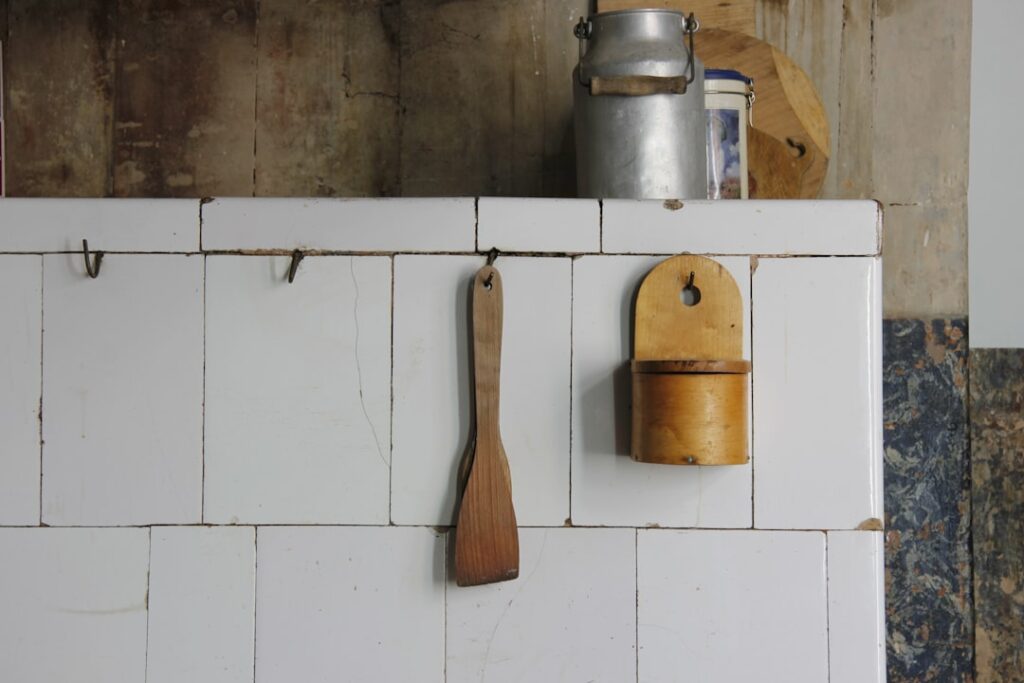
I have set a lot of tile over the years, and the question I hear almost as often as anything about grout is where to hang the loofah. Nobody wants to drill a hole through a $14-per-square-foot porcelain wall for a $6 hook, and the good news is you usually do not have to. The best shower hooks for tile today fall into three camps: modern adhesive hooks rated for wet areas, quality suction hooks used on the right tile, and hardware that clamps over a glass panel or the tile edge itself. Each works, but only under specific conditions, and the failures I get called about almost always come down to using the right hook on the wrong surface. Here is how I sort them out on real jobs.
Part of our Bathroom Remodeling & Flooring guide — explore the full guide →
- Why tile is a hard surface to hang anything on
- Adhesive shower hooks: the default answer for most people
- Suction hooks: better than their reputation, on the right tile
- Over-glass and over-tile hardware: zero adhesion required
- Quick comparison of your options
- When drilling is actually the right call
- Removing hooks without wrecking the tile
Why tile is a hard surface to hang anything on
Tile looks like the perfect anchor point, but it fights you three ways. First, glazed ceramic and porcelain are extremely smooth, which is great for suction but terrible for cheap adhesives that need microscopic texture to grip. Second, the surface lives in a hot, wet, steamy environment that cycles from 70°F to 110°F and back every day. That thermal cycling is what peels bargain-bin adhesive pads off the wall at 2 a.m. with a crash. Third, if you do decide to drill, porcelain is fired so hard that a standard masonry bit will skate across it and chip the glaze before it ever bites.
So the game is matching the attachment method to your tile type, your weight requirement, and your tolerance for permanence. A towel bar holding two soaked bath towels is a 5 to 8 pound sustained load with a yank factor. A hook for a mesh pouf is a few ounces. Treat them differently.
Adhesive shower hooks: the default answer for most people
Modern adhesive hooks are not the foam-tape junk from twenty years ago. The good ones use either a high-bond acrylic foam tape (the same chemistry as automotive trim tape) or a reusable gel pad, and the better waterproof-rated versions will genuinely hold 5 to 15 pounds on glazed tile for years. Expect to pay $8 to $20 for a two-pack of quality stainless or zinc-alloy hooks.
The catch is that adhesive performance is almost entirely about prep and placement. Here is the routine I give clients, and it matters more than the brand:
- Clean the tile with rubbing alcohol, not household cleaner. Soap scum and cleaner residue are release agents. Let it flash off completely.
- Mount the hook on the flat face of a single tile, never bridging a grout line. Grout sits slightly recessed, so bridging it means only part of the pad is touching anything.
- Press hard for a full 30 to 60 seconds. Adhesive tape bonds are pressure-activated.
- Wait 24 hours before loading it, and 48 hours before it sees steam. Almost every “it fell off in a week” story skipped this step.
Adhesive hooks struggle on two surfaces: textured or matte tile, where the pad only contacts the high spots, and natural stone like travertine or slate, which is porous and often sealed with products that interfere with the bond. On honed marble I also worry about the reverse problem, because some aggressive adhesives can pull or stain the stone on removal. For stone showers I lean toward suction on a polished area or an over-glass solution instead.
Suction hooks: better than their reputation, on the right tile
Suction cups get a bad rap because people stick them to textured tile or across grout joints and then blame the cup. On smooth glazed ceramic, porcelain, or glass tile with joints far enough apart to give you a full flat landing zone, a quality lever-lock suction hook is genuinely strong. The lever-style cups that mechanically pull a vacuum, rather than the push-on type, are rated at 10 to 15 pounds and mostly deliver it. They run $10 to $25.
Two honest limitations. Suction cups lose vacuum slowly, so plan on pressing or re-locking them every few months; that makes them wrong for anything you would be upset to find on the floor. And they need a footprint of smooth, continuous surface roughly 2.5 to 3 inches across. Standard 3×6 subway tile works. A 1-inch mosaic wall does not, full stop, because the cup can never seal across all those grout lines. That mosaic scenario is exactly where adhesive hooks with a smaller pad, centered on prep and cure time, become the only no-drill choice.
Over-glass and over-tile hardware: zero adhesion required
If your shower has a frameless glass panel or door, the easiest heavy-duty answer is a hook that hangs over the top edge of the glass. These are padded stainless brackets, typically $12 to $30, sized for 3/8 or 1/2 inch glass, and they hold serious weight because gravity does the work. Two wet towels are no problem. I put these in almost every glass-enclosed shower I finish because they install in ten seconds and leave no mark.
The same idea works on half-walls and bathtub surrounds: over-the-wall caddy hooks drape across the top of a knee wall or the tub-surround edge. Just confirm the padding is silicone or rubber, because bare metal will eventually scratch glaze and etch glass with trapped grit.
Quick comparison of your options
| Hook type | Typical hold | Best surface | Cost | Weak spot |
|---|---|---|---|---|
| Acrylic-foam adhesive | 5–15 lbs | Glossy ceramic/porcelain | $8–$20/pair | Texture, stone, poor prep |
| Lever-lock suction | 10–15 lbs | Smooth tile, glass, large formats | $10–$25 | Grout lines, slow vacuum loss |
| Over-glass bracket | 20+ lbs | Frameless glass panels | $12–$30 | Needs glass or a wall edge |
| Drilled + anchor | 25+ lbs | Any tile | $5 + bit ($10–$20) | Permanent, skill required |
When drilling is actually the right call
For grab bars, heavy towel bars, or anything a person might grab in a slip, no stick-on product is acceptable. Those get drilled and anchored, ideally into blocking or a stud. If you do drill tile, here is the short version of doing it without chipping: use a diamond or carbide spear-point bit sized for your anchor, put painter’s tape on the mark to stop the bit skating, start the drill slow with light pressure, and keep the bit wet with a sponge so it does not overheat. Drill through the tile only, then switch to a regular bit for the backer board. Aim for a grout line when the layout allows, since grout is easier to drill and easier to patch later if you ever remove the hardware.
One more placement note that saves regret: drill at least an inch away from tile edges and corners, where the tile is weakest and most likely to crack.
Removing hooks without wrecking the tile
Adhesive hooks come off clean if you go slow. Warm the pad with a hair dryer for 60 seconds to soften the adhesive, then pull the foam pad with dental floss or fishing line worked behind it, using a sawing motion. Residue wipes off glazed tile with rubbing alcohol or a citrus adhesive remover; skip razor blades on glossy glaze unless you keep the blade dead flat. On natural stone, test any solvent in a hidden spot first. Suction and over-glass hardware, of course, leave nothing behind, which is a real argument for them in rentals.
A few final habits keep any of these solutions alive longer. Squeegee or towel the area around the hook when you squeegee the glass, because standing water working at a pad edge is what starts the peel. Keep total load realistic: a hook rated at 10 pounds is rated for a static 10 pounds, not a 10-pound robe yanked off it sideways every morning. And when a hook does let go, resist re-sticking it in the same spot immediately; clean both the pad and the tile with alcohol, or better, replace the adhesive strip entirely, because a contaminated bond never recovers its original strength.
My honest recommendation after years of callbacks and quick fixes: renters and anyone with glossy tile should buy a quality adhesive hook, prep with alcohol, and respect the 24-hour cure. Glass-enclosure owners should skip the science experiment and use over-glass hooks. Save suction for smooth large-format walls where you will remember to re-press it seasonally, and reserve the drill for anything structural. Match the shower hooks for tile to the surface you actually have, not the one in the product photo, and they will still be holding when the towels wear out.
Prefer to explore on your own?
See how new flooring looks in your actual room in seconds — free, no signup.
Try the free Floor Studio →

