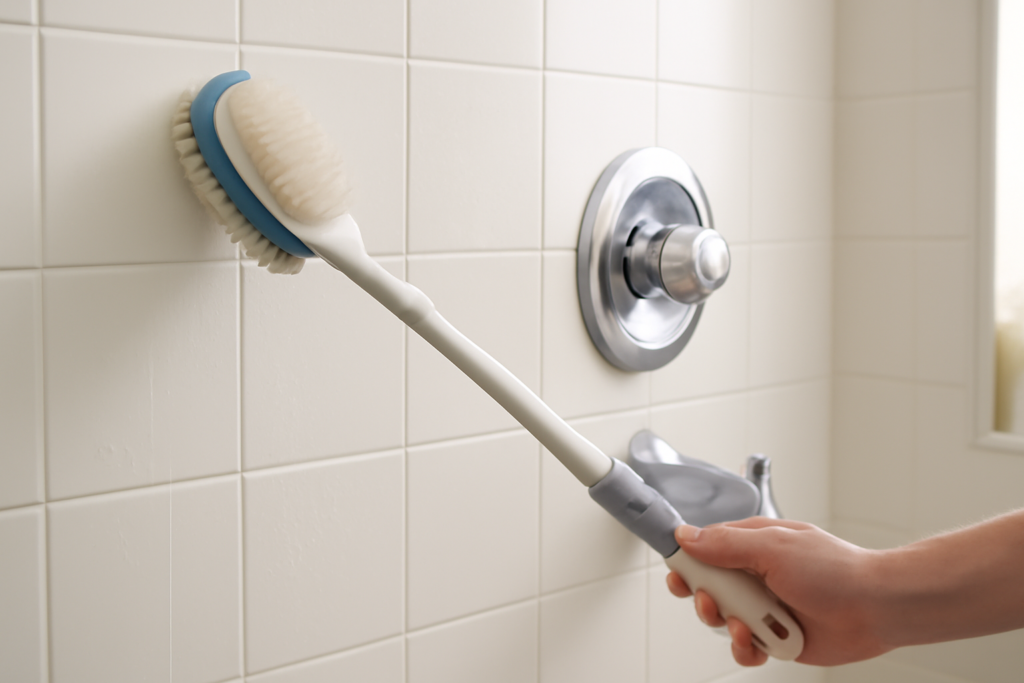
Cleaning a shower shouldn’t leave your knees aching and your back tight. A shower scrubber with long handle reach solves the two biggest annoyances of bathroom cleaning: bending into the tub and stretching up to the ceiling corners where soap scum and mildew love to hide. With a handle that extends anywhere from 30 inches to over 60 inches, you scrub the whole enclosure while standing upright, dry, and outside the splash zone.
Part of our Bathroom Remodeling & Flooring guide — explore the full guide →
This guide walks through the handle styles, bristle types, and features that actually matter, plus realistic price ranges so you know what a fair deal looks like. Whether you have glossy ceramic tile, a fiberglass tub surround, or a natural stone walk-in shower, there’s a long-handled tool built for it.
Why a Long Handle Beats a Sponge
A standard handheld sponge forces you into awkward positions. You crouch to reach the bottom of the tub, twist to hit the back wall, and often give up on the ceiling entirely. That’s where mold gets a foothold. A long handle changes the geometry of the job. Standing at arm’s length, you apply leverage from your shoulder and core instead of your wrist, so you generate more scrubbing pressure with less effort.
There’s a safety angle too. Roughly one in four bathroom injuries involve slips near the tub. When you’re not stepping into a wet, soapy enclosure to reach a far corner, you drastically cut your fall risk. For anyone with limited mobility, a knee replacement, or chronic back pain, that reach is the difference between doing the job yourself and hiring it out.


Types of Long-Handle Shower Scrubbers
Not every long-handled scrubber works the same way. The right pick depends on your surfaces and how much muscle you want the tool to supply.
Manual Stiff-Bristle Brushes
The workhorse category. These have a fixed or pivoting head with nylon or polypropylene bristles on a pole between 30 and 55 inches. They cost the least, usually $12 to $25, and need no batteries. A pivoting head is worth the small upcharge because it flattens against walls and floors automatically. Look for a comfort grip and a hang hole so the brush dries between uses.
Cordless Electric Spin Scrubbers
The fastest-growing category. A rechargeable motor spins a circular brush head at 300 to 500 RPM, doing the scrubbing for you. Popular models like the Rubbermaid Reveal Power Scrubber (with an add-on extension pole) or the Homitt and Voweek spin scrubbers run $30 to $70. Most ship with an adjustable extension pole that reaches 40 to 55 inches and two or three interchangeable heads: a flat brush for walls, a corner cone for grout lines, and a dome for curved fixtures. Battery life typically lasts 60 to 90 minutes per charge, plenty for several bathrooms.
Squeegee and Scrubber Combos
Two-in-one tools pair a scrub pad on one side with a rubber squeegee on the other. You clean, then flip to pull water off glass doors and tile, which prevents new water spots and scum. These run $15 to $30 and shine in walk-in glass showers.
Telescoping Microfiber Mops
For textured stone or delicate finishes that stiff bristles could scratch, a flat microfiber head on a telescoping pole is gentler. Think of it as a floor mop repurposed for walls. Expect $20 to $40, with washable, reusable pads.
Bristle and Pad Materials
The head material determines what you can safely scrub. Match it to your surface or you risk dull scratches that trap even more grime.
- Nylon medium bristles: The all-rounder. Safe on ceramic and porcelain tile, fiberglass, and acrylic tubs. Firm enough for grout, gentle enough for most finishes.
- Stiff polypropylene: Best for deep grout stains and textured floor tile with a slip-resistant surface. Too aggressive for glass or gloss.
- Soft foam or microfiber: The safe choice for natural stone, glass, and enameled cast iron. Won’t scratch, but needs a good cleaner to compensate for less bite.
- Silicone bristles: Naturally mildew-resistant and easy to rinse clean, though they hold less cleaning product.
A quick rule: on any surface you’re unsure about, start with the softest head and step up only if it fails to remove the buildup.
Handle Features Worth Paying For
The pole is half the tool. A flimsy handle flexes under pressure and wastes your effort, so inspect these details before buying.
Telescoping vs. Fixed Length
A telescoping pole that locks anywhere from 30 to 55 inches adapts to reach both the tub floor and the ceiling. Twist-lock and flip-lock mechanisms both work; flip-locks tend to hold better over time and are easier to adjust with wet hands.
Material and Weight
Aluminum poles resist rust and stay light, usually under 1.5 pounds. Stainless steel is sturdier but heavier. Avoid cheap plastic telescoping sections, which crack at the joints within months of humid bathroom use.
Grip and Angle
A soft TPR (thermoplastic rubber) grip prevents slipping when your hands are wet and soapy. An angled or pivoting head, ideally one that swivels 90 degrees or more, lets you keep the pole comfortable while the brush lies flat on the surface.
How to Use a Long-Handle Scrubber Effectively
Technique matters as much as the tool. Follow this sequence for a faster, more thorough clean.
- Spray your cleaner across the walls and floor, then let it dwell for 5 to 10 minutes. Dwell time does most of the chemical work so you scrub less.
- Wet the brush head first. A dry head drags and can scuff.
- Scrub top to bottom in overlapping strokes. Gravity carries loosened grime and suds downward, so you never re-dirty a clean area.
- Hit grout lines and corners with a narrow or cone-shaped head, working the bristles into the seams.
- Rinse from the top down with the showerhead or a bucket, then squeegee glass and tile to stop water spots.
For weekly upkeep, a plain scrub with dish soap and warm water is enough. Save oxygen-bleach or dedicated tile cleaners for monthly deep cleans, and reserve stronger mildew removers for visible black spotting in grout.
What to Spend
You don’t need to overspend to get a capable tool. Here’s how the money breaks down:
- $12 to $25: A solid manual brush with a pivoting head and telescoping pole. All most people need.
- $30 to $70: A cordless electric spin scrubber with an extension pole and multiple heads. Worth it if you clean often, have textured surfaces, or want to save your shoulders.
- $70 and up: Premium electric units with longer battery life, faster RPM, and better warranties. Diminishing returns for a single bathroom.
Replacement heads for electric models run $8 to $15 for a set of three, and you should swap them every 6 to 12 months as bristles splay and lose bite.
Frequently Asked Questions
Will an electric spin scrubber scratch my tub?
Not if you use the correct head. Soft or medium brush heads spinning at 300 to 500 RPM are safe on acrylic, fiberglass, and glazed tile. Avoid stiff bristles on high-gloss or acrylic surfaces, and never press so hard that the motor bogs down.
How long should the handle be?
Look for a telescoping pole that adjusts between roughly 30 and 55 inches. That range lets a person of average height reach the tub floor without bending and the ceiling corners without a step stool.
Can I use one on natural stone?
Yes, but only with a soft foam or microfiber head and a pH-neutral, stone-safe cleaner. Stiff bristles and acidic cleaners like vinegar will etch marble, travertine, and other calcium-based stones.
How do I keep the brush from getting moldy?
Rinse the head thoroughly after each use, shake out the water, and hang the tool to air-dry outside the shower. Silicone bristles resist mildew best, and most electric heads are machine washable on a gentle cycle.
The Bottom Line
A long-handled shower scrubber is one of the cheapest upgrades you can make to bathroom cleaning, and it pays off every single week in saved effort and a lower slip risk. For most homes, a $20 manual brush with a pivoting head and a telescoping aluminum pole handles the job. If you clean frequently or fight stubborn grout, step up to a cordless spin scrubber with an extension pole and a set of task-specific heads. Match the bristle to your surface, spray and dwell before you scrub, and work top to bottom, and you’ll spend less time cleaning a cleaner shower.