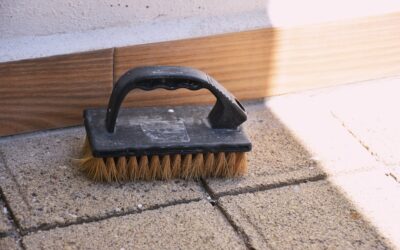
The wrong brush turns a 10-minute cleanup into a 45-minute wrestling match with soap scum. The right shower scrub brush cuts through mineral film, pink bacteria, and mildew without scratching glass or eating grout. After testing more than 20 brushes in rental turnovers and my own two bathrooms, I have seen what actually works. Bristle stiffness, handle angle, and pole length matter far more than brand.
Part of our Bathroom Remodeling & Flooring guide — explore the full guide →
- Why a Dedicated Shower Brush Beats a Sponge
- Types of Shower Scrub Brushes
- Top Picks Worth Buying
- Bristle Stiffness and Surface Safety
- Handle Design and Ergonomics
- Electric and Cordless Options
- How to Use a Scrub Brush Effectively
- Cleaning Solutions That Pair Well
- Care and Replacement Schedule
- Final Thought
Why a Dedicated Shower Brush Beats a Sponge
Sponges skate over grout lines and leave soap film in corners. Microfiber cloths get saturated with grime on the first wall. A stiff-bristle brush with the right geometry reaches into textured tile, scrubs silicone caulk without tearing it, and applies the kind of pressure your fingers cannot maintain for 20 minutes straight.
A good brush also keeps your hands out of cleaner and mold. Even a mild daily spray contains hydrogen peroxide, surfactants, or citric acid, and repeated skin contact leads to dermatitis over time. A 12-inch handle keeps those chemicals off your forearms.
Types of Shower Scrub Brushes
Not every brush solves every problem. Match the tool to the task.
- Stiff nylon bristle handheld: Best for tile walls and floors. Bristles 0.5 to 0.7 mm thick resist splaying.
- Soft white bristle: For acrylic or fiberglass surrounds that scratch easily.
- Narrow grout brush: V-shaped head, 1-inch wide bristles, perfect for grout lines and corner silicone.
- Long-handle pole brush: 42 to 60 inches for tall walls, ceilings, and tubs without kneeling.
- Electric spin scrubber: Battery-powered head rotates 300 to 450 RPM; reduces elbow grease on tough stains.
Top Picks Worth Buying
I keep three brushes within reach of every shower I maintain: an OXO Good Grips Deep Clean brush with a swivel head, a Libman Tile and Tub brush with a telescoping handle, and a Rubbermaid Reveal Power Scrubber for heavy jobs. Between them, any bathroom cleans up in under 20 minutes.
Best values under $25
- OXO Deep Clean Brush Set, about $15, covers tight grout lines
- Libman Scrub Kit, about $10, stiff bristles for ceramic tile
- Full Circle Tenacious C, about $12, recycled plastic handle, replaceable head
- Rubbermaid Reveal Power Scrubber, about $23, AA-battery powered
Bristle Stiffness and Surface Safety
Glass shower doors scratch more easily than most people realize. Anything stiffer than a medium nylon bristle risks hairline abrasions on factory glass coatings like ShowerGuard or EnduroShield. Use a soft bristle brush or dedicated melamine foam pad on clear glass, and save the stiff brushes for porous tile and grout.
Natural stone, especially marble and travertine, needs a different approach. Skip the stiff brush and the acidic cleaner. A soft white brush with pH-neutral stone cleaner like Granite Gold avoids etching the surface.
Handle Design and Ergonomics
A good shower scrub brush puts your wrist in a neutral position. Look for a pistol-grip or angled handle so you are pushing, not twisting, when you scrub. Cheap straight-handle brushes force your wrist into ulnar deviation and wreck your hand after 5 minutes.
Telescoping handles that extend from 24 to 52 inches let you reach shower ceilings and the tops of glass surrounds without a stepstool. Make sure the twist lock holds under pressure; the cheapest brushes collapse when you lean in hard.
Electric and Cordless Options
For bathrooms neglected for months, a cordless power scrubber saves real time. The Rubbermaid Reveal, the Homitt cordless scrubber, and the Bissell PowerFresh lineup all rotate fast enough to lift soap scum with a light pass. Budget $25 to $80 depending on battery life and the number of included heads.
Swap heads for different jobs: a 2-inch corner head for grout, a 4-inch flat head for large tile fields, and a soft pad head for fiberglass. The charging batteries typically last 60 to 90 minutes per charge, plenty for a full bathroom.
How to Use a Scrub Brush Effectively
Wet the walls first with hot water to open the grout and loosen surface scum. Spray your cleaner and let it dwell 3 to 5 minutes before touching a brush to anything. Most failures in shower cleaning come from scrubbing too fast, not from weak chemistry.
Step-by-step routine
- Spray cleaner top to bottom, let it sit 4 minutes
- Scrub with moderate pressure in small circles
- Use a grout brush along every horizontal line
- Rinse with hot water using a handheld head or cup
- Squeegee glass and metal to prevent new water spots
Cleaning Solutions That Pair Well
For routine soap scum, a 50/50 mix of white vinegar and Dawn dish soap in a spray bottle handles most walls. Skip vinegar on natural stone and on any silicone older than 5 years (it can speed up breakdown). For heavy mildew, 3% hydrogen peroxide in a spray bottle kills spores in about 10 minutes of contact time.
Care and Replacement Schedule
Rinse your brush with hot water after every use and shake it dry. Never store a wet brush head-down in a closed cabinet; bacteria and mold colonize bristles faster than they do grout. Replace the head every 3 to 4 months in a frequently used shower, or sooner if bristles splay or discolor.
Final Thought
Pick the stiffness to match your surface, a handle that fits your hand, and a grout brush for the detail work. A $15 brush used correctly beats a $90 scrubber used carelessly. Keep two on hand, rinse them after each use, and you will scrub less because you will scrub smarter.