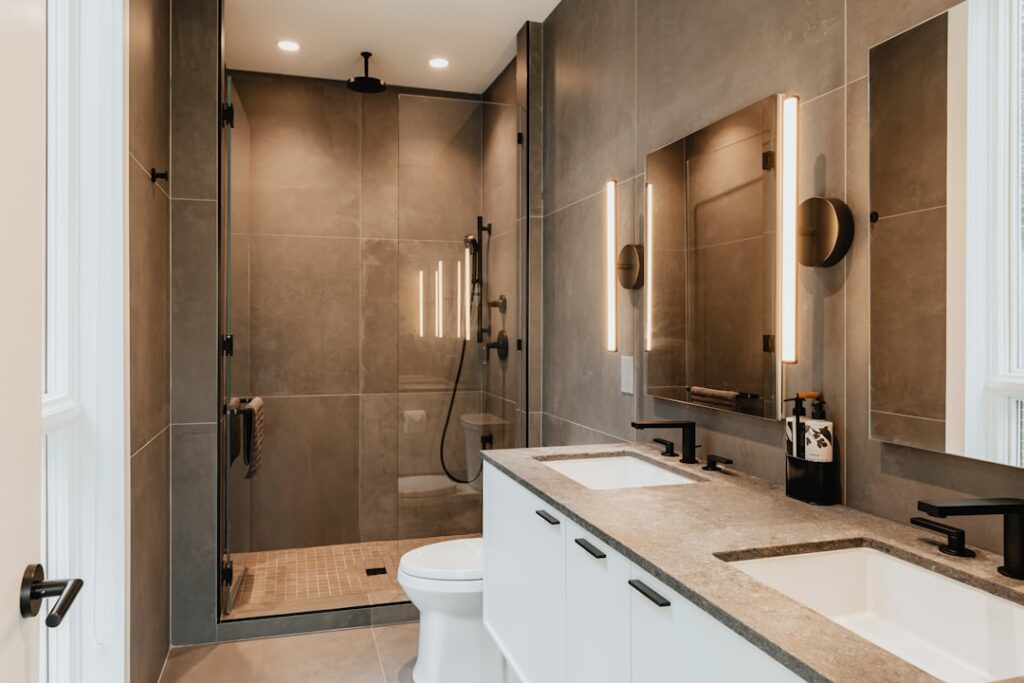
The small strip at the entry of your shower does a big job. A properly built shower threshold contains the water inside the shower, keeps your bathroom floor dry, and protects the framing beneath from rot. Get it wrong, with the wrong slope or poor waterproofing, and you invite leaks, mold, and costly subfloor damage. This guide explains what a threshold is, the materials you can use, how slope and waterproofing work, and the curbless options that have become popular.
What a Shower Threshold Is
The threshold, sometimes called the curb, is the raised barrier at the entrance of a shower stall. Its purpose is to hold water inside the shower pan and prevent it from spilling out onto the bathroom floor. In a traditional shower, the curb sits a few inches above the bathroom floor; in a curbless design, the barrier is replaced by careful sloping and drainage.
Beyond its waterproofing role, the threshold also provides a clean visual transition between the shower flooring and the bathroom floor, and it gives the glass door or enclosure a place to seat.
Common Threshold Materials
Several materials work for a shower threshold, each with pros and cons.
- Natural stone (marble, granite) — a single solid piece that resists water and looks seamless; a popular premium choice.
- Solid surface or engineered stone — nonporous and easy to keep watertight.
- Tile over a mortar curb — matches the shower tile but has grout joints that must be sealed.
- Preformed curbs — foam or composite curbs from waterproofing systems that install quickly and stay watertight.
A single-piece stone or solid-surface threshold has the advantage of no seams to leak, which is why many builders prefer it over a tiled curb in wet, high-use showers.
Why Slope Matters
The threshold must be sloped slightly back toward the shower interior so any water that lands on it drains inward rather than out onto the bathroom floor. A common guideline is a gentle pitch of a few degrees toward the drain side. Without that inward slope, water pools on the curb and eventually finds its way out or into the wall.
Inside the shower, the entire pan also slopes toward the drain, typically about a 1/4-inch drop per foot of run. The threshold slope works together with the pan slope to keep every drop heading to the drain. Getting these slopes right is the single most important factor in a leak-free shower.
Waterproofing the Threshold
The threshold is one of the most leak-prone spots in a shower because it takes constant splashing and sits at the boundary of wet and dry zones. Proper waterproofing is non-negotiable.
- The waterproof membrane or pan liner must extend up and over the curb on all sides, never stopping short.
- Seams and corners need to be sealed and folded carefully, with no punctures from fasteners through the membrane.
- Tiled curbs should use a waterproofing system, and the top should slope inward before tiling.
- The joint where the threshold meets the bathroom floor and the shower walls should be caulked, not grouted, so it can flex.
If you are using a modern foam-board waterproofing system, the preformed curb integrates with the membrane for a continuous watertight barrier, which simplifies the job considerably.
Curbless and Low-Threshold Showers
Curbless showers, which eliminate the raised curb entirely, have grown popular for their clean, modern look and accessibility. Without a curb to step over, they are far easier for aging-in-place and wheelchair access. The water containment job shifts entirely to careful sloping, a linear or well-placed drain, and sometimes a recessed shower floor.
Curbless designs demand precise installation. The bathroom floor often needs to be recessed or the shower floor built up so the whole wet area drains correctly, and the waterproofing must extend well beyond the shower opening. They cost more and require more planning, but the payoff is a seamless, accessible space.
Installation and Cost Considerations
A traditional tiled or stone curb is the most affordable and the most common. Material for a stone threshold itself is modest, often $30 to $100 for the slab, while the labor and waterproofing make up the bulk of the cost. Curbless conversions cost significantly more because they may involve reframing the floor, adding a linear drain, and expanding the waterproofed area.
Whatever the design, do not cut corners on the membrane and slope. A redo after water damage costs far more than doing it right the first time.
Maintenance and Care
Keep the caulk joints at the threshold in good shape, since cracked or moldy caulk is an early sign of trouble. Reseal natural stone thresholds periodically to prevent staining and water absorption. Wipe the curb dry after showers in homes prone to mildew, and inspect the grout and caulk a couple of times a year, recaulking promptly when you see gaps.
Choosing a Threshold to Match Your Shower
The threshold is a chance to either blend in or add a clean design accent. Matching the threshold material to the shower floor or the bathroom floor creates a seamless transition, while a contrasting stone curb can frame the shower entry as a deliberate feature. A single solid stone or solid-surface threshold gives the cleanest, most watertight result and pairs well with almost any tile.
Width and edge profile matter too. A slightly wider threshold gives a more substantial look and a place to set the glass enclosure, while a beveled or eased top edge is comfortable underfoot and easy to clean. Whatever you choose, keep the inward slope intact so the finished look never comes at the cost of waterproofing.
Signs of a Failing Threshold
Catching threshold problems early prevents expensive damage. Watch for water pooling outside the shower after use, which signals the slope is wrong or the curb is leaking. Cracked or peeling caulk at the base of the threshold, soft or discolored flooring just outside the shower, and a musty smell all point to moisture escaping past the barrier.
If you see these signs, address them promptly. Sometimes the fix is as simple as recaulking the joints, but persistent leaks may mean the waterproofing membrane has failed and the area needs to be opened up and rebuilt. Acting quickly limits the damage to the subfloor and framing below.
Final Thoughts
A well-built shower threshold is invisible when it works and a disaster when it does not. Whether you choose a classic stone curb or a sleek curbless design, prioritize inward slope and complete, continuous waterproofing over everything else, and your shower will keep water where it belongs for the long haul.