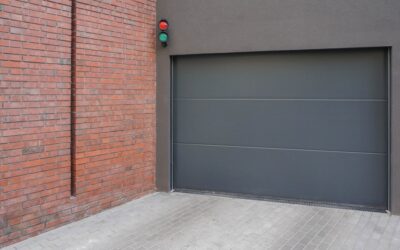
If your garage has a vaulted ceiling, exposed storage, or a heavy carriage-style door, the standard rail-and-trolley opener bolted to the middle of the ceiling may not be your best option. A side garage door opener, also called a jackshaft opener, mounts on the wall beside the door and turns the torsion bar directly, freeing up your entire ceiling. Once a commercial-only design, these openers have become a favorite among homeowners who want a cleaner look and more overhead space.
Part of our Garage Doors guide — explore the full guide →
Instead of pushing the door open with a long rail, a side-mount opener spins the torsion shaft the door already rides on. This fundamentally different approach solves several problems that trip up traditional openers.
- How a Jackshaft Opener Works
- Key Benefits of Side-Mount Openers
- When a Side Opener Makes Sense
- Top Brands and Models
- Installation Requirements
- Cost Versus Value
- Maintenance and Longevity
- Battery Backup and Smart Features
- Side-Mount Versus Traditional Openers
- Common Problems and Fixes
- Making Your Decision
How a Jackshaft Opener Works
A conventional opener sits on the ceiling and drags the door up a track using a chain or belt trolley. A jackshaft unit mounts to the wall at the end of the torsion tube and rotates that shaft, coiling the cables that lift the door, exactly the way manual torsion springs operate.
Because the motor drives the shaft directly, there is no rail spanning the length of your garage. The result is a completely open ceiling and a quieter, smoother operation that many homeowners prefer once they experience it.
Key Benefits of Side-Mount Openers
The advantages of a side garage door opener go well beyond looks, though the clean ceiling is often what draws people in first.
- Free ceiling space — ideal for garages with overhead storage racks, car lifts, or vaulted ceilings
- Handles heavy doors — well suited to solid wood and carriage-house doors that overwhelm rail openers
- Quieter operation — no chain vibrating along a ceiling rail transmitting noise to rooms above
- Works with high ceilings — no need for special extension kits that rail openers require
- Built-in features — many include automatic deadbolt locks and battery backup
For homeowners with a bedroom above the garage, the reduced noise and vibration alone can justify the switch.
When a Side Opener Makes Sense
These openers are not for every garage, but in the right situation they are clearly the better choice. Consider one if your ceiling is too high or too low for a standard rail, if you have installed or plan to install a car lift, or if obstructions like ductwork or lighting block the center of the ceiling.
They also shine with heavy doors. A solid wood carriage door can weigh several hundred pounds, and a jackshaft motor turning the torsion bar handles that load more gracefully than a trolley yanking on the top panel. If your door is standard weight and your ceiling is clear, a traditional opener costs less and works fine, so the side-mount is best reserved for these specific cases.
Top Brands and Models
The residential jackshaft market is dominated by a few proven models. The LiftMaster 8500W is the benchmark, a Wi-Fi-enabled unit with a built-in deadbolt and battery backup. Chamberlain sells a comparable model under its own brand for a bit less.
Expect to pay $300 to $500 for the opener itself, notably more than the $150 to $300 of a typical rail opener. Sommer also makes a well-regarded direct-drive side-mount for homeowners who prioritize quiet operation. Whichever you choose, confirm it is rated for your door’s weight and that your setup uses a torsion spring system, since jackshaft openers cannot work with extension-spring doors.
Installation Requirements
A side-mount opener has specific requirements your garage must meet. The most important is that your door use a torsion spring mounted on a shaft above the opening, not extension springs running along the tracks.
- Verify a torsion bar runs horizontally above the door.
- Confirm at least 8 to 10 inches of clearance on the side where the motor mounts.
- Ensure a grounded electrical outlet is within reach of the motor location.
- Check that the torsion shaft is a compatible diameter, typically 1 inch.
Professional installation runs $150 to $350 on top of the unit, and many homeowners hire it out because the opener interacts directly with the torsion spring system, which stores dangerous energy. If you are not experienced with garage door hardware, this is one job worth leaving to a pro.
Cost Versus Value
All in, a professionally installed side-mount opener typically costs $450 to $850, compared to $300 to $500 for a traditional opener installed. That premium buys you the open ceiling, quieter operation, and heavy-door capability.
For homeowners with overhead storage, a car lift, a room above the garage, or a heavy custom door, that extra couple hundred dollars is money well spent. For a standard two-car garage with a lightweight steel door and a clear ceiling, the added cost is harder to justify.
Maintenance and Longevity
Side-mount openers are famously low-maintenance because they have no long rail or trolley to wear out, but a few routine checks keep them running smoothly for 15 years or more. The opener depends entirely on a healthy torsion spring system, so the springs and cables carry the load and deserve annual attention.
Twice a year, lubricate the torsion springs and the bearings on either end of the shaft with a silicone-based garage-door spray, and inspect the lift cables for fraying near the bottom brackets. Because the motor drives the shaft directly, a worn or unbalanced spring makes the opener work much harder than it should. Test the door’s balance by pulling the release and lifting it manually; a properly balanced door stays put around waist height. If it slams down or springs up, the springs need adjustment by a technician before they strain the opener.
Battery Backup and Smart Features
One underrated advantage of premium jackshaft models is their built-in extras, which often justify part of the higher price. The LiftMaster 8500W includes an integrated battery backup that keeps the door working through a power outage, a genuine convenience during storms when you most need to get a car in or out.
Many models also include an automatic deadbolt that physically locks the door into the track when closed, adding real security that a standard opener cannot match. Wi-Fi connectivity through the myQ app lets you open, close, and monitor the door from your phone, receive alerts if it was left open, and grant temporary access to visitors or delivery drivers. For homeowners who value security and convenience, these integrated features add meaningful value beyond the clean ceiling and quiet operation.
Side-Mount Versus Traditional Openers
To decide whether the premium is justified, it helps to compare the two designs side by side on the factors homeowners care about most. Each has clear strengths depending on your garage.
- Ceiling space — side-mount frees the entire ceiling; rail openers occupy the center
- Noise — jackshaft units run quieter, a real benefit under living space
- Heavy doors — side-mount handles solid wood carriage doors better
- Cost — traditional openers win, at $150 to $300 versus $300 to $500 for the unit
- Spring type — jackshaft requires torsion springs; rail openers work with either
The pattern is clear: side-mount openers excel when your garage has special needs, while traditional rail openers remain the sensible default for standard doors and clear ceilings. Neither is universally better; the right choice depends entirely on your specific setup.
Common Problems and Fixes
Side-mount openers are reliable, but a few issues surface over the years, most tied to the torsion spring system they drive. Understanding them helps you catch trouble early before it strains the motor.
If the door struggles to lift or the opener labors, the torsion spring has likely lost tension and needs adjustment, a job for a technician given the stored energy involved. A door that reverses partway down usually needs its force or travel limits reset, similar to any opener. Because the motor mounts to the wall beside the door, its cables and pulleys are easy to inspect; frayed lift cables should be replaced promptly, since a snapped cable can leave the door stuck or unsafe. Keeping the springs and bearings lubricated and testing the door’s balance twice a year heads off most of these problems and keeps the opener running quietly for its full lifespan.
Making Your Decision
Weigh your ceiling situation, door weight, and noise sensitivity against the higher price. If you check even one of the boxes for high ceilings, overhead storage, a car lift, or a heavy door, a side garage door opener is likely the smartest upgrade you can make. Confirm your door uses torsion springs, choose a model rated for your door’s weight, and budget for professional installation to get a quiet, ceiling-clearing setup that will serve you for years.