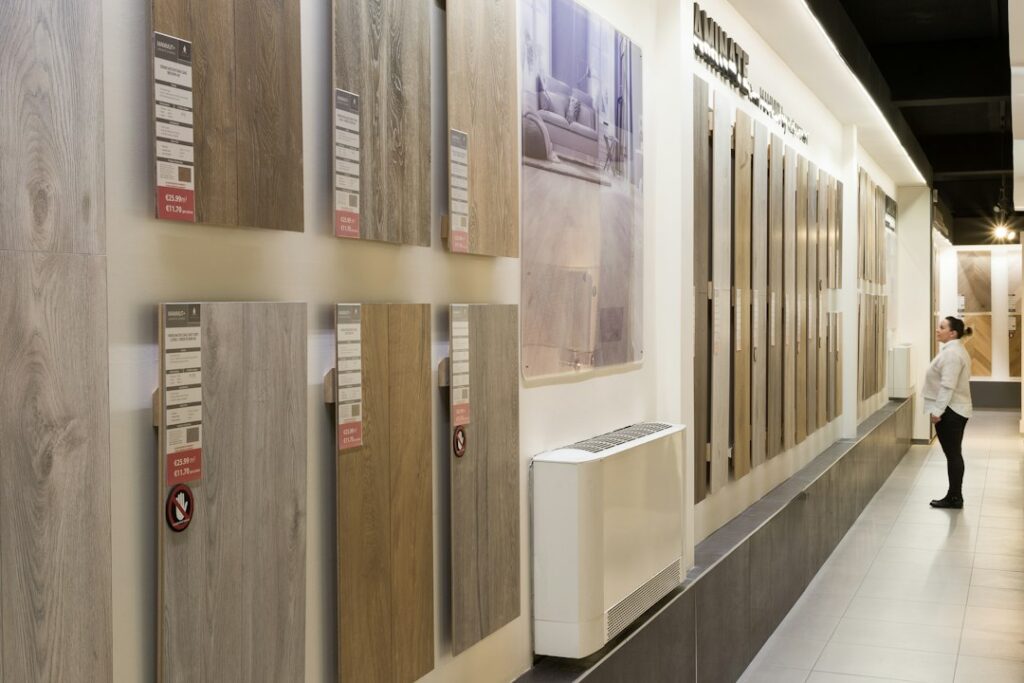
When you’re researching a named flooring retailer like Simpsons Flooring, the smartest move isn’t to memorize one storefront’s catalog, it’s to learn how to evaluate any flooring seller so you walk in knowing more than the salesperson expects. Most buyers focus on the showroom display and forget that the real differences live in core construction, wear-layer thickness, fitting quality, and the fine print of the warranty. This guide gives you a framework to judge product categories, compare quotes, and avoid the upsells that pad a flooring bill by hundreds of dollars.
Know the Product Categories First
Any full-line flooring retailer organizes stock into a handful of categories, and each has a different sweet spot:
- Luxury vinyl (LVP/LVT): Waterproof, $2-$5 per sq ft, ideal for kitchens, baths, and basements
- Laminate: Scratch-resistant, $1-$3 per sq ft, good for busy family rooms on a budget
- Engineered wood: Real-wood surface over a stable core, $4-$9 per sq ft, works with underfloor heating
- Solid hardwood: Sandable for decades, $6-$12 per sq ft, best in stable, dry rooms
- Carpet: Warm and quiet, $2-$7 per sq ft, sorted by fiber and pile density
Walk in already knowing which category fits your room, and you’ll spend your time comparing quality within it rather than getting steered toward whatever carries the highest margin that week.
How to Judge Product Quality
Specs matter more than showroom lighting. For luxury vinyl, the wear layer is the headline number: 12 mil is fine for a guest room, while 20 mil or thicker belongs in a busy entry or rental. For laminate, look at the AC rating, AC4 or AC5 for households with kids and pets. For carpet, check face weight and twist; a tightly twisted, higher-density pile resists matting far longer than a plush bargain roll.
With engineered wood, ask the thickness of the real-wood veneer. A 3mm or thicker top layer can be sanded once or twice; a 0.6mm wear layer cannot be refinished at all. A retailer who answers these questions plainly is one worth buying from.
Pros of Buying From a Dedicated Flooring Store
A specialist flooring retailer usually beats a big-box store on depth of selection, in-house fitting teams, and staff who actually know subfloor prep. You can typically take home large samples, get an in-home measure, and have one company handle supply and installation, which means a single point of accountability if something goes wrong.
Many dedicated stores also offer better warranty support and stock matching trims, transitions, and underlay so your whole job is coordinated. That bundled service is the main reason to pay a little more than the cheapest online price.
Cons and Common Upsells to Watch
The trade-off is price. Showroom overhead and commissioned sales staff can push the total above online or warehouse pricing. Watch for upsells on premium underlay you may not need, extended “protection plans” that duplicate the manufacturer warranty, and inflated subfloor-prep line items.
Always get the quote itemized: product cost, underlay, fitting labor, removal and disposal of old flooring, and trim. A single lump sum hides where your money goes and makes it impossible to compare against a second bid.
Reading the Warranty
Manufacturer warranties sound generous but are full of conditions. A “25-year” residential wear warranty often prorates after a few years, excludes commercial use, and is voided entirely by improper installation or DIY fitting. Ask whether professional installation is required to keep coverage valid, and confirm who handles a claim, the retailer or the manufacturer.
Keep your receipt, the product batch information, and the care instructions together. Most warranty disputes are lost because the homeowner used the wrong cleaner or can’t prove the purchase date.
Getting a Fair Fitted Quote
Measure your rooms before you shop so you can sanity-check the retailer’s square footage. Add 7-10% for waste, more for diagonal or herringbone layouts. Then collect two or three itemized quotes and compare them line by line.
Ask each seller the same questions: Is subfloor leveling included? Is old-floor removal in the price? What’s the lead time and the callback policy if a board lifts? A retailer that answers clearly and puts it in writing earns the sale.
In-Store Visit Versus Buying Online
Part of evaluating any flooring retailer is deciding whether the showroom experience is worth the price difference over online sellers. The showroom advantage is real: you can run your hand over the actual wear layer, see the embossing under proper light, take home large samples, and get a professional in-home measure that catches problems a DIY tape never will. For installation jobs, that single point of accountability is worth a premium.
Online sellers win on raw price and selection breadth, but you carry the risk: color can read differently on a screen, you measure and order yourself, and returns of opened flooring are often refused. A sensible middle path is to shop the showroom for fit, feel, and advice, then compare the exact same product code online to gauge whether the store’s installed package justifies the difference. Many buyers find the coordinated supply-and-fit service worth paying for, especially on a large or complex job.
Questions That Reveal a Good Retailer
You can size up a flooring store in a few minutes by the questions they ask you and the ones they answer well. A strong retailer asks where the floor is going, how much traffic and moisture it sees, and whether there’s underfloor heating, before recommending anything, because the room dictates the product.
Test them in return. Ask the wear-layer thickness in mils, the AC rating on a laminate, whether a board can be refinished, and what subfloor prep the quote assumes. A salesperson who answers these confidently and points you toward the right spec, even a cheaper one, has earned your trust. Vague answers, pressure to sign today, or a refusal to itemize the quote are all signals to take your measurements and your business elsewhere.
The Bottom Line
Whether you ultimately buy from Simpsons Flooring or any other retailer, the winning approach is the same: know your category, judge the real specs, demand an itemized quote, and read the warranty before you sign. Do that, and you’ll get a floor that performs and a price you can actually defend.
Prefer to explore on your own?
See how new flooring looks in your actual room in seconds — free, no signup.
Try the free Floor Studio →