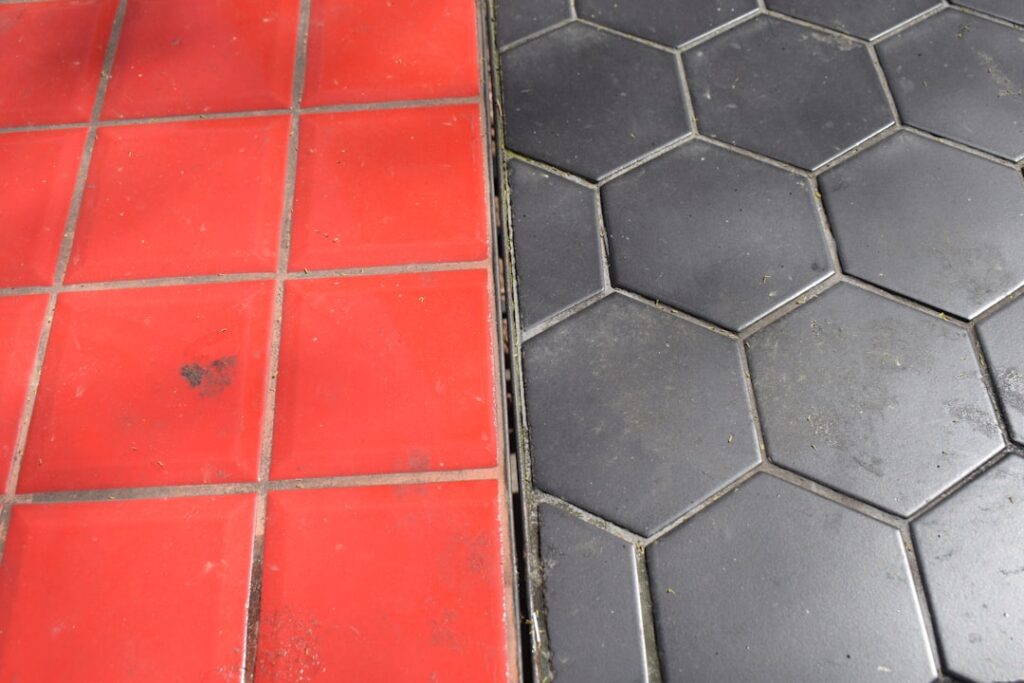
Grout is basically a sponge made of cement — porous, absorbent, and happy to hold onto every drop of mopping water and cooking grease that hits it. That is why floors that get mopped weekly can still look dingy after a few years. Professional tile and grout cleaning cost typically runs $0.50 to $3.50 per square foot, with most homeowners paying $300 to $650 for an average job. Those numbers hide a lot of variation, though, and knowing what drives the price is the difference between a fair quote and an inflated one. Here is how pros actually price this work, based on how the jobs really go.
Part of our Tile & Grout guide — explore the full guide →
Average Pricing at a Glance
Most professional outfits price by the square foot, and the national spread looks like this:
- Basic steam/pressure cleaning: $0.50 to $1.50 per sq ft
- Heavy soil or restorative cleaning: $1.50 to $3.50 per sq ft
- Grout sealing add-on: $0.40 to $1.00 per sq ft
- Grout color sealing: $1.00 to $2.50 per sq ft
- Typical whole-job total: $300 to $650
- Minimum service charge: $100 to $250
A 250-square-foot kitchen and hallway at $1.25 per square foot comes to about $315. A 900-square-foot open-plan main floor at the same rate lands near $1,125, though larger jobs usually earn a volume discount that pulls the effective rate down 15 to 25 percent. Nearly every company enforces a minimum charge because loading a truck-mounted machine for a 40-square-foot bathroom costs them the same setup time as a big job.
What the Pros Actually Do for That Money
The gap between your mop and a professional result comes down to heat, pressure, and vacuum recovery. A standard professional cleaning starts with an alkaline pre-spray — often at pH 11 to 12 — that sits on the floor for 10 to 15 minutes and breaks the bond between grease and grout. The technician agitates stubborn areas with a rotary brush, then cleans with a spinner tool fed by a truck-mounted unit pushing 200°F-plus water at 800 to 1,200 psi while simultaneously vacuuming the slurry away. That extraction step is the key: home steam mops loosen soil, then leave the dirty water sitting right back in the grout pores.
A thorough crew also details edges and corners by hand, since spinner tools leave a few inches uncleaned along baseboards. The whole process on a 300-square-foot floor takes roughly 60 to 90 minutes, and the floor is walkable almost immediately.
The Six Factors That Move Your Price
Square footage sets the baseline, but these variables swing the final number more than most homeowners expect. Soil level is the big one — a floor that has never been professionally cleaned in ten years takes double the pre-spray, dwell time, and passes of a floor maintained every couple of years, and pros price accordingly. Tile type matters too: smooth porcelain cleans fast, while heavily textured tile and natural stone like travertine slow the work and may require gentler, stone-safe chemistry that costs more. Slate and honed marble usually get quoted at the top of the range or priced as specialty stone care.
Grout line width and depth affect time as well; a 1980s floor with 1/2-inch sanded grout joints has far more grout surface than a modern rectified tile with 1/8-inch lines. Room layout counts — a wide-open great room cleans faster per foot than three small bathrooms with toilets to work around. Finally, geography does what it always does: expect the high end of every range in coastal metros and the low end in smaller Midwest and Southern markets.
Sealing: The Upsell That Is Usually Worth It
Every cleaning crew will offer to seal the grout afterward, and unlike many add-ons, this one earns its keep. Freshly cleaned grout is bare and will re-absorb spills immediately; a penetrating sealer applied at $0.40 to $1.00 per square foot buys you one to three years of protection and makes the next cleaning cheaper because soil stays near the surface. Color sealing is the heavier option: an epoxy- or urethane-based coating tinted to a uniform shade that hides permanent staining completely and waterproofs the joint. At $1.00 to $2.50 per square foot it can approach the cost of the cleaning itself, but for a floor with blotchy, 15-year-old grout it delivers a near-regrout appearance for a third of regrouting cost.
Skip sealing on epoxy grout if your home has it — epoxy is nonporous and takes no sealer. A tech who quotes sealing on epoxy grout either did not check or is hoping you will not.
Sample Job Costs
Real quotes make the math concrete. Figures below assume moderate soil and standard ceramic or porcelain tile:
- Small bathroom, 50 sq ft: $100 to $175 (minimum charge territory)
- Kitchen, 150 sq ft: $150 to $300
- Kitchen plus baths, 350 sq ft: $300 to $600
- Whole main level, 800 sq ft: $600 to $1,300
- Shower walls and floor: $75 to $200 as an add-on, more if heavy mold remediation is needed
Showers deserve a note: wall tile is priced differently than floors because it is hand-detailed rather than machine-spun, and badly molded silicone joints often need cutting out and recaulking at $10 to $20 per linear foot. If a company quotes a shower sight-unseen at floor rates, expect a revised number when they arrive.
DIY vs. Hiring a Pro
You can absolutely clean grout yourself for the cost of supplies. An alkaline cleaner like Zep Grout Cleaner ($6 to $10 per quart), a stiff nylon grout brush, and a shop vac to extract the dirty solution will recover a moderately soiled floor over a weekend — figure $30 to $60 in materials and a genuinely unpleasant afternoon per room, since you are working on your knees at baseboard level. Rental extractors from the hardware store run $40 to $75 per day and help, but they deliver a fraction of the heat and vacuum of a truck mount.
The honest breakpoint: DIY makes sense up to a couple hundred square feet or for maintenance between professional visits. For a whole level, ten-year soil, or natural stone, the pro’s equipment produces a visibly different result — grout usually lightens two or three shades — and saves you six-plus hours of knee work for a few hundred dollars. Avoid acid-based cleaners and undiluted vinegar as a habit; repeated acid exposure slowly dissolves cement grout and etches marble and travertine on contact.
How Often Should You Pay for It?
Frequency depends on traffic and habits more than any calendar rule. A kitchen floor in a busy household with pets and kids genuinely benefits from professional cleaning every 12 to 18 months, while a guest bathroom might go five years without looking tired. Two habits stretch the interval dramatically. First, switch routine mopping to a pH-neutral cleaner (Bona Tile, or a capful of neutral concentrate per gallon) instead of sudsy all-purpose products — soap residue is itself a soil magnet that grays grout faster than dirt does. Second, wipe spills on grout lines promptly during the first year after sealing, while the sealer is at full strength. Homeowners who do both routinely double the time between paid cleanings, which changes the lifetime math of tile ownership more than any coupon ever will.
Getting a Fair Quote
Get two or three bids and make sure each states the rate per square foot, the measured area, whether furniture moving is included, and what chemistry they use on stone. Ask whether the price includes hand-detailing edges and a neutralizing rinse — cheap operators skip both. Be wary of coupon pricing like “three rooms for $99,” which almost always converts to per-foot pricing plus add-ons once the tech is standing in your kitchen. A legitimate company will also tell you when cleaning will not fix the problem: grout that is cracked, crumbling, or stained through its full depth needs regrouting or color sealing, not another cleaning. Paying $400 to make a sound floor look new again is good value; paying $400 to brighten failed grout for six weeks is not, and the better contractors will say so up front.
Prefer to explore on your own?
See how new flooring looks in your actual room in seconds — free, no signup.
Try the free Floor Studio →