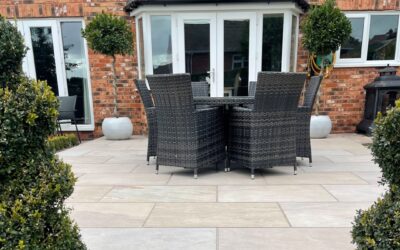
A tight patio — say 10×12 feet or smaller — feels even smaller when surrounded by a solid 6-foot fence. The trick to good small patio fence ideas is borrowing privacy without stealing daylight. A well-designed perimeter combines partial sightline blocking, visual lightness, and a material that doesn’t dwarf the space. After designing dozens of urban backyards in tight lots, I’ve found that the best solutions come in around $300 to $1,200 total and can be built over a single weekend.
Part of our Decks & Outdoor guide — explore the full guide →
Horizontal Slatted Cedar Fencing
A horizontal slat fence with 1×4 cedar boards spaced 1/2 inch apart visually widens a small patio because the eye reads the long lines as more space. Build the frame from pressure-treated 4×4 posts set in concrete (Quikrete Fast-Setting at $6 per 50-pound bag), then screw cedar boards horizontally with Spax #8 deck screws.
Total material cost runs about $14 to $18 per linear foot at a 5-foot height. Pre-staining the boards with Sherwin Williams Woodscapes before installation prevents the gray weathering that turns cedar dingy by year two.
Lattice Topper on Short Solid Base
Combining a 3-foot solid base with 18 inches of lattice on top creates 4.5 feet of effective privacy while feeling much lighter than a full fence. Buy pre-built cedar lattice panels (about $35 each at Home Depot) and a matching dog-ear picket section below.
The diamond gaps in lattice still allow airflow, which keeps a small patio cooler in summer. Train a clematis or climbing hydrangea up the lattice section for a layered, living screen by season two.
Corten Steel Privacy Panels
Weathering steel, sold under brands like Stahl Corten or via custom fabricators on Etsy, oxidizes to a warm rust color and never needs painting. A pair of 4×6-foot Corten panels mounted on galvanized posts costs roughly $400 to $700 depending on cutout patterns (florals, geometric, custom logos).
Place panels strategically, not continuously. Two panels positioned to block sightlines from the most visible windows or neighboring decks deliver more privacy than a continuous low fence. Allow 4 to 6 weeks for the rust patina to fully develop after installation.
Bamboo Roll-Up Screens
For renters or anyone who needs reversible privacy, bamboo roll-up screens attach to existing chain-link or wood posts with zip ties. A 6×16-foot Backyard X-Scapes bamboo roll costs about $90 and lasts 3 to 5 years before sun-fading becomes obvious.
Bamboo handles wind by flexing, which prevents the catastrophic blowdown that wood panel fences risk in 40+ mph gusts. It’s also one of the few options that meets HOA setback requirements in many subdivisions because it isn’t technically “permanent.”
Modular Composite Fence Sections
Trex Seclusions and Veranda composite fence panels come in 6-foot pre-built sections that drop into channel posts. The look is clean and uniform, with no visible fasteners. Cost lands at $80 to $130 per linear foot installed, which is on the high end, but the material lasts 25+ years with zero maintenance.
For a small patio, two or three panels arranged in an L-shape gives the maximum privacy bang per dollar without enclosing the entire yard. Trex offers an “Adirondack Brown” color that reads as natural wood from 10 feet away.
Living Wall on a Steel Frame
Build a 4×6-foot steel frame from 1-inch square tubing and attach 12 hanging planter pockets (Plant Wall Design or Florafelt run $40 to $80 per pocket). Plant with creeping fig, sedum, or trailing rosemary for a green screen that grows denser each season.
A drip irrigation kit from Rain Bird costs about $50 and automates watering, which is critical because vertical planters dry out twice as fast as ground beds. Plan for a $300 to $600 total build that doubles as a focal point.
Concrete Block Planter Wall
Stack standard 8-inch CMU blocks two or three courses high to create a 16- to 24-inch planter wall, then fill with soil and grow tall ornamental grasses (Karl Foerster grass or Miscanthus). The grass adds another 3 to 5 feet of soft screening above the block.
Total material cost for a 12-foot wall is about $200 in blocks plus $80 in soil and plants. Skim the exterior face with Quikrete Surface Bonding Cement for a smooth modern finish, or leave it raw for an industrial look.
Folding Wood Screens for Apartments
For balconies and rental patios where permanent fencing isn’t allowed, freestanding folding screens made from cedar or thermally modified ash work well. A 3-panel screen at 6 feet tall and 5 feet wide overall costs $150 to $300 to build with basic miter saw and pocket-hole jig skills.
Anchor with concrete-filled planter weights on each end to prevent tipping in wind. Treat with Penofin Marine Oil annually to prevent warping from sun exposure.
Lighting and Plant Pairings
Whatever fence style you choose, add lighting. Low-voltage LED strips along the top of a horizontal slat fence (Hampton Bay or Malibu sets at $80 to $150) extend patio use into the evening and visually push the perimeter back, making the space feel bigger after dark.
For plants, fill the base of your new fence with layered heights — 12-inch boxwood at front, 24-inch hostas in the middle, and 4-foot ornamental grasses at back. This three-tier planting softens any small patio fence ideas you build and disguises imperfect transitions where the fence meets the ground.
Permits and Property Lines
Most jurisdictions require a permit for any fence over 6 feet and many limit front-yard fences to 4 feet. Check with your local building department before ordering materials. If your patio sits within an HOA, confirm material and color restrictions in writing — vinyl and composite often get blocked even when wood is approved.
For property-line installations, pull a copy of your survey or hire a surveyor for $300 to $500 to mark corners. A fence even 6 inches over the line is the most common neighbor dispute in suburban America, and “I thought it was right” doesn’t hold up at the county clerk’s office.