Smart outdoor lighting brings app control, automation, and voice commands to the exterior of your home, letting you schedule pathway lights, trigger floodlights on motion, and set colorful scenes for a patio party from your phone. What was once a niche hobbyist project is now mainstream, with reliable systems from major brands that install in an afternoon. This guide explains the types of smart outdoor lighting, how the systems work, key features to look for, and what it costs to build a setup that fits your home.
Part of our Windows & Doors guide — explore the full guide →
- Why Go Smart Outdoors
- Types of Smart Outdoor Lighting
- How Smart Lighting Systems Connect
- Key Features to Look For
- Weather Ratings and Durability
- Popular Ecosystems and Brands
- Installation: DIY vs. Professional
- What Smart Outdoor Lighting Costs
- Automation Scenes and Routines
- Power, Wiring, and Signal Range
- Common Mistakes to Avoid
- Building a System That Grows With You
Why Go Smart Outdoors
Traditional outdoor lights rely on manual switches or simple timers and photocells. Smart lighting adds a layer of intelligence that delivers real benefits. You gain convenience through scheduling and voice control, so lights come on at sunset and off at bedtime automatically. You get security from motion-triggered lights, vacation randomization, and remote control that makes an empty house look occupied. And you gain ambiance from dimming and color options that transform a patio for entertaining. All of this is controlled from a single app, often the same one that runs your indoor smart devices.
Types of Smart Outdoor Lighting
Smart outdoor lighting comes in several forms, and most homes mix a few:
- Smart bulbs: screw into existing wet-rated fixtures and add app control and color; the easiest entry point.
- Smart fixtures: sconces, floodlights, and path lights with built-in smart capability.
- Smart floodlights and security lights: motion-activated, often paired with cameras.
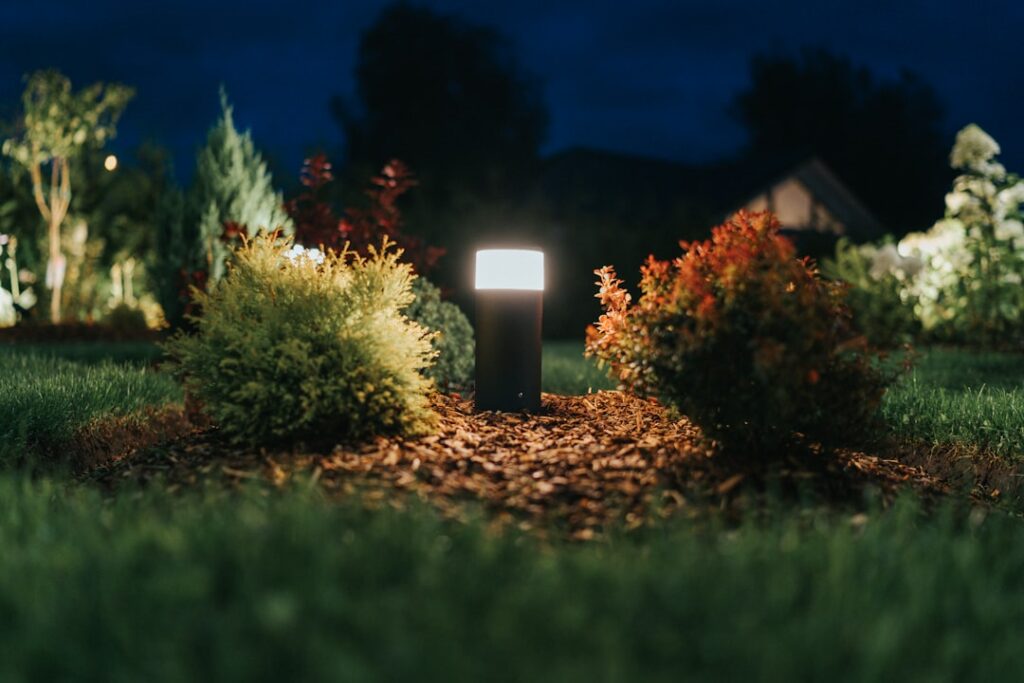
- Low-voltage smart landscape systems: path, spot, and wash lights on a 12-volt transformer with app control.
- Permanent smart eave lighting: app-controlled color LEDs mounted under the roofline for year-round accents and holiday displays.
- Smart string and deck lights: flexible, colorful lighting for patios and railings.
How Smart Lighting Systems Connect
Smart lights communicate over one of several wireless protocols, and understanding them helps you build a reliable system. Wi-Fi bulbs connect directly to your home network with no hub, which is simple but can strain the router if you add many. Zigbee and Z-Wave systems use a low-power mesh network through a hub, which is more robust and scalable for larger installations. Bluetooth devices connect directly to your phone at short range, fine for a single deck but limited for whole-yard control. Matter and Thread are newer standards designed to make devices from different brands work together more seamlessly. For a big outdoor system, a hub-based mesh network generally provides the most stable coverage across a large yard.
Key Features to Look For
Not all smart lights are equal. Prioritize these capabilities:
- Scheduling and sunset tracking so lights follow the changing seasons automatically.
- Motion and sensor integration for security and energy savings.
- Dimming and tunable white for warm ambiance and bright task light on demand.
- Color options (RGB) for holidays, parties, and accents.
- Voice assistant support for Alexa, Google Assistant, or Apple Home.
- Away and vacation modes that randomize lights to simulate occupancy.
- Weather resistance with proper wet or damp ratings for the location.
Weather Ratings and Durability
Outdoor smart devices must handle rain, heat, cold, and humidity. Check that fixtures and bulbs carry the correct rating: wet-rated for exposed positions and damp-rated for covered areas. Look for an IP rating on outdoor gear, with IP65 or higher indicating strong protection against dust and water jets. Cheap smart bulbs rated only for indoor use will fail quickly outdoors, so verify the rating before installing anything exposed to the elements.
Popular Ecosystems and Brands
Choosing an ecosystem early saves headaches. Philips Hue is a leading premium system with a hub, reliable performance, and a wide range of outdoor fixtures and bulbs. Ring and Wyze offer smart floodlights and security-focused lighting that ties into cameras. Kasa and Govee provide affordable Wi-Fi bulbs, strips, and permanent eave lights. Lutron offers robust, professional-grade control. For low-voltage landscape lighting, brands like Kichler and Hinkley offer smart-enabled systems. Pick a platform that works with your preferred voice assistant and that you can expand over time, since mixing incompatible systems creates a fragmented experience.
Installation: DIY vs. Professional
Many smart outdoor lighting upgrades are firmly DIY. Swapping standard bulbs for smart bulbs in existing fixtures takes minutes. Installing smart string lights, plug-in path lights, or a low-voltage landscape kit is a weekend project requiring only basic tools. However, hardwiring a new smart floodlight or fixture, running a new circuit, or installing permanent eave lighting across a roofline may warrant a professional, especially where new wiring, height, or roof access is involved. Low-voltage landscape systems are relatively safe for DIY because they run on 12 volts from a transformer, but the transformer connection to line voltage should be done correctly.
What Smart Outdoor Lighting Costs
Budgets scale with ambition:
- Smart bulbs: $15 to $50 each.
- Smart floodlights: $50 to $250 each.
- Hub (if needed): $40 to $100.
- Low-voltage smart landscape kit: $200 to $800 for a starter set.
- Permanent smart eave lighting: $1,500 to $5,000 professionally installed.
A modest smart outdoor setup, a few bulbs and a floodlight, can start under $150, while a comprehensive whole-property system reaches into the thousands.
Automation Scenes and Routines
The real power of smart outdoor lighting emerges when you set up automations that run without any effort. A sunset-to-bedtime routine turns your entry and path lights on at dusk and off at a set hour, adjusting automatically as the days lengthen and shorten. A motion routine can bring floodlights to full brightness when someone approaches after dark, then dim back down. Vacation mode randomizes lights across the property to simulate someone home. Entertaining scenes set warm, dimmed patio lighting with a single tap or voice command, and color scenes turn the whole yard festive for holidays. Geofencing can trigger lights when your phone approaches home, so you never arrive to a dark house. Spend time building these routines once, and the system quietly handles your lighting every day thereafter.
Power, Wiring, and Signal Range
Reliable smart outdoor lighting depends on solid power and signal. Many smart fixtures are hardwired to existing circuits, while low-voltage systems run from a transformer that steps household current down to 12 volts, which is safer to work with and easier to bury in the yard. Battery and solar smart lights avoid wiring entirely but trade some reliability and brightness, particularly in shaded or northern locations where solar charging is weak. Signal range is the other common hurdle, since a large yard can outrun your Wi-Fi. Mesh systems using Zigbee, Z-Wave, or Thread extend coverage by relaying signals device to device, and outdoor-rated smart plugs or repeaters can bridge dead zones at the far corners of the property. Plan for both adequate power and strong signal at every fixture location before you buy.
Common Mistakes to Avoid
- Using indoor-rated bulbs outdoors, leading to quick failure.
- Overloading Wi-Fi with too many bulbs instead of using a mesh hub.
- Mixing incompatible ecosystems that will not talk to each other.
- Ignoring weak signal at the far corners of a large yard.
- Setting lights too bright or too blue, creating harsh, unwelcoming glare.
Building a System That Grows With You
Smart outdoor lighting rewards a bit of planning. Start with one ecosystem, choose weather-rated devices, and prioritize the features you will actually use, such as scheduling and motion control. Add color and permanent accent lighting later if you want them. With the right foundation, you gain a system that greets you with light at sunset, deters intruders while you are away, and sets the perfect mood for a summer evening on the patio, all from a tap on your phone or a simple voice command.