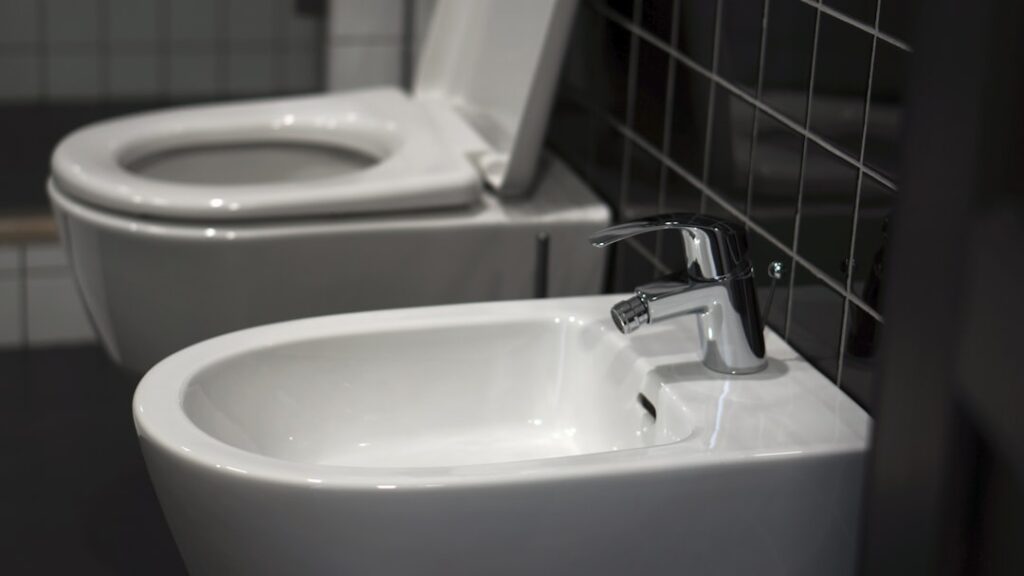
A smart toilet with bidet combines a standard flushing toilet with an electric, water-spraying seat that offers a heated seat, warm-water wash, adjustable spray position, and often a warm-air dryer and automatic lid. Prices run from about $400 for a bidet seat you add to your existing bowl to $8,000 for a fully integrated tankless unit. Before you buy, know this: a smart toilet with bidet is an electrical appliance and needs a grounded outlet nearby, which is the single detail most first-time buyers overlook.
Part of our Bathroom Remodeling & Flooring guide — explore the full guide →
- The GFCI outlet requirement — read this first
- Two ways to get there: bidet seat versus integrated unit
- Warm water: tank versus tankless heating
- Features that actually matter
- Water supply and fit
- How to install a bidet seat
- Cleaning and upkeep
- Who benefits most
- What to budget
- Electric versus non-electric bidet seats
- Power use and running costs
- Bottom line
The GFCI outlet requirement — read this first
Every electric bidet seat and integrated smart toilet plugs into a standard 120-volt outlet, and because it lives in a wet location right next to water, that outlet must be GFCI-protected (a ground-fault circuit interrupter, the type with TEST and RESET buttons). Modern bathroom codes already require GFCI outlets, but many older homes have no outlet near the toilet at all — the nearest one is by the sink, three feet away.
You have three options if there is no outlet behind the toilet:
- Use an existing GFCI outlet within reach of the unit’s cord (typically about 4 feet). Do not run an extension cord permanently in a bathroom.
- Have a licensed electrician add a GFCI outlet behind or beside the toilet — usually $150 to $350 depending on wall access.
- Choose a non-electric bidet seat instead (see below) if you cannot add power.
Never wire this yourself unless you are qualified. Water and 120 volts share a very small space here.
Two ways to get there: bidet seat versus integrated unit
You do not have to replace your whole toilet. There are two distinct product categories:
- Electric bidet seat (retrofit): $400 to $900. Replaces just your existing toilet seat. Works with most standard bowls. Brands include Toto Washlet, Bio Bidet, and Brondell. This is how most people start.
- Integrated smart toilet: $1,500 to $8,000. The bowl and washing system are one seamless unit, often tankless and skirted for easy cleaning. Toto Neorest, Kohler Numi 2.0, and Woodbridge models lead here.
For most homeowners a bidet seat delivers 90 percent of the experience at a quarter of the cost. Integrated units make sense during a full bathroom remodel or when you want the cleanest, most minimal look.
Warm water: tank versus tankless heating
How the unit heats wash water affects both comfort and price:
- Tank (reservoir) heating: Stores about a cup of warm water in a small heated tank. Cheaper, but the warm water runs out after roughly 30 to 60 seconds and needs time to reheat. Common on units under $600.
- Tankless (on-demand) heating: Heats water instantly as it flows, so warmth never runs out. Found on premium seats and integrated units. Draws more power — often 1,200 to 1,400 watts during heating, which is another reason the dedicated GFCI circuit matters.
Features that actually matter
Marketing lists dozens of functions. These are the ones you will use daily:
- Heated seat with adjustable temperature — the feature owners rank highest, especially in winter.
- Adjustable water temperature and pressure so the wash suits everyone in the household.
- Adjustable nozzle position and a separate rear and front wash.
- Self-cleaning nozzle that rinses before and after each use.
- Warm-air dryer — reduces paper use, though it is slower than a towel.
- Nightlight and auto lid — genuinely useful at night; auto-open lids run on a proximity sensor.
- Remote or side panel: wall-mounted remotes are easier for guests than fumbling for a side control.
Water supply and fit
The unit taps into your existing toilet water supply line through an included T-valve, so no plumber is usually needed for a bidet seat. Confirm two measurements before ordering: bowl shape (round versus elongated, the same 16.5-inch versus 18.5-inch distinction as any toilet seat) and the distance from the mounting bolts to the water tank, since bulky seats can foul a close tank. Most seats need at least 1.5 to 2 inches of clearance behind the bolt holes.
How to install a bidet seat
A retrofit bidet seat is a genuine DIY job, about 30 to 45 minutes:
- Turn off the water at the shutoff valve behind the toilet and flush to empty the tank.
- Remove the old seat by unscrewing the two bolts.
- Attach the mounting plate that comes with the bidet, then slide the seat onto it until it clicks.
- Install the T-valve on the water supply line — disconnect the hose feeding the tank, thread on the T-valve, then reconnect the tank hose and run the bidet’s hose to the seat.
- Turn the water back on and check every connection for drips.
- Plug into the GFCI outlet and run a test cycle.
Cleaning and upkeep
Smart bidet seats are easier to keep clean than they look. Most have a quick-release button so the seat slides off for scrubbing around the hinge. Run the self-clean nozzle cycle weekly. If your water is hard, a descaling cycle every few months keeps the spray even and protects the internal heater. Replace inline water filters, where fitted, roughly every six months. Wipe the seat with mild soap; harsh bathroom chemicals can damage the plastic and electronics.
Who benefits most
A smart toilet with bidet suits a wide range of households, and a few groups gain the most. People with limited mobility or reduced grip strength value the hands-free wash and dry, and a heated seat with a nightlight makes nighttime trips easier for older adults. Families cut their toilet-paper spending noticeably once everyone adjusts. Anyone in a cold climate ranks the heated seat as the standout comfort of winter. The one household to think twice is a rental where you cannot add a GFCI outlet — in that case a non-electric seat is the practical route, and it can move with you to the next home.
What to budget
- $400-$600: Entry electric bidet seat, tank heating, heated seat, remote. A strong first bidet.
- $700-$1,200: Tankless warm water, dryer, auto lid, better remote. The comfort sweet spot.
- $1,500-$4,000: Integrated smart toilet, skirted design, tankless, full automation.
- $4,000-$8,000: Flagship units with app control, ambient lighting, and premium flush engineering.
Add $150 to $350 if an electrician must install a GFCI outlet. Even so, a $500 bidet seat on an existing bowl is one of the highest-satisfaction bathroom upgrades per dollar you can make.
Electric versus non-electric bidet seats
If you cannot get power to the toilet and do not want to pay an electrician, a non-electric bidet seat is a real alternative. It costs $40 to $120, needs no outlet, and taps the same cold water supply line. The trade-off is honest: no heated seat, no warm-air dryer, and the wash water is whatever temperature comes from your line — often bracing in winter. A middle path is a non-electric seat that connects to both your cold line and a nearby hot line under the sink, mixing warm water with a manual dial and still needing no electricity. For anyone chasing the full smart-toilet experience, though, electric is the only way to get a heated seat, on-demand warm water, and automation, which circles back to why that GFCI outlet is worth installing.
Power use and running costs
A smart bidet is a modest but real addition to your electric bill. A tank-heated model draws power mostly to keep the reservoir and seat warm, while a tankless unit spikes to 1,200 to 1,400 watts only during the seconds it heats flowing water. In practice most households see a few dollars a month. You can trim that with the eco or energy-save mode nearly every unit includes, which lets the seat cool between uses or drops the heater overnight. Beyond electricity, the only recurring costs are the occasional water filter and, on some models, a deodorizer cartridge.
Bottom line
Decide first whether you want a retrofit seat or a full integrated unit, then confirm two things before you order: a GFCI outlet within cord reach, and your bowl’s shape and clearance. Get warm water via tankless heating if the budget allows, prioritize a heated seat and adjustable spray, and either way you get a cleaner, more comfortable bathroom without a full remodel.