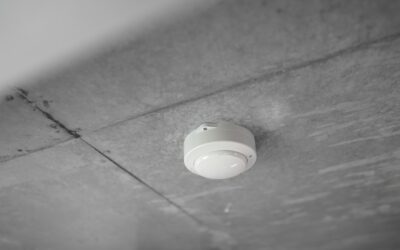
A smoke alarm that beeps in one corner of a sleeping house while a fire grows in the basement is nearly useless, and that is exactly the problem hardwired systems are designed to solve. Smoke alarm wiring connects detectors to your home’s electrical system and, just as importantly, links them to one another so that when one senses smoke, every alarm in the house sounds at once. This guide explains how that wiring works, what code requires, and where the line falls between homeowner basics and work that must be done or verified by a licensed electrician. Because this is both life-safety and mains electrical wiring, that distinction matters more here than in almost any other home project.
How Hardwired Smoke Alarms Work
A hardwired smoke alarm draws its primary power from your home’s 120-volt electrical system rather than relying solely on a battery. Each unit also includes a battery backup so it keeps working during a power outage, which is non-negotiable in modern systems and required by code in most jurisdictions. The combination means the alarm is always powered and the battery is not the sole line of defense. When the household power is on, the alarm runs on it; when the power fails, the battery takes over automatically.
Most hardwired alarms connect with a three-conductor cable: a hot (usually black), a neutral (usually white), and a third “interconnect” or “traveler” wire (usually red or yellow) that carries the signal between alarms.
What Interconnection Means and Why It’s Required
Interconnection is the feature that turns individual detectors into a whole-house system. When alarms are interconnected, smoke detected by any single unit triggers every connected alarm simultaneously. That early, building-wide warning is the entire safety value: it wakes everyone, no matter where the fire starts.
There are two ways to interconnect:
- Hardwired interconnection. The traveler wire physically links all the alarms. When one triggers, the signal travels along that wire and sets off the rest. This is the traditional method in homes built or rewired to current code.
- Wireless interconnection. Newer alarms communicate by radio frequency. They still need power (hardwired or long-life battery), but they “talk” to each other wirelessly, which is invaluable for retrofitting older homes without running new cable through finished walls.
Important compatibility note: interconnected alarms must generally be the same brand and a compatible model. Mixing manufacturers on a hardwired interconnect can prevent the signal from working and is not safe to assume.
What Code Requires
Smoke alarm requirements are governed by NFPA 72 (the National Fire Alarm and Signaling Code), the building code in force in your area, and your local jurisdiction’s amendments. While specifics vary, the widely adopted requirements call for smoke alarms:
- Inside every bedroom
- Outside each sleeping area, in the immediate vicinity of the bedrooms
- On every level of the home, including basements and habitable attics
- Interconnected, so all alarms sound together
- Powered with battery backup (hardwired with battery, or in some retrofits, sealed long-life battery units)
New construction and major renovations almost always require hardwired, interconnected alarms with battery backup. Requirements for replacing existing alarms in older homes vary by jurisdiction. Always confirm the exact rules with your local building or fire department before you start, because what is permitted as a retrofit differs from what is required in new work.
Proper Placement
Even perfect wiring fails if the alarms are in the wrong spot. Follow these placement guidelines, which align with NFPA 72 and manufacturer instructions:
- On ceilings, mount the alarm at least 4 inches from the nearest wall.
- On walls, mount it 4 to 12 inches down from the ceiling.
- Keep them away from kitchens (at least 10 feet from cooking appliances to limit nuisance alarms), bathrooms with showers (steam), and HVAC supply vents and ceiling fans that can blow smoke away from the sensor.
- Avoid corners, where air is “dead” and smoke arrives late.
- On vaulted ceilings, place the alarm near the peak but not at the very apex, per the manufacturer’s instructions.
Combination smoke and carbon monoxide alarms are common; if you use CO detection, follow the placement guidance for CO as well, typically near sleeping areas and on each level.
This Is Mains Wiring: Treat It Accordingly
Here is the part that cannot be glossed over. Hardwired smoke alarm wiring is connected to your home’s 120-volt electrical circuits. Working on it means working on live mains wiring, which carries a real risk of electric shock, and any mistake also risks the very fire protection you are installing. This is not a casual DIY project to improvise.
If you are doing anything beyond replacing an existing alarm on an existing, matching wiring harness, the wiring should be installed or verified by a licensed electrician, and the system must comply with NFPA 72 and your local code. Specifically, bring in a licensed pro to:
- Run new cable, add circuits, or wire alarms in new construction or a remodel
- Establish or modify a hardwired interconnect between units
- Connect alarms to a panel or junction box
- Verify that existing wiring, polarity, and interconnection are correct and code-compliant
Many jurisdictions also require permits and inspection for this work. The cost of a licensed electrician is small next to the consequences of a system that does not sound when it must. If you are not fully qualified and confident with mains wiring, do not improvise it.
What Homeowners Can Safely Do
Plenty of smoke alarm care is appropriate for any homeowner and requires no wiring:
- Test monthly. Press the test button on each alarm and confirm all interconnected units sound.
- Replace batteries in the backup compartment at least yearly, or when you hear the low-battery chirp.
- Vacuum the alarms a couple of times a year to clear dust that causes false alarms.
- Replace whole units every 10 years, or sooner per the manufacturer; the sensors degrade over time. Check the manufacture date printed on the back.
- Know the difference between a chirp (battery/end-of-life) and a full alarm.
When replacing a hardwired alarm with the same compatible model, power down the correct breaker first, but if you have any doubt about the wiring or compatibility, have an electrician confirm it.
The Bottom Line
Good smoke alarm wiring delivers two things that save lives: continuous power with battery backup, and interconnection so the whole house is warned at the first sign of fire. Place alarms in every bedroom, outside sleeping areas, and on every level, keep them tested and current, and follow NFPA 72 and local code. Above all, respect that this is live mains wiring tied to your family’s safety, so anything beyond a like-for-like alarm swap belongs in the hands of, or at minimum verified by, a licensed electrician.