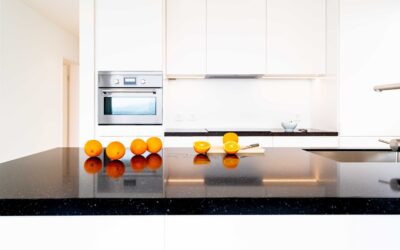
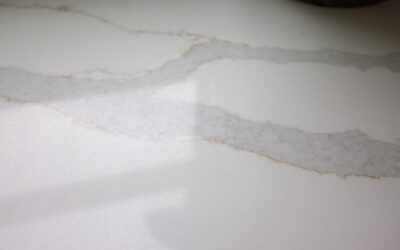
Both materials are quarried natural stone, both are heat-resistant, and both have been used in American kitchens for over 150 years. But that’s where the similarities end. Soapstone vs granite is one of the most misunderstood comparisons in countertop shopping because they perform almost opposite of each other on the metrics that actually matter — porosity, scratch resistance, and how each one ages. Picking right depends on what kind of cook lives in the kitchen.
Part of our Countertops guide — explore the full guide →
Mineral Composition
Granite is an igneous rock formed from cooled magma, composed mainly of feldspar, quartz, and mica. The crystalline structure makes it hard (Mohs scale 6-7) and gives it that characteristic grainy or speckled appearance.
Soapstone is a metamorphic rock made primarily of talc, with smaller amounts of magnesite, dolomite, and chlorite. The high talc content gives it a distinctive soft, soapy feel and a Mohs hardness of just 1-3 on the surface — though architectural soapstone is denser than the carving variety used in art.
Hardness and Scratching
Granite resists scratches from knives, dropped pans, and abrasive cleaners. You can chop directly on granite (though you’ll dull your knives) without leaving marks. This is the biggest single reason granite has been America’s most-installed natural stone for 30 years.
Soapstone scratches readily. A keychain dragged across the surface leaves a mark. But here’s the counterintuitive part: scratches on soapstone are repairable in 30 seconds with a piece of 220-grit sandpaper. Scratches on granite are permanent — fabricators can grind and polish small areas, but it costs $300-600 per repair.
For chefs who want a working surface that improves with character, soapstone wins. For households that want pristine perfection, granite wins.
Heat and Stain Resistance
Both materials handle direct heat exceptionally well. You can pull a cast iron skillet straight off a 500°F burner and set it on either surface without damage.
Where they diverge is liquid stains. Granite is porous and requires sealing every 1-3 years. Without sealing, oils, wine, and acidic liquids penetrate and leave permanent dark spots. Soapstone is non-porous, full stop. It cannot stain because liquids cannot enter the stone. Drop a glass of red wine on soapstone and walk away — it wipes up tomorrow with no trace.
This single property makes soapstone arguably the lowest-maintenance natural stone available, despite its surface scratching.
Appearance and Color Range
Granite comes in hundreds of color and pattern options — black, white, gray, blue, red, gold, green, multi-toned. Each slab is unique, but the variety lets you match nearly any kitchen design.
Soapstone has a much narrower palette: gray, dark gray, black, with white veining. That’s essentially it. The veining patterns vary, but if you want a colorful kitchen, soapstone limits you.
The big visual difference is patina. New soapstone is light gray. As mineral oil is applied (or as it ages naturally), it darkens to deep charcoal or black. This patina is part of the appeal but also commits you to a darker kitchen than you’d see at the slab yard.
Edge Profiles and Fabrication
Granite supports any edge profile — bullnose, ogee, beveled, eased. Fabrication is highly automated, which keeps costs in check.
Soapstone is softer and easier to fabricate but most fabricators stick to simpler profiles — eased edge, square, half-bullnose. Complex ogees and waterfall edges can be done but cost more because fewer shops have the experience.
Pricing Comparison
For installed countertops in a typical 30 sq ft kitchen:
- Granite: $40-100 per sq ft installed. Total project $1,200-3,000 for standard tier slabs, more for exotic colors.
- Soapstone: $80-150 per sq ft installed. Total project $2,400-4,500. Premium architectural grade hits the higher end.
Soapstone runs more expensive on average because the supply is smaller (only a handful of US quarries plus Brazilian imports) and the slabs run smaller, so fabrication labor per square foot is higher.
Maintenance Demands
Granite needs sealing every 1-3 years depending on use. The seal test is simple — drop water on the stone. If it beads, sealer is intact. If it absorbs within 5 minutes, time to reseal. Quality sealer (Bulletproof, Stone Pro) costs $30-60 and takes 30 minutes to apply.
Soapstone needs no sealing. Many owners apply mineral oil monthly to even out the patina, but it’s optional and reversible. Rub on, wipe off, done. That’s it.
How Each Ages
Granite ages by accumulating sealer-failure stains around faucets, sink rims, and cooktop edges. Without diligent maintenance, dark blotches develop within 5-10 years.
Soapstone ages by darkening uniformly as it patinas. Scratches and small chips become part of the character — much like a vintage butcher block or copper sink. Owners who like the “lived-in” aesthetic prefer this trajectory.
Choosing Between Them
The honest soapstone vs granite decision comes down to maintenance philosophy. Choose granite if you want a hard, low-effort surface that stays looking new for the warranty period and you’re willing to seal it occasionally. Choose soapstone if you want a working surface that won’t stain or burn, you embrace patina, and you’re okay with periodic scratch sanding.
For serious home cooks, soapstone is often the better functional choice despite the higher price. For households focused on resale appeal, granite has broader market acceptance and faster sale-time pricing in most markets.
Sourcing Tips for Both Materials
Always inspect actual slabs at the yard rather than choosing from photos. Both materials show massive variation slab to slab, even within the same color name. Bring a sample of your cabinet finish, backsplash tile, and floor to the slab yard so you can hold them against candidates. Mark your selected slab with a clear label and photo so the fabricator pulls the right one.
For soapstone, ask whether the slab is architectural or artistic grade. Artistic grade has higher talc content (softer) and is intended for carving, not countertops. Architectural soapstone from Vermont, Brazil, and Virginia quarries is denser and works better in kitchens. Granite buyers should specifically ask for the slab thickness — 3 cm (1-1/4 inch) is the residential standard, while some imports come in 2 cm and require lamination at exposed edges.