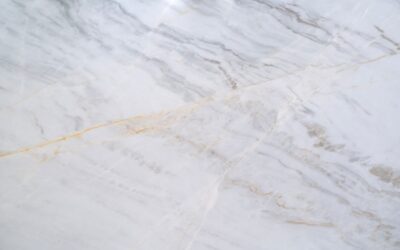
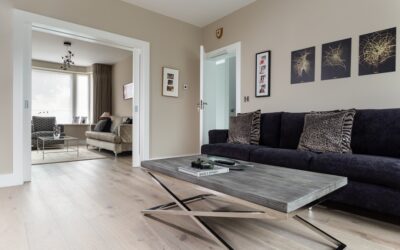
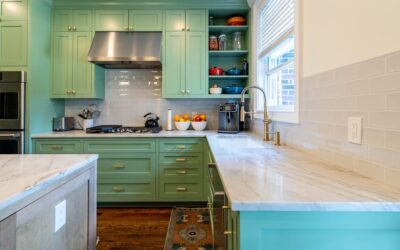
A single dropped lemon wedge will leave a permanent etch mark on marble before you finish typing the word “Bounty,” while the same wedge on granite slides off without leaving a trace. Marble vs granite flooring is one of the few stone-versus-stone decisions where the differences are mineralogical rather than aesthetic, and the wrong pick for a given room can cost $14,000 to $24,000 to replace once etching, scratching, or staining sets in. Both stones look luxurious at install — the divergence shows up at year three, year ten, and at resale.
Part of our Countertops guide — explore the full guide →
What Each Stone Actually Is
Marble is metamorphic limestone, primarily calcium carbonate at Mohs 3 to 4 hardness. The same chemistry that gives marble its veining also makes it react with any acid — citrus, vinegar, red wine, tomato sauce, sparkling water, even hard water with high mineral content over time. Granite is igneous rock built from quartz, feldspar, and mica at Mohs 6 to 7 hardness, with crystalline structure that resists both acids and abrasion at the molecular level.
That single difference — calcium carbonate vs interlocked silicate crystals — drives 80% of the practical decisions between the two materials. Hardness, porosity, slip behavior, and maintenance all flow from the underlying chemistry.
Hardness and Scratch Resistance
- Marble Mohs 3 to 4 — scratched by steel keys, kitchen knives, copper coins, and the grit tracked in from outdoor shoes
- Granite Mohs 6 to 7 — only scratched by harder minerals like topaz, corundum, or diamond — essentially uncrackable underfoot
- Marble shows wear paths through high-traffic areas within 5 to 8 years — visible dulling along entry routes
- Granite holds polish for 30 plus years in residential service with no refinishing
- Both can chip at corners from dropped cookware, with granite chips smaller and harder to see
- Refinishing differs — marble can be diamond-honed back to like-new for $4 to $7 per square foot, granite is harder to refinish but rarely needs it
Porosity and Staining
Granite porosity ranges from 0.4% to 1.5% by volume, with denser commercial-grade slabs at the low end. Marble porosity ranges from 0.5% to 2.5% — slightly more porous on average, but the bigger issue is what the pores absorb. A coffee spill on sealed granite wipes up with paper towels and leaves nothing. The same coffee on sealed marble can leave a faint brown shadow if not blotted within 30 minutes, and an unsealed slab stains permanently.
Sealing schedules reflect the difference. Granite often holds a single penetrating sealer like Miracle 511 for 3 to 5 years before retreatment. Marble needs sealing every 12 to 18 months in residential service, more often in kitchens and bathrooms where acidic exposure is daily.
Etching — The Marble Problem Granite Doesn’t Have
Etching is a chemical reaction, not a stain. When a citrus, vinegar, or wine spill sits on marble for even 30 seconds, the acid dissolves the surface calcium carbonate and leaves a dull spot that no cleaner removes. Polished marble shows etching most visibly because the surrounding gloss highlights the dulled patches. Honed marble hides etching better but still develops light-reflective shadows under raked sun.
Granite does not etch. The silicate crystals are chemically stable across the pH range a kitchen ever sees — from straight bleach at pH 13 to lemon juice at pH 2. That single property is why granite became the kitchen default for two decades and why marble countertops are still controversial in busy households.
Cost Per Square Foot in 2026
- Domestic Carrara marble tile (12×12 inch, 3/8 inch thick): $4.99 to $7.99 per sq ft — entry-level marble
- Calacatta and Statuario marble tile (18×18 inch, polished): $11.99 to $19.99 per sq ft — premium imports
- Bookmatched marble slabs (full 9 ft slabs): $24 to $38 per sq ft — luxury and statement installs
- Standard granite tile (12×12 inch, polished): $3.99 to $6.99 per sq ft — entry to mid-tier
- Premium granite tile (18×18 inch, exotic colors): $8.99 to $14.99 per sq ft — quartzite-like patterns
- Slab granite (full slabs cut for floors): $12 to $24 per sq ft installed — high-end whole-room installs
- Installation labor (any natural stone): $7 to $14 per sq ft, depending on layout pattern
- Honing, polishing, sealing supplies: $1 to $3 per sq ft over the project life
Total installed cost typically lands $14 to $28 per square foot for either stone on a standard layout, with marble pulling ahead in the premium ranges and granite staying steadier in mid-tier pricing.
Slip Resistance and Safety
Both stones can be slip hazards when polished and wet. Polished marble hits DCOF readings around 0.38 to 0.45 wet — at or below the 0.42 ANSI A326.3 threshold for residential wet areas. Polished granite runs similar, around 0.40 to 0.48 wet. Spec honed, flamed, or leathered finishes for bathrooms, entries, and pool surrounds where wet conditions are routine.
Flamed granite is the gold standard for outdoor stone applications — DCOF readings of 0.65 to 0.85 wet, with a textured surface that handles barefoot pool decks and patio installs without complaints. Marble does not flame well — the heat damages the stone — so marble loses the outdoor and wet-area applications by default.
Where Each Stone Earns Its Keep
Marble belongs in low-traffic, climate-controlled, shoes-off spaces. Primary bathrooms with vigilant cleaning, formal entryways with strict shoe rules, dressing rooms, dedicated home offices, and powder rooms all work. The visual return on investment is genuine — marble is the only stone that consistently reads “luxury” in 2026 design photography, and homeowners willing to maintain it get a floor with no manufactured competitor.
Granite earns kitchens, mudrooms, laundry rooms, sunrooms, entryways with kid traffic, basements, and any outdoor application. The stone is bulletproof against the realistic abuse those rooms see — dropped cookware, tracked grit, wet boots, ice melt, pet accidents — and the lifetime cost is the lowest of any premium flooring material once installed.
Resale and Appraiser Reality
Granite floors have lost some cachet in 2026 design, particularly in kitchens where quartz and porcelain slab now dominate the upper-tier market. The flooring market is different — appraisers still credit granite floors as a premium feature in entryways, mudrooms, and sunrooms, and most buyers see them as a positive. Recovery is typically 75% to 85% of installed cost in mid-tier homes.
Marble floors carry stronger appraisal value in homes above $1 million but can hurt resale in lower price brackets where buyers fear the maintenance commitment. Marble bathrooms recover 80% to 95% of cost. Marble kitchens recover 60% to 75% because the buyer pool shrinks. Pick the stone that matches the price tier of the home and the buyer who will live there next.
The Verdict for Most Buyers
Marble vs granite flooring isn’t a contest with a single winner — they solve different problems. Granite delivers durability, low maintenance, and broad usability across nearly any room. Marble delivers visual depth and luxury read that granite can’t match, at the cost of permanent vigilance about what touches it. For a primary residence kitchen, mudroom, or entry, granite wins on every practical axis. For a primary bathroom, formal dining room, or powder room in a mid-tier-and-up home, marble wins on visual impact and resale impact in the right price bracket. Spec each stone for the room where its strengths matter and its weaknesses don’t, and the floor outperforms either material used in the wrong place.
Prefer to explore on your own?
See how new flooring looks in your actual room in seconds — free, no signup.
Try the free Floor Studio →