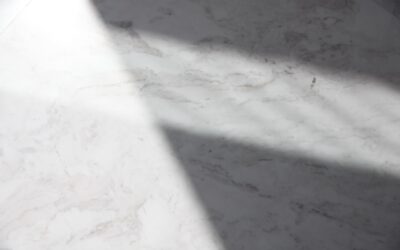
Few materials carry the prestige of marble, and none is more recognizable than the soft gray-white stone quarried in northern Italy. Carrara marble tile brings that classic, luminous look to floors, walls, showers, and backsplashes at a more accessible price than slab. But marble is a natural stone with real quirks: it is soft, it etches from acids, and it needs sealing. Understanding those traits before you buy is the difference between loving the result and regretting it. This guide covers the look, the care, and the practical realities.
Part of our Countertops guide — explore the full guide →
What Carrara Marble Looks Like
Carrara has a distinctive personality. The background is a soft gray to white, threaded with fine, feathery veins in gray and sometimes faint blue. Compared to its showier cousins, Carrara reads as subtle and understated, which is exactly why designers reach for it in spaces meant to feel calm and timeless. Because it is natural stone, no two tiles are identical. The veining shifts from piece to piece, giving an installation organic movement that no printed lookalike fully replicates.
Carrara vs. Calacatta and Other Marbles
Buyers often confuse the major white marbles, so it helps to know the differences.
- Carrara has a grayer base with thinner, more linear veining and a softer overall look. It is also the most affordable of the white Italian marbles.
- Calacatta has a whiter background with bolder, more dramatic veins, often with gold or warm tones. It costs more and feels more luxurious.
- Statuario sits between the two, with a bright white field and striking gray veining.
If you love the marble look but want to keep costs down, Carrara delivers the most refined option for the money.
Finishes and Where to Use Them
The finish changes both the appearance and the practicality of the tile.
- Polished Carrara is glossy and reflective, deepening the veining, but it shows etch marks and is slippery when wet
- Honed Carrara has a matte, satiny surface that hides etching better and offers more traction, making it the smarter pick for floors and showers
- Tumbled tile has soft, worn edges for a rustic, old-world feel
For bathroom floors and shower pans, honed is almost always the right call because of slip resistance and forgiveness with etching.
The Two Realities: Soft and Acid-Sensitive
Marble is calcium carbonate, which means two things you must plan around. First, it is relatively soft, so it scratches and chips more easily than porcelain. Second, it etches when it contacts acids. A splash of lemon juice, wine, vinegar, or even some cleaners can leave a dull spot where the acid eats into the polish. Etching is not a stain; it is a physical change to the surface. This is the single most important thing to understand before putting Carrara in a kitchen, where acidic spills are common. Many homeowners happily use it on walls and backsplashes where contact is limited, while choosing porcelain for kitchen counters.
Sealing and Maintenance
Sealing is non-negotiable with Carrara. A penetrating stone sealer slows absorption, giving you time to wipe up spills before they stain. Plan to seal at installation and reapply periodically, typically once or twice a year depending on use and the sealer. For daily care, follow a simple routine:
- Wipe spills immediately, especially anything acidic
- Clean only with a pH-neutral stone cleaner, never vinegar or acidic products
- Use mats and avoid dragging gritty items across the surface
- Dust-mop floors rather than using harsh chemicals
Test water absorption now and then; if water soaks in quickly instead of beading, it is time to reseal.
What Carrara Tile Costs
Carrara is the budget-friendly choice among white marbles, but it still costs more than ceramic or porcelain. Expect roughly $7 to $20 per square foot for the tile itself, with larger formats and specialty mosaics at the higher end. Installation adds labor, and because marble is soft and shows imperfections, hiring an experienced tile setter is worth the cost on a feature installation.
Best Uses for Carrara Tile
Carrara performs differently depending on where you put it, so match the application to its strengths and weaknesses.
- Bathroom walls and shower surrounds are ideal, since vertical surfaces avoid most acidic contact and foot traffic
- Backsplashes showcase the veining at eye level with limited exposure to spills
- Fireplace surrounds and accent walls highlight the stone with no wear concerns
- Bathroom floors work well with a honed finish and diligent sealing
- Kitchen floors can work, though the softness means scratches and etching are more likely in a high-traffic, spill-prone zone
The general rule is that the more acidic contact and abrasion a surface sees, the more carefully you should weigh Carrara against a porcelain lookalike.
How to Handle Etching and Stains
Even with good care, marble eventually shows its history, and knowing how to address marks keeps it looking its best. Light etching on polished marble can sometimes be reduced with a marble polishing powder rubbed gently over the dull spot, which restores some of the sheen. Deeper etching may require professional honing and repolishing. For stains, a poultice, a paste that draws the stain out of the stone, often lifts oil or organic discoloration that has set in. The key is to act on spills quickly and to accept that part of marble’s character is a lived-in patina that develops over years. Homeowners who embrace that aging tend to be happiest with the material.
Is Carrara Marble Tile Right for You?
Carrara rewards homeowners who value timeless beauty and accept a little maintenance. It is a superb choice for bathroom walls, shower surrounds, fireplace surrounds, and backsplashes, and it works on floors with a honed finish and diligent sealing. If you want a zero-maintenance surface that never etches, a marble-look porcelain may suit you better. But if you want the genuine depth and elegance of natural stone, Carrara marble tile remains a classic that never goes out of style.
The homeowners happiest with Carrara are those who go in with clear eyes. They choose a honed finish where slip resistance and forgiveness matter, they commit to sealing and gentle cleaning, and they accept that a little patina is part of living with natural stone. Approach it that way and you are rewarded with a surface that has been prized for centuries, one that brings a quiet, luminous beauty to a home that few materials can match. For a feature bathroom, a backsplash, or a fireplace surround, it is hard to do better.
Prefer to explore on your own?
See how new flooring looks in your actual room in seconds — free, no signup.
Try the free Floor Studio →