
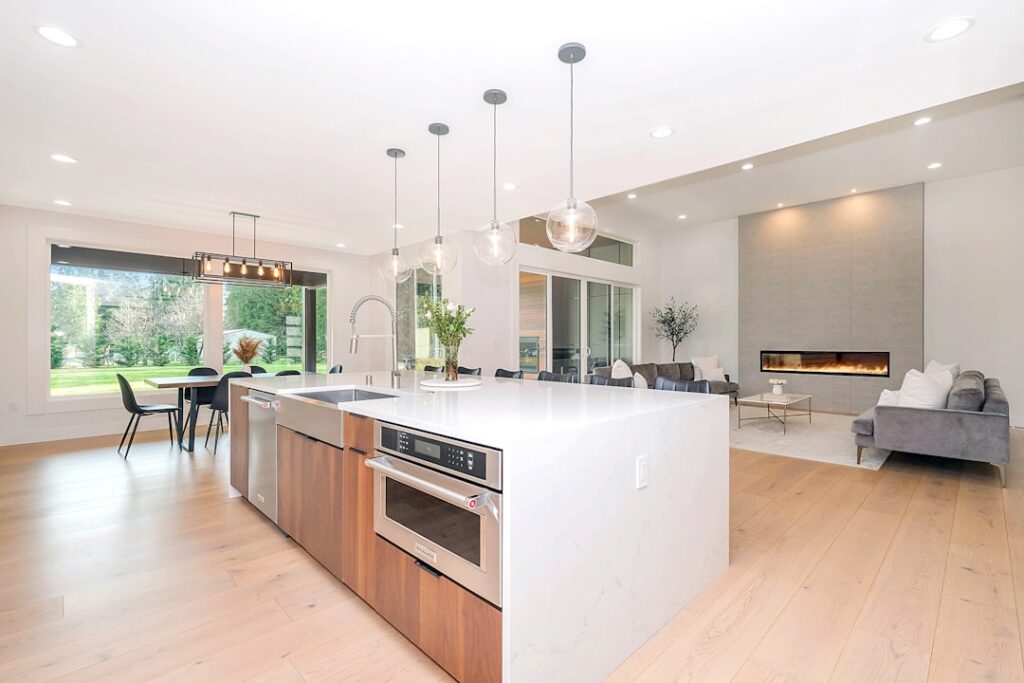
If you love the soft, cloudy elegance of Italian marble but dread its staining and etching, a Carrara quartz countertop may be exactly what your kitchen needs. This is an engineered quartz surface designed to mimic natural Carrara marble’s white background and delicate gray veining, giving you the timeless look without the fragility. Understanding what you are actually buying, how it differs from real marble, and what it costs will help you choose the right slab with confidence.
Part of our Countertops guide — explore the full guide →
- What a Carrara Quartz Countertop Really Is
- Carrara Quartz Versus Real Marble
- Carrara Versus Calacatta Quartz Patterns
- Popular Brands and Patterns
- Cost of a Carrara Quartz Countertop
- Care and Everyday Maintenance
- Pros and Cons to Weigh
- Fabrication and Installation
- Frequently Asked Questions
- The Bottom Line
What a Carrara Quartz Countertop Really Is
First, clear up the biggest point of confusion. A Carrara quartz countertop is not natural stone. It is engineered quartz, made from roughly 90 to 94 percent ground natural quartz bound with resins and pigments, then pressed and cured into a hard, nonporous slab. Manufacturers print or blend the pattern to imitate the look of Carrara marble, which is quarried in the Carrara region of Italy.
Genuine Carrara marble features a soft white to grayish background crossed by fine, feathery gray veins. Quartz versions recreate that palette using controlled patterning, so you get the marble aesthetic in a material that resists stains, etching, and daily wear far better than the real thing. It is essentially the low-maintenance answer to a marble look.
Carrara Quartz Versus Real Marble
The two materials look similar from across the room, but they behave very differently under a working kitchen’s demands.
- Porosity: marble is porous and needs sealing; quartz is nonporous and never needs sealing.
- Etching: acidic foods like lemon and vinegar etch dull spots into marble; quartz does not etch.
- Staining: wine and oil can stain marble; quartz shrugs them off.
- Consistency: every marble slab is unique with unpredictable veining; quartz patterns are consistent and predictable, so what you see in the showroom is what you get.
- Heat: marble tolerates heat better; quartz resin can scorch or discolor above roughly 300°F, so always use trivets.
If you want authentic natural stone and accept a patina over time, choose marble. If you want the marble look with almost no maintenance, Carrara quartz wins.
Carrara Versus Calacatta Quartz Patterns
Shoppers often confuse Carrara with Calacatta, and the distinction affects both look and price. Carrara patterns have a grayer, more muted background with finer, more frequent veining that reads soft and understated. Calacatta patterns feature a whiter background with bolder, more dramatic veins, often warmer in tone, and typically cost more. If you want a subtle, quiet marble look, Carrara-style quartz is your target.
Popular Brands and Patterns
Most major quartz manufacturers offer at least one Carrara-inspired design. Recognizable examples include:
- Caesarstone London Grey and Frosty Carrina.
- Silestone patterns in its Nebula and Eternal ranges that echo the Carrara look.
- MSI Q Carrara Grigio and Calacatta lines.
- Cambria designs such as Torquay that channel a similar soft-veined feel.
Names vary by brand, so shop by appearance rather than by the word “Carrara” alone. Always inspect a full slab or a large sample under your kitchen’s lighting, since vein contrast and background tone shift noticeably between products.
Cost of a Carrara Quartz Countertop
Engineered quartz with a Carrara pattern generally runs $50 to $100 per square foot installed, with most projects landing between $60 and $85 per square foot. Premium designer brands and thicker 3cm slabs push the top of that range, while promotional or builder-grade patterns can dip lower.
- Slab thickness: 3cm (about 1.25 inches) is standard for kitchens; 2cm is common for bathrooms and costs less.
- Edge profiles: a standard eased or beveled edge is included; ogee, mitered, or waterfall edges add labor.
- Cutouts and seams: sink, cooktop, and faucet cutouts plus additional seams on large kitchens raise the total.
For a typical 40-square-foot kitchen, budget roughly $2,400 to $4,000 installed for a mid-grade Carrara quartz. That often lands close to natural Carrara marble pricing while delivering far lower long-term maintenance.
Care and Everyday Maintenance
Ease of care is the whole reason to choose quartz over marble. Because the surface is nonporous, daily cleaning takes nothing more than warm water, a soft cloth, and a little dish soap or a pH-neutral spray. Spills wipe away without staining, and there is no sealing to schedule, ever.
A few habits protect the resin binder that holds quartz together. Keep hot pans off the surface with trivets, since sudden or sustained heat above roughly 300°F can cause discoloration or thermal cracking. Avoid harsh chemicals like oven cleaner, bleach, and abrasive scouring pads, which can dull the finish over time. For dried-on residue, a plastic scraper and a nonabrasive cleaner handle the job. Also keep quartz out of direct, constant sunlight where possible, as intense UV exposure can slowly yellow some lighter patterns over many years.
Pros and Cons to Weigh
Advantages
- Marble look with no sealing, etching, or staining worries.
- Nonporous and highly hygienic surface.
- Consistent, predictable pattern from slab to slab.
- Durable and scratch-resistant for daily kitchen use.
- Lower lifetime maintenance than natural stone.
Drawbacks
- Not natural stone, so it lacks marble’s true depth to a trained eye.
- Sensitive to high heat; always needs trivets.
- Can be damaged by UV over long, direct sun exposure.
- Not a DIY material; requires professional fabrication.
- Premium patterns rival real marble in price.
Fabrication and Installation
Quartz is engineered in factory slabs, typically around 120 by 55 inches, and your fabricator cuts your counters from those slabs. The process starts with a template of your cabinets, usually captured with a digital laser tool for accuracy. Because Carrara quartz has directional veining, ask your fabricator how the pattern will run across the counter and how seams will be matched so the veins flow naturally rather than stopping abruptly.
From template to installation, most projects take one to three weeks. On install day, a crew sets the slabs, levels them on your cabinets, and bonds seams with color-matched adhesive. Quartz is heavy, roughly 20 to 25 pounds per square foot at 3cm, so your base cabinets need to be solid and level. Seam placement is worth discussing in advance, since a well-planned seam on a busy vein is far less noticeable than one across an open field of white.
Frequently Asked Questions
Is Carrara quartz real marble?
No. It is engineered quartz manufactured to look like Carrara marble. It gives you the marble aesthetic while resisting the stains and etching that plague natural marble.
Does a Carrara quartz countertop stain?
Very rarely. The nonporous surface repels wine, oil, coffee, and juice, so quick wiping is all that is needed. There is no sealing required.
Can you put hot pans on it?
You should not. Quartz resins can scorch or crack from high heat, so always place hot cookware on a trivet or hot pad.
How can I tell Carrara from Calacatta quartz?
Carrara reads grayer with finer, subtler veining, while Calacatta has a whiter background with bolder, more dramatic veins and usually costs more.
The Bottom Line
A Carrara quartz countertop delivers the soft, gray-veined marble look most homeowners want while removing the sealing, staining, and etching headaches that come with the real stone. Shop by appearance across brands, view a full slab under your own lighting, keep trivets handy for hot pans, and enjoy a surface that stays beautiful with nothing more than routine wiping. For anyone who loves marble but cooks like a real kitchen demands, it is one of the smartest choices on the market.


