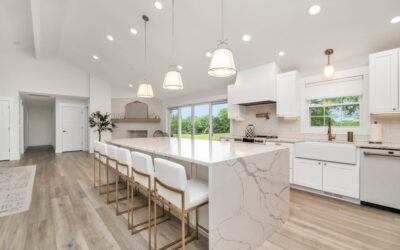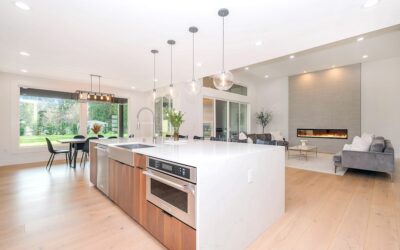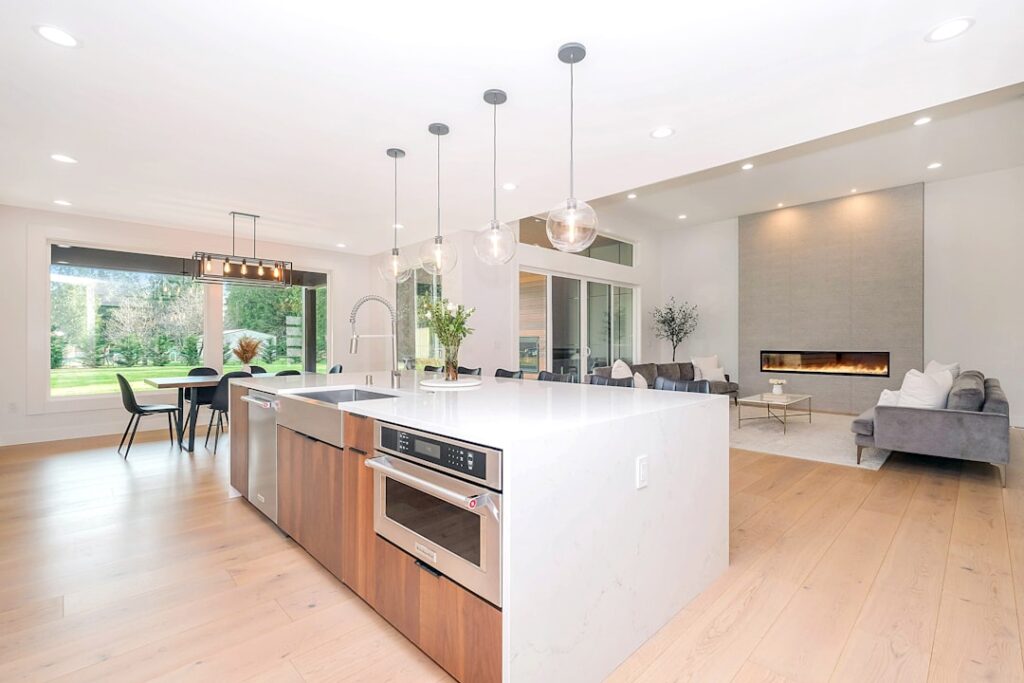
The bold gray veins running across a bright white slab are the reason Calacatta marble has been prized for centuries, and the reason it stains, etches, and scratches if you so much as slice a lemon on it. A Calacatta quartz countertop gives you that same dramatic, high-contrast look in an engineered material that shrugs off wine, coffee, and cutting boards. For homeowners who love the drama of natural marble but not the constant babysitting, it has become one of the most requested surfaces in kitchen design.
Part of our Countertops guide — explore the full guide →
Calacatta vs. Carrara: Know the Difference
These two names get used interchangeably, but they describe different looks. Calacatta features a whiter background with thick, bold, widely spaced veins in gray or warm gold, creating a luxurious, high-drama surface. Carrara has a softer gray-white background with finer, more feathery gray veining and less contrast. Calacatta reads as more upscale and statement-making, which is why it commands a premium even in engineered quartz. When you shop, confirm you are looking at a Calacatta pattern if bold veining is what you want, because the names are frequently mislabeled.
Why Choose Quartz Over Real Marble
Engineered quartz is roughly 90 to 94 percent ground natural quartz bound with resins and pigments. That composition gives it advantages real Calacatta marble cannot match:
- Non-porous surface — it never needs sealing and resists staining from wine, coffee, oil, and juice.
- Etch resistance — acidic foods that dull and etch marble leave quartz unaffected.
- Consistent pattern — you can preview the exact veining you will receive, unlike a one-of-a-kind natural slab.
- Durability — it resists scratches and chips far better than soft marble under daily kitchen use.
The trade-off is authenticity and heat tolerance. A trained eye can spot engineered veining, and the resin binder means you should never set a hot pan directly on quartz, since heat above roughly 300°F can scorch or discolor it.
What a Calacatta Quartz Countertop Costs
Pricing lands in the mid-to-upper range of quartz. Expect $60 to $120 per square foot installed for most Calacatta-look quartz, with premium designer patterns from top brands reaching $120 to $200 per square foot. A typical kitchen with 40 to 50 square feet of counter therefore runs roughly $3,000 to $8,000 installed. Costs climb with thicker slabs, mitered edges that create a chunky waterfall look, and complex cutouts for farmhouse sinks and cooktops. Always price by the installed square foot, not the slab alone, since fabrication and installation are a major share of the total.
Top Brands and Patterns to Know
Several manufacturers produce highly regarded Calacatta patterns, each with a slightly different vein style and background tone. Caesarstone, Cambria, Silestone, MSI, and LG Viatera all offer multiple Calacatta variations, from crisp cool-white backgrounds with charcoal veins to warmer creams with gold accents. Because the look varies so much between lines, request a full-size sample or, better, view the actual slab at the fabricator’s yard before committing. Small chips never capture how a bold vein will flow across a full island.
Choosing the Right Edge and Finish
The edge profile shapes the whole feel of the counter. A simple eased or straight edge keeps the look modern and lets the veining do the talking, while a mitered edge builds a thick, substantial slab that suits a luxury kitchen. Most Calacatta quartz comes in a polished finish that plays up the white brightness and vein contrast, but honed and matte finishes are increasingly available for a softer, more marble-authentic surface that hides fingerprints better. Matte finishes can show smudges from oils, so wipe them regularly.
Caring for the Surface
Maintenance is refreshingly simple, which is the whole point. Wipe daily with warm water, a drop of dish soap, and a soft cloth. Skip abrasive pads, scouring powders, and harsh chemicals like bleach or oven cleaner, which can dull the polish over time. For dried-on food, let a damp cloth sit to soften it rather than scraping. The two rules that matter most: always use a trivet or hot pad under hot cookware, and use a cutting board rather than slicing directly on the surface, which protects your knives more than the counter.
Where It Works Best
Calacatta quartz shines as a focal point. It looks spectacular on a large kitchen island, as a full-height backsplash that showcases the veining vertically, and in bright bathrooms as a vanity top. It pairs beautifully with white and navy cabinets, warm brass or matte black hardware, and both modern and transitional designs. In a small kitchen, a bold Calacatta pattern can feel busy, so some designers pair a dramatic island slab with quieter perimeter counters to balance the drama.
Is It Right for Your Kitchen?
A Calacatta quartz countertop is the best of both worlds for homeowners who want marble’s timeless drama without the maintenance and worry. You get the bold veining and bright white background that make a kitchen feel custom, plus a surface that survives real family cooking. Budget for the mid-to-high price of a premium quartz, view the actual slab before you buy, and protect it from direct heat, and it will look as striking a decade from now as the day it was installed.