The look of genuine Calacatta marble, with its dramatic gray veining warmed by streaks of gold, has long been the gold standard of luxury countertops, and a Calacatta Gold quartz slab delivers that same elegance without marble’s fragility. Engineered quartz captures the bold, flowing veins and creamy background of the natural stone while resisting stains, etching, and scratches that plague real marble. For homeowners who want the high-end marble aesthetic in a hardworking kitchen, this material is one of the most popular choices on the market. This guide covers what it is, what it costs, and how to use it well.
Part of our Countertops guide — explore the full guide →
What Is a Calacatta Gold Quartz Slab
Quartz countertops are engineered from roughly 90 to 95 percent ground natural quartz bound with resins and pigments. A Calacatta Gold quartz slab is designed specifically to imitate the appearance of rare Calacatta marble, which comes from quarries in Italy and is prized for its bright white-to-cream background and thick, contrasting veins. The gold in the name refers to the warm amber and taupe tones woven through the gray veining.
Because the pattern is manufactured rather than mined, quality Calacatta Gold quartz offers the beauty of the marble look with far more consistency and none of the porosity. You get the drama of bold veining and the warmth of the golden tones in a surface that is non-porous, extremely hard, and built for everyday use.
Calacatta Versus Carrara Veining
Shoppers often confuse Calacatta with Carrara, but the veining is distinctly different and worth understanding before you choose. Calacatta patterns feature a whiter, brighter background with bold, dramatic, widely spaced veins, giving a luxurious, high-contrast look. Carrara, by contrast, has a grayer background with softer, finer, more feathery veining that reads as subtle and understated.
Calacatta Gold specifically adds those warm golden undertones to the mix, which makes it pair beautifully with brass and gold fixtures, warm wood cabinetry, and cream tones. If you want a statement countertop that draws the eye, the bold Calacatta veining delivers more drama than the quieter Carrara look.
What It Costs
Calacatta Gold quartz sits in the premium tier of engineered stone because of its striking, complex pattern. Expect prices to run roughly $60 to $120 per square foot installed, depending on the brand, slab thickness, and edge profile you choose. Higher-end designer lines with especially realistic, continuous veining command the top of that range.
That is more than a basic solid-color quartz but often comparable to or less than genuine Calacatta marble, which can cost far more and demands ongoing sealing and delicate care. When you factor in that quartz never needs sealing and resists the etching and staining that would damage real marble, many homeowners find the Calacatta Gold quartz slab the better long-term value for the look they want.
Durability and Maintenance
The practical advantages over marble are the whole point of choosing quartz. Because it is non-porous, a Calacatta Gold quartz slab does not absorb liquids, so wine, coffee, oil, and juice wipe away without staining. It never needs sealing, unlike marble and granite, which require periodic resealing to stay protected. It is also highly scratch and chip resistant thanks to the density of the engineered material.
Maintenance could not be simpler. Daily cleaning is just warm water and mild dish soap or a pH-neutral cleaner. The main caution is heat, since the resins in quartz can scorch or discolor under a hot pan, so always use trivets and hot pads. Avoid harsh abrasive scrubbers and bleach-based cleaners, which can dull the surface over time, and your countertop will keep its bright, veined beauty for decades.
Best Uses in the Home
Calacatta Gold quartz shines anywhere you want the marble look with easy upkeep. Its versatility makes it a favorite across the home.
- Kitchen countertops and islands: the flagship use, where the bold veining becomes a centerpiece and the stain resistance handles daily cooking.
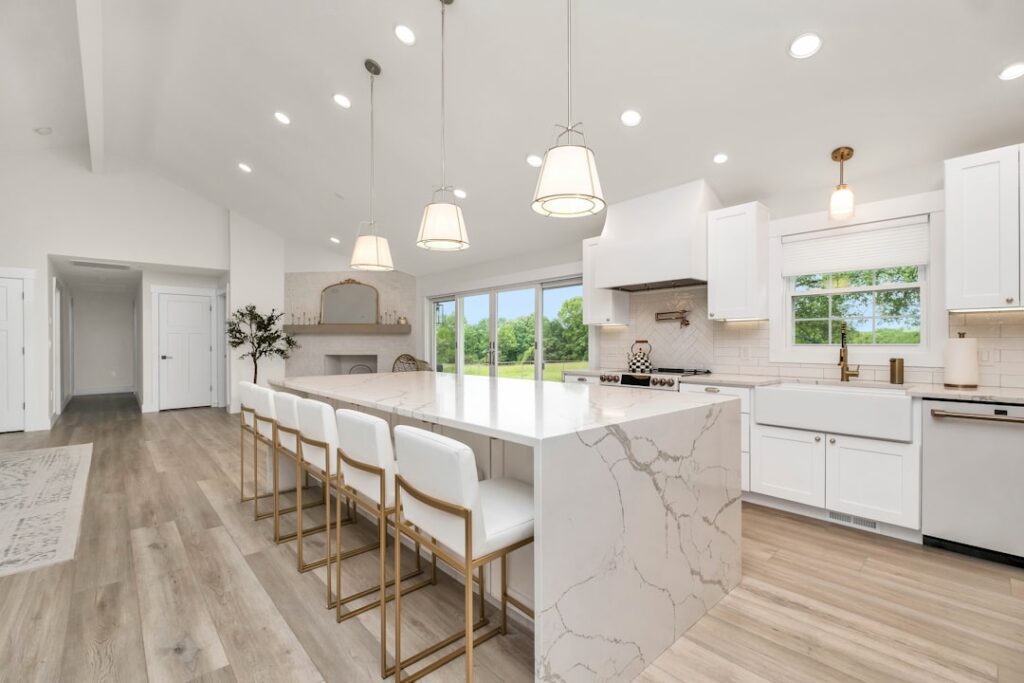
- Waterfall islands: running the veined slab down the sides to the floor showcases the pattern dramatically.
- Full-height backsplashes: extending the slab up the wall creates a seamless, high-impact statement.
- Bathroom vanities and shower surrounds: the waterproof, non-porous surface is ideal for wet areas where marble would struggle.
Pair it with warm metals like brass and gold to echo the golden veining, or with matte black and white cabinetry for a crisp, modern contrast. Either direction plays to the slab’s strengths.
Choosing a Quality Slab and Fabricator
Not all Calacatta Gold quartz is created equal, so it pays to inspect actual slabs before buying rather than choosing from a small sample chip. The realism of the veining varies widely between manufacturers, and the best slabs feature continuous, flowing veins that carry across the surface with natural variation rather than an obvious repeating pattern. Ask to see the full slab in person and picture how the veining will fall across your island and countertops, since a good fabricator can book-match and lay out the slab so the pattern flows across seams. Confirm the thickness you are getting, typically two or three centimeters, and discuss the edge profile, because a mitered edge on an island can make a standard slab look like a thick, luxurious block of solid stone. A skilled fabricator with experience seaming veined quartz is worth seeking out, as clumsy seam placement can interrupt the marble effect that made you choose the material in the first place.
Is It the Right Choice for You?
A Calacatta Gold quartz slab is an excellent choice for homeowners who love the luxurious, dramatic look of Calacatta marble but want a surface that stands up to real life. You get the bold veining and warm golden tones in a material that resists stains, never needs sealing, and shrugs off the etching that would ruin natural marble. If your heart is set on the authenticity and cool touch of genuine stone, real marble still has its place, but for a beautiful, low-maintenance, hardworking countertop, this engineered slab is tough to beat.