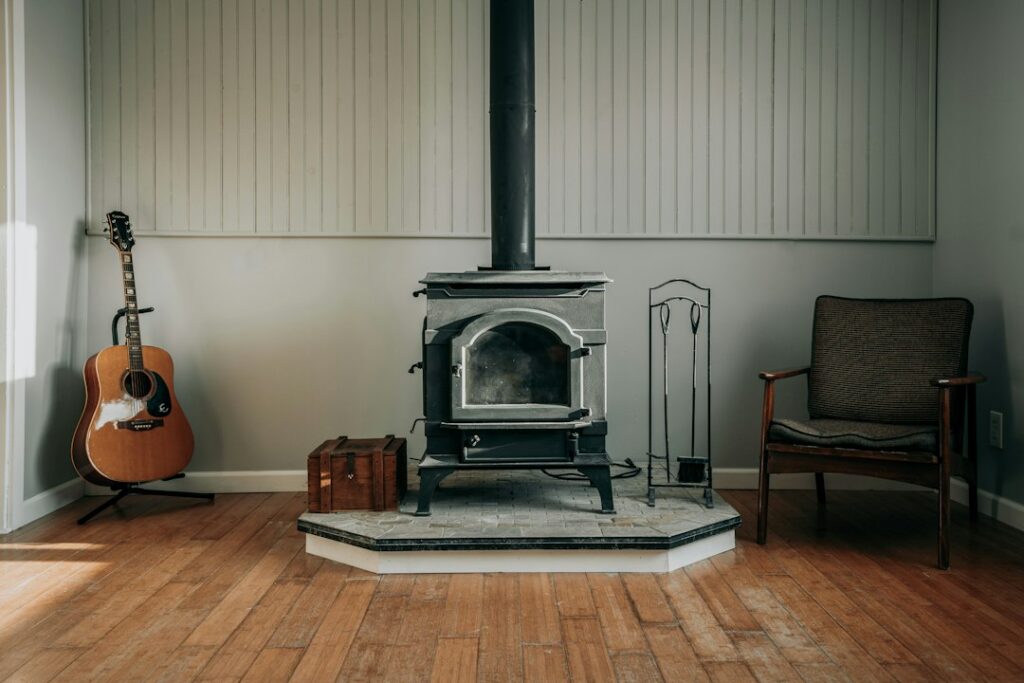
Most wood stoves blast heat while the fire roars and go cold within an hour of the last log turning to coals. A soapstone wood stove behaves differently: its stone panels soak up heat during the burn and release it for hours afterward, giving you a steady, gentle warmth instead of a hot-then-cold cycle. That comfort comes with trade-offs in price, weight, and warm-up time that you should understand before you commit. This guide walks through how these stoves work, what they cost, how to site and install one, and how to live with it day to day.
Part of our Countertops guide — explore the full guide →
- How a Soapstone Wood Stove Stores and Releases Heat
- Soapstone vs. Cast Iron vs. Steel Stoves
- What a Soapstone Wood Stove Costs Installed
- Weight, Floor Loading, and Hearth Requirements
- Clearances, Venting, and Code Basics
- Breaking In a New Soapstone Stove
- Daily Operation and Wood Selection
- Maintenance and Long-Term Care
- Is a Soapstone Wood Stove Right for Your Home?
How a Soapstone Wood Stove Stores and Releases Heat
Soapstone is a dense, talc-rich metamorphic rock that weighs roughly 170 to 185 pounds per cubic foot. It has a specific heat of about 0.98 kJ/kg per degree Kelvin, which is roughly double that of cast iron and steel. In plain terms, every pound of stone can hold about twice as much heat energy as a pound of metal at the same temperature. Because soapstone also conducts heat evenly, it warms without developing the hot spots that can crack other stones.
A typical stove wraps a cast iron or steel firebox in soapstone panels 1 to 1.5 inches thick. During a burn, the panels climb slowly to surface temperatures in the 300°F to 450°F range. After the fire dies down, that stored energy radiates into the room for another 4 to 8 hours, depending on the stove’s mass and how hot you ran it. The heat feels softer than the radiant blast off bare steel, closer to the warmth of a masonry heater than a traditional box stove.
You pay for that thermal mass on the front end. A cold soapstone stove can take 60 to 90 minutes to bring a room up to temperature, while a steel stove might do it in 20 to 30 minutes. If you want fast heat when you walk in the door on a Friday night, stone is the slower choice. If you burn daily through a long heating season, the even output is hard to beat.
Soapstone vs. Cast Iron vs. Steel Stoves
Choosing a stove body is really a choice about how you want heat delivered. Here is how the three common materials compare for a homeowner heating 1,200 to 2,000 square feet.
| Material | Heat-Up Time | Heat After Fire Dies | Typical Stove Price |
|---|---|---|---|
| Soapstone | 60-90 min | 4-8 hours | $3,000-$6,500 |
| Cast iron | 30-45 min | 1-3 hours | $2,000-$4,500 |
| Plate steel | 20-30 min | Under 1 hour | $1,200-$3,500 |
Steel is the budget workhorse and heats up fast. Cast iron splits the difference and offers decorative castings. Soapstone costs the most and weighs the most, but it smooths out temperature swings and lets you load the stove fewer times per day. Many owners find they burn about the same amount of wood; they simply get more comfortable heat from each load because less of it rushes up the flue during peak burn.
Catalytic vs. Non-Catalytic Designs
Soapstone stoves come in both catalytic and non-catalytic versions. Catalytic models route smoke through a ceramic or steel honeycomb combuster that ignites gases at around 500°F, allowing long, low burns of 10 to 12 hours or more. They require a combuster replacement every 3 to 6 seasons at $150 to $300. Non-catalytic stoves use secondary air tubes to burn off smoke at high temperature, are simpler to operate, and tend to like hotter, shorter fires. For overnight heat, catalytic soapstone is a strong pairing because the stone keeps releasing warmth while the fire idles.
What a Soapstone Wood Stove Costs Installed
Budget for more than the sticker price. A complete installation usually includes the stove, venting, a hearth pad, permits, and labor. Here is a realistic range for a single-story home with a new chimney run:
- Stove: $3,000 to $6,500 for mid-size models rated for 1,000 to 2,500 sq ft
- Class A insulated chimney pipe: $1,200 to $3,000 for a through-the-ceiling or through-the-wall run
- Stainless liner for an existing masonry chimney: $1,500 to $3,500 installed
- Hearth pad: $300 to $1,500 depending on size, R-value, and finish (tile, slate, or stone)
- Delivery and placement: $200 to $600, higher if the stove must go up or down stairs
- Permit and inspection: $75 to $300 in most jurisdictions
- Labor: $800 to $2,500 for a certified installer
All-in, most homeowners spend $6,000 to $12,000. Tapping into an existing, sound masonry chimney lands you at the low end; a two-story chimney run with a roof penetration pushes toward the top. Tax incentives for high-efficiency wood heaters have changed several times in recent years, so confirm what is currently available with a tax professional rather than counting on a credit when you set your budget.
Weight, Floor Loading, and Hearth Requirements
Soapstone stoves are heavy. Mid-size models commonly weigh 400 to 700 pounds, and large units can top 800. Add a stone or tile hearth pad and you may concentrate 900 pounds or more on a footprint of about 16 square feet. Most conventional floors framed with 2×10 joists at 16 inches on center handle this without trouble when the stove sits near a bearing wall, but older homes, notched joists, or long spans deserve a second look. If your floor already bounces or you are placing the stove mid-span over a basement, have a contractor or engineer check whether sistering joists or adding a post is warranted.
Your hearth pad must meet the stove’s listed requirements, which fall into two categories:
- Ember protection: a noncombustible surface that stops sparks and falling coals. Many stoves with raised bottoms or bottom heat shields only need this.
- Thermal protection: an insulated pad with a specified R-value or k-factor, required when the stove radiates significant heat downward.
The pad typically needs to extend 16 to 18 inches in front of the loading door in the U.S. and 8 inches beyond the sides and back, though your stove’s installation manual is the final word. Do not assume a thin layer of ceramic tile over plywood qualifies as thermal protection; tile set on cement board over plywood has a very low R-value unless the manual says otherwise.
Clearances, Venting, and Code Basics
Every certified stove ships with a manual listing minimum clearances to combustibles, which are anything that can burn: drywall-faced walls, wood trim, furniture, and curtains. Unprotected clearances for soapstone stoves often run 12 to 20 inches to side and rear walls, and many models can be moved closer with rear heat shields or a listed wall shield with a 1-inch air gap. Follow the manual rather than a rule of thumb; the listing is what the inspector checks.
For venting, most soapstone stoves use a 6-inch flue. Single-wall stovepipe is acceptable inside the room if it keeps at least 18 inches from combustibles, while double-wall connector pipe usually allows 6 inches. Where the pipe passes through a ceiling, wall, or roof, you need a listed Class A insulated chimney system with its own support and firestop. Outside, the common “3-2-10” guideline applies: the chimney must extend at least 3 feet above the roof where it penetrates and at least 2 feet higher than any part of the building within 10 feet horizontally. Short chimneys are the most common cause of poor draft and smoke spillage.
Any new stove sold in the U.S. should meet the EPA 2020 emissions standard of 2.0 grams of smoke per hour for cordwood testing. Check the label before buying a used stove; older units may not be legal to install in some counties with burn restrictions.
When to Call a Licensed Professional
Wood stove installation involves fire, structural loads, and carbon monoxide risk, so bring in a pro in these situations: you are adding a new chimney or roof penetration, relining a masonry chimney, questioning your floor’s capacity, or your jurisdiction requires a permit (most do). Look for an NFI-certified wood-burning specialist or a CSIA-certified chimney sweep for the venting work. Your homeowner’s insurance carrier may also require a permit and final inspection before it covers a solid-fuel appliance. Install working smoke alarms and a carbon monoxide alarm on every level, including one near sleeping areas, before your first fire.
Breaking In a New Soapstone Stove
Soapstone needs a gentle introduction. Stone panels hold residual moisture from quarrying and fabrication, and heating them too fast can cause hairline cracks or open cement seams. Manufacturers typically call for a break-in schedule like this:
- Fire one: a small kindling fire, keeping the stovetop under about 250°F, then let it die out completely.
- Fires two and three: slightly larger fires, peaking around 300°F to 350°F, with a full cool-down between each.
- Fires four and five: build toward normal loads, staying under 450°F.
- After that: normal operation, typically with a stovetop thermometer showing 400°F to 600°F depending on the model.
You will also notice an odor during the first several burns as the paint and gasket cement cure. Open a couple of windows and keep pets and kids out of the room. The paint on the cast iron frame is not fully set until it has reached operating temperature, so avoid wiping it during this period.
Daily Operation and Wood Selection
Stone rewards steady, consistent burning. Most owners settle into a routine of two or three loads per day during cold weather, with the stove never fully cooling between them. That keeps the soapstone “charged” and avoids the slow warm-up from a stone-cold start.
Your fuel matters more than the stove. Burn only seasoned hardwood with a moisture content of 20 percent or less, measured on a freshly split face with a $25 to $40 pin-type moisture meter. Oak, maple, ash, hickory, and cherry are ideal. Wet wood wastes energy boiling off water, lowers firebox temperatures, and coats the flue with creosote. Split wood should season for at least 12 months, and oak often needs 18 to 24 months, stacked off the ground with the top covered and the sides open to airflow.
Never burn painted or pressure-treated lumber, cardboard in quantity, trash, or driftwood. Treated wood releases toxic compounds, and salt from driftwood corrodes the stove and liner. A few pro habits help too:
- Open the air control fully for 15 to 20 minutes after every reload to establish a hot fire before turning it down.
- Rake coals toward the air inlet before adding wood so the new load catches quickly.
- Leave a 1-inch bed of ash on the firebox floor; it insulates and helps coals last longer.
- Use a magnetic stovetop thermometer, since stone surfaces run cooler than the steel firebox inside.
Maintenance and Long-Term Care
A well-kept soapstone stove can last 30 years or more. Plan on these tasks:
- Chimney sweep: at least once a year, or every cord or two if you burn heavily. Expect $150 to $350 per cleaning.
- Door and glass gaskets: test with a dollar bill closed in the door; if it slides out easily, replace the gasket. Kits cost $20 to $50.
- Catalytic combuster: inspect each season and replace when it no longer lights off or shows crumbling.
- Stone surfaces: dust with a dry cloth when cool. Light scratches can be sanded out with 220-grit paper and oiled with mineral oil for a darker, even patina.
- Cement joints: check seams between panels each fall and reseal small gaps with the manufacturer’s stove cement.
Hairline surface crazing on soapstone is usually cosmetic and common after a few seasons. A crack that goes through a panel, or a panel that shifts, is a reason to stop burning and call the dealer, since replacement panels are available for most models.
Is a Soapstone Wood Stove Right for Your Home?
A soapstone stove makes the most sense if you burn wood as a primary or major heat source, you are home most of the day, and you value steady comfort over fast warm-up. Open-plan homes and well-insulated houses benefit most because the stone’s gentle radiant heat spreads evenly without overheating the room near the stove. It is a weaker fit for a weekend cabin you visit occasionally, a room where you only want an evening fire, or a floor you cannot reinforce.
Before you buy, measure the room, check your chimney condition with a Level II inspection, confirm local permit and emissions rules, and talk with a certified installer about the stove’s weight and clearances. Get those pieces right and a soapstone wood stove can be one of the most comfortable heat sources you ever put in a house, warming the floors and furniture with a quiet, lasting glow long after the last log burns down.