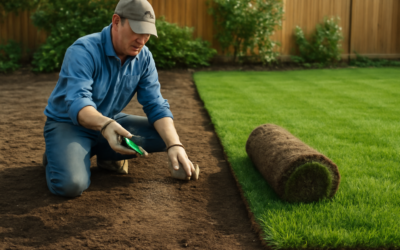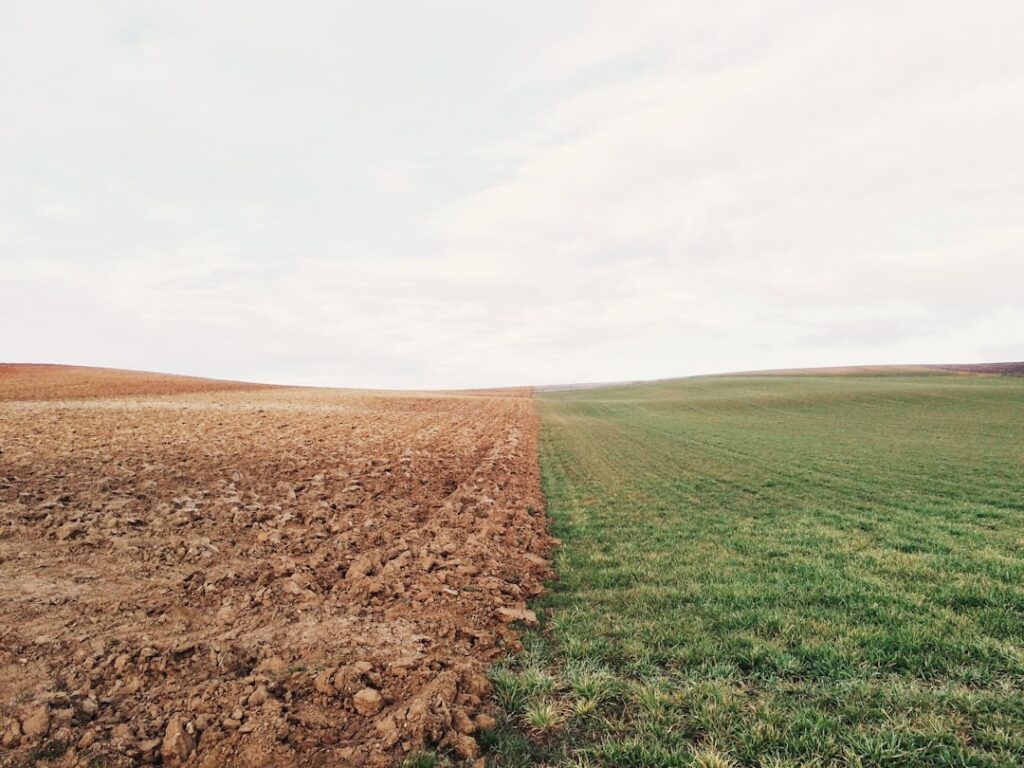
The instant-gratification part of your brain wants sod. The frugal part wants seed. Deciding between sod or seed comes down to four honest questions: how much you can spend, how fast you need a finished lawn, how much slope and erosion you are fighting, and how much sweat you are willing to put in over the following weeks. Both methods produce a beautiful lawn when done right. I have installed hundreds of each, and the “wrong” choice is almost always the one that ignored the homeowner’s real budget or timeline. Let me lay out the tradeoffs so you can pick with confidence.
- The Core Difference in a Sentence
- Cost Comparison per Square Foot
- Speed: How Fast You Get a Lawn
- Timing and Season Flexibility
- Erosion, Slopes, and Problem Sites
- Effort and Watering Demands
- Durability and Long-Term Quality
- Which Should You Choose?
- Soil Preparation: The Step Both Methods Share
- Maintenance in the First Year
The Core Difference in a Sentence
Seed is grass you grow from scratch on your own soil, cheap but slow. Sod is mature grass grown on a farm, harvested in rolls with its roots intact, and laid down as an instant lawn, expensive but immediate. Everything else, the cost, the timing, the labor, flows from that one distinction.
Cost Comparison per Square Foot
Money is usually the deciding factor, so start here. The gap is dramatic.
- Seed: Roughly $0.05 to $0.20 per sq ft for the seed itself. A 5,000 sq ft lawn might cost $150 to $400 in seed, starter fertilizer, and straw mulch combined if you do it yourself.
- Sod (DIY): $0.35 to $0.85 per sq ft for the sod rolls. That same 5,000 sq ft lawn runs $1,750 to $4,000 in materials before labor.
- Sod (professionally installed): $1.00 to $2.00 per sq ft installed, so $5,000 to $10,000 for 5,000 sq ft.
Seed can be five to ten times cheaper. For a large property, that difference can be thousands of dollars, which is why big rural lots almost always get seeded while small, high-visibility front yards often get sod.
Speed: How Fast You Get a Lawn
Sod wins on speed, no contest. The day it is laid, you have a green lawn. It is rooted enough to walk on lightly in about two weeks and fully knit down in three to four weeks.
Seed asks for patience. Germination takes 5 to 21 days depending on grass type, cool-season fescue and rye sprout fastest, bluegrass and warm-season Bermuda are slowest. From seeding to a mowable, usable lawn is typically 8 to 12 weeks, and reaching full thickness can take a full growing season. If you are hosting a graduation party in a month or selling the house in six weeks, sod is the answer.
Timing and Season Flexibility
Seed is fussy about when it goes down. Cool-season grasses seed best in early fall when soil sits at 50 to 65°F; the second-best window is early spring. Warm-season grasses want late spring soil at 65 to 70°F. Seed outside those windows and germination stalls or seedlings die in heat or frost.
Sod is far more forgiving. Because the grass is already mature, you can lay it almost any time during the growing season, including summer, as long as you water aggressively. That flexibility is a real advantage if your project timeline does not line up with the ideal seeding window.
Erosion, Slopes, and Problem Sites
On a slope, sod is often the smarter investment even though it costs more. Seed on a grade washes away in the first hard rain, leaving you with bare gullies and wasted money. Sod anchors immediately; its knitted root mat holds soil in place from day one, and you can even stake it on steep pitches.
Sod also shades out weeds instantly because it is a solid mat. A seeded lawn is an open invitation for crabgrass and broadleaf weeds during the weeks the young grass is still filling in, which means more weeding or careful use of seedling-safe pre-emergents. For erosion-prone, weed-heavy, or high-traffic sites, sod earns its price.
Effort and Watering Demands
People assume sod is the low-effort option because a crew rolls it out in a day. The truth is more nuanced. Both need serious water early on, but the schedules differ.
- New seed: Keep the top inch of soil constantly moist. That means light watering two to three times a day for the first two weeks, then tapering off. Miss a hot afternoon and the seedlings can die.
- New sod: Soak it thoroughly right after laying, then water daily for the first two weeks, about half an inch each morning, before backing off to deeper, less frequent watering.
The physical labor tilts the other way. Laying sod is heavy work, hauling and fitting 40-pound rolls, while spreading seed is comparatively easy. Neither is truly hands-off in the first month.
Durability and Long-Term Quality
Here is a point in seed’s favor that surprises people. Because seeded grass grows its roots directly in your native soil, it can develop a deeper, better-anchored root system over time and often adapts more thoroughly to your yard’s exact conditions. You also get more variety selection with seed, since you can buy custom blends tuned to sun, shade, or drought.
Sod is grown on farm soil, so its roots have to bridge into your ground; done properly this is seamless, but poor soil prep can leave sod struggling. Once both lawns are mature, a well-established seeded lawn and a well-established sodded lawn are essentially indistinguishable. The differences are all in the first year.
Which Should You Choose?
Use this quick decision guide based on what I tell homeowners on site.
- Choose seed if: your budget is tight, the area is large, the ground is fairly flat, and you can wait a couple of months and stay on a strict watering schedule during the ideal season.
- Choose sod if: you want an instant lawn, the site slopes or erodes, weeds are a battle, you are outside the seeding window, or the area is small enough that the premium is manageable.
A hybrid approach works well too. Many homeowners sod the high-visibility front yard and slopes, then seed the larger, flatter backyard to control cost. Whichever route you take, the real determinant of success is soil prep and watering, not the method itself. Loosen and level the top few inches, add starter fertilizer, and water diligently, and the choice between sod or seed becomes a matter of budget and patience rather than a gamble on results.
Soil Preparation: The Step Both Methods Share
Whether you seed or sod, the work that happens before either goes down decides whether it thrives. Start by clearing the area of old grass, weeds, rocks, and debris. Loosen the top 4 to 6 inches of soil with a tiller or rake so roots can penetrate; compacted soil defeats even the best seed or the healthiest sod. This is also the moment to run a soil test and amend, add compost to improve structure, and adjust pH toward the 6.0 to 7.0 range most turf grasses prefer.
Grade the area next, sloping it gently away from the house for drainage and breaking up any low spots that would collect water. Roll or lightly firm the surface so it is smooth but not compacted, then apply a starter fertilizer. Skipping this prep is the number one reason both seeded and sodded lawns disappoint. I have seen premium sod fail on hard, unprepared clay and cheap seed flourish on well-worked soil. The method is far less important than the foundation you lay it on.
Maintenance in the First Year
Both lawns need a gentle first season to mature. Hold off on the first mow until seeded grass reaches about 3 to 3.5 inches or sod has rooted firmly, usually two to three weeks, then never cut more than a third of the blade at once. Stay off new sod and young seedlings as much as possible for the first few weeks so you do not create ruts or tear roots. Wait to apply broadleaf weed killers until a seeded lawn has been mowed three or four times, since herbicides can kill tender seedlings.
Feed both lawns again about four to six weeks in with a balanced fertilizer to carry them through establishment. By the end of the first growing season, a well-tended seeded lawn and a well-tended sodded lawn look and perform the same, which circles back to the core point: choosing between sod or seed is really a decision about your budget, timeline, and site conditions, not about which one produces a better lawn in the long run.