Lighting up your yard used to mean trenching wire and paying an electrician, but a good solar light for backyard use now delivers warm, reliable illumination with no wiring and no running electric bill. These fixtures collect sunlight during the day, store it in a small battery, and switch on automatically at dusk. The technology has improved enormously, and today’s solar lights are bright enough to define paths, highlight landscaping, and add ambiance to a patio. The trick is choosing the right type for each job and placing it where it gets enough sun. Here is how to light your backyard with solar the smart way.
How Solar Lights Work
Every solar light shares the same basic system: a photovoltaic panel, a rechargeable battery, an LED bulb, and a light sensor. During daylight, the panel converts sunlight into electricity that charges the battery. At dusk, the sensor detects darkness and switches the LED on, drawing from the stored charge through the night. By morning, the cycle starts again.
Because the entire system is self-contained, there is no wiring, no transformer, and no electricity cost. The main limitation is sunlight: a panel in deep shade will not charge fully, and a string of cloudy days reduces runtime. Understanding this trade-off is the key to choosing and placing solar lights that actually perform.
Types of Backyard Solar Lights
Different jobs call for different fixtures. Knowing the categories helps you build a layered, functional lighting plan:
- Path lights: stake-mounted fixtures that line walkways and garden beds
- String lights: festive strands for patios, pergolas, and gazebos
- Spotlights: directional lights to highlight trees, signs, or architecture
- Floodlights and security lights: bright, often motion-activated lights for safety
- Deck and step lights: low-profile fixtures that improve safety on stairs and railings
- Decorative and lantern lights: hanging or tabletop pieces for ambiance
Most backyards benefit from a mix. You might run path lights along the walk, string lights over the seating area, and a motion-activated floodlight near the back door.
Path and Walkway Lighting
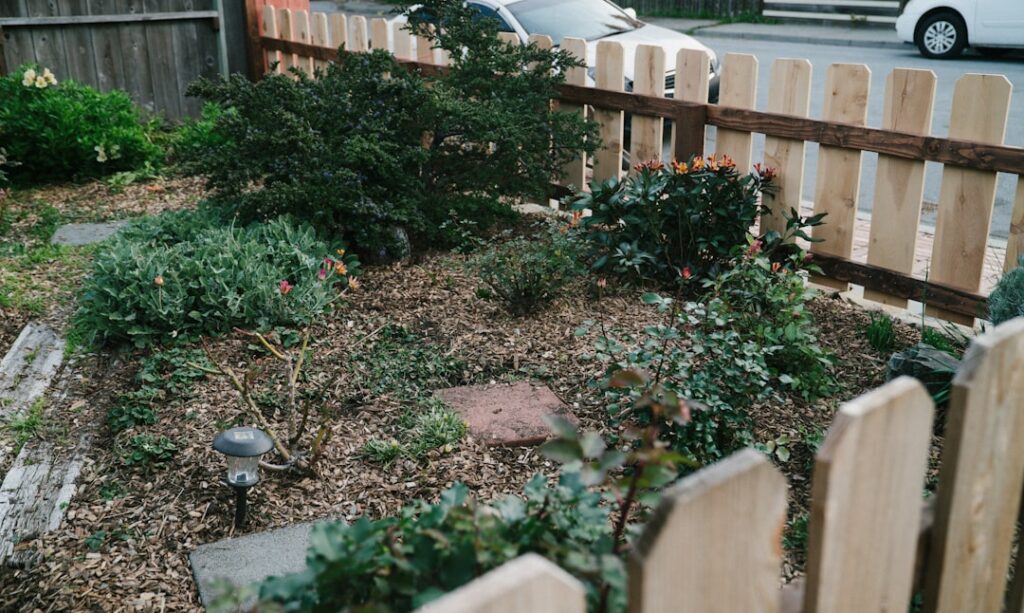
Path lights are the most popular starting point because they add both safety and beauty. Spaced evenly along a walkway, they guide foot traffic and prevent trips after dark. For an even, pleasant effect, place them roughly 6 to 8 feet apart, staggering them slightly on either side of the path rather than lining them up like runway markers.
Choose a warm white color temperature around 2700K to 3000K for a soft, inviting glow; cool blue-white light tends to look harsh in a residential yard. Push the stakes firmly into the soil so they stand straight, and angle the small solar panels toward the south where they will gather the most sun.
String Lights for Ambiance
Nothing transforms a patio or gazebo like string lights overhead. Solar string lights drape across a seating area, wrap around a railing, or zigzag over a dining space to create that warm, café-style atmosphere. Look for strands with a separate solar panel on a stake or clip, so you can mount the lights in a shaded spot while the panel sits in the sun.
For reliable evening performance, position the panel where it gets direct, unobstructed sunlight for most of the day. Many string-light sets include multiple lighting modes, from steady to twinkle, so you can match the mood. These are the fixtures that turn a backyard into an evening gathering spot.
Security and Motion-Activated Lights
For safety and deterrence, solar floodlights with motion sensors are hard to beat. They stay dim or off to conserve power, then snap to full brightness when they detect movement near a door, driveway, or dark corner of the yard. This both startles potential intruders and lights your way when your hands are full.
When shopping for security solar lights, prioritize brightness measured in lumens, the detection range and angle of the motion sensor, and a large solar panel that can keep the battery topped up despite the high power draw. Mount them 8 to 10 feet high for the best coverage, and aim the panel at the open sky for maximum charging.
Placement for Maximum Charging
Solar lights live or die by sun exposure, so placement is everything. The panels need direct sunlight, ideally six or more hours a day, to fully charge the battery. Avoid tucking lights under dense tree canopies, eaves, or in the permanent shadow of a fence or wall, where they will charge poorly and dim early.
A few placement habits dramatically improve performance:
- Face fixed panels toward the south in the Northern Hemisphere
- Keep panels clean, since dust and pollen block sunlight
- Trim back foliage that creeps over a panel during the season
- Use models with separate, repositionable panels for shaded fixture locations
If a particular spot simply does not get enough sun, a light with a remote panel on a longer cable lets you put the fixture in shade and the panel in the sun.
What to Look For When Buying
Quality varies widely in solar lighting, and the cheapest sets often disappoint within a season. Pay attention to the battery type and capacity, since a larger lithium battery holds more charge and lasts longer than the small NiMH cells in bargain units. Check the lumen rating for actual brightness rather than vague marketing claims, and look for weatherproof construction rated for outdoor use, ideally with an IP65 or higher rating.
Durable housing materials such as metal, real glass, or thick UV-resistant plastic hold up far better than flimsy plastic that fades and cracks. Reading reviews for real-world runtime and winter performance helps you avoid the lights that look bright on day one but fade fast.
Maintenance and Seasonal Care
Solar lights are low-maintenance, not no-maintenance. Wipe the panels clean every few weeks so they keep charging efficiently. Replace the rechargeable batteries every one to two years as they lose capacity, which restores brightness and runtime to like-new performance. In regions with harsh winters and short days, you may notice shorter runtimes, and some homeowners bring decorative pieces indoors over winter to protect them.
With the right fixtures placed in sunny spots and a little seasonal upkeep, solar lighting gives your backyard safe walkways, a welcoming patio glow, and reliable security lighting, all without a single foot of wiring or a dollar added to your power bill.