No trenching, no wiring, no monthly cost to your electric bill, that is the promise that has made solar the fastest-growing category in yard lighting. Modern outdoor lighting solar powered fixtures have shed their dim, unreliable reputation thanks to better LEDs and lithium batteries, and today’s best models throw genuinely usable light from dusk to dawn. The catch is that not all solar lights are created equal, and where and how you place them matters as much as which ones you buy. This guide covers the types, the specs that actually matter, and how to get bright, dependable results.
Part of our Windows & Doors guide — explore the full guide →
How Solar Outdoor Lighting Works
Each fixture pairs a small photovoltaic panel with a rechargeable battery and an LED. During the day, the panel charges the battery; at dusk, a light sensor switches the LED on and runs it off the stored charge. Because the whole system is self-contained, there is nothing to wire and no permit involved. The performance ceiling is set by three things: how much sun the panel collects, how big the battery is, and how efficient the LED is.
Types of Solar Fixtures
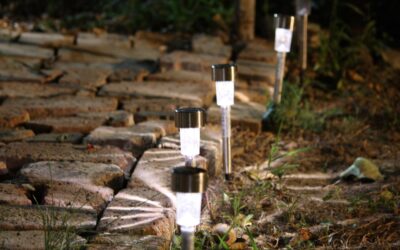
- Path lights: stake-mounted lights that line walkways and driveways, the most common type
- Spotlights: adjustable fixtures that uplight trees, flags, or architecture, usually the brightest solar option
- Wall and security lights: motion-activated fixtures for entries, garages, and dark corners
- String and decorative lights: ambient lighting for patios, pergolas, and fences
- Deck and post-cap lights: low-output accent lights that trace railings and steps
Many higher-end models separate the panel from the fixture with a cord, letting you mount a shaded light while placing the panel in full sun, a design that dramatically improves reliability.
The Specs That Actually Matter
Lumens
Lumens measure brightness. Path lights need only 5 to 40 lumens to mark a walkway, while a solar security or flood light should deliver 400 to 1,000-plus lumens to actually light an area. Spotlights for accenting a tree land around 100 to 300 lumens. Do not judge by the panel’s wattage; look at the LED’s lumen output.
Battery Capacity and Type
Battery type is the biggest predictor of how long a light lasts through the night and across seasons. Lithium-ion and LiFePO4 batteries hold more charge, tolerate cold better, and last far longer than the older Ni-Cd or Ni-MH cells in cheap fixtures. A quality light runs 8 to 10 hours on a full charge; a bargain one fades by midnight within a few months.
Color Temperature
Warm white (2700K to 3000K) feels inviting and suits patios and paths. Cool white (5000K to 6500K) is brighter and better for security lighting, where visibility beats ambiance. Some fixtures let you switch between them.
Placement Is Everything
The single biggest reason solar lights disappoint is poor sun exposure. The panel needs six to eight hours of direct, unshaded sun to fully charge, so a light tucked under a tree, beside a north-facing wall, or shaded by the house will underperform no matter how good it is. Before installing, watch where the sun falls across your yard during the day.
For shaded fixtures, choose a model with a remote, cord-connected panel you can mount on a sunny roof edge or post. Keep panels clean, too, dust, pollen, and snow cut charging significantly, so a quick wipe every few weeks keeps output high.
Motion Sensors and Smart Features
Motion-activated solar security lights conserve battery by staying dim or off until they detect movement, then blazing to full brightness. This extends runtime and startles intruders. Look for adjustable sensitivity and a “dim-to-bright” mode that keeps a low glow all night and boosts on motion. Some newer fixtures add app control, dusk-to-dawn plus motion modes, and even small solar-charged cameras.
Seasonal and Climate Considerations
Solar output drops in winter when days are short and the sun sits low, so expect shorter runtimes from November through February in northern states. Cold also reduces battery capacity, which is another reason lithium chemistry matters in harsh climates. Choose fixtures rated IP65 or higher for full weather resistance, and clear snow off panels promptly to keep them charging.
What Solar Does Well and Where It Falls Short
Solar excels at path lighting, accent lighting, decorative string lights, and motion security in sunny spots, all with zero wiring and no running cost. It falls short where you need bright, guaranteed, all-night light in a shaded location or high-traffic entry; there, a low-voltage wired system or a hardwired fixture is more dependable. Many homeowners blend the two, using solar for the easy runs and wired lighting where reliability is critical.
Budget Expectations
Basic solar path light sets run $20 to $50 for a pack of six to eight. Quality individual spotlights and security lights with lithium batteries cost $25 to $70 each. Premium separate-panel security floods and decorative string systems range from $40 to $120. Spending a little more on lithium batteries and higher lumen ratings is the difference between lights that last years and ones you replace next spring.
Installation and Setup Tips
Solar lighting is genuinely plug-and-play, but a few steps improve the result. When fixtures arrive, most ship with the battery disconnected by a small pull tab under the panel; remove it and let the lights charge in full sun for two to three full days before judging their brightness, since the first charge is often incomplete. For stake lights, loosen and soften the ground with water before pushing them in so the stakes do not snap. Angle each panel toward the midday sun, tilting it slightly south in the northern U.S. to catch the most light through the seasons.
Maintenance Over the Year
Wipe panels every few weeks and after storms, replace rechargeable batteries every one to two years as capacity fades, and bring decorative string lights indoors over harsh winters if they are not rated for it. A quick seasonal check keeps output strong and extends the life of every fixture.
The Bottom Line
Outdoor lighting solar powered fixtures deliver wire-free, cost-free illumination that now rivals low-voltage systems for many uses. Prioritize lithium batteries, match lumens to the job, and above all, place panels where they get full sun. Get those three right and solar lighting will brighten your paths, patio, and perimeter reliably, night after night, with nothing to plug in.