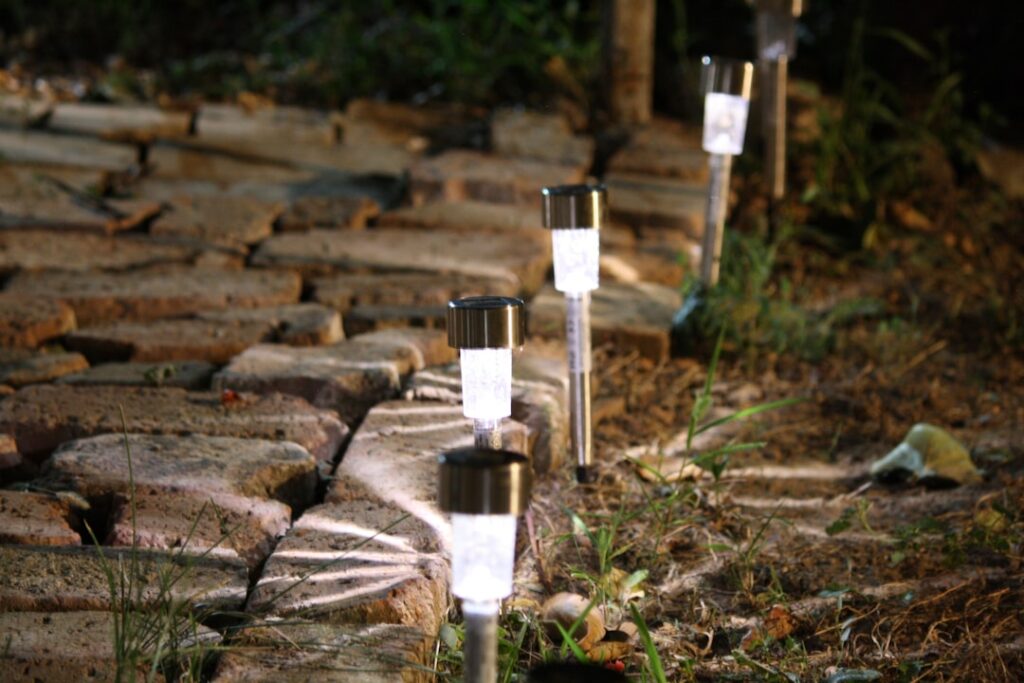
Swapping hardwired fixtures for solar powered outdoor led lights has become one of the easiest upgrades a homeowner can make, since it eliminates trenching for electrical lines while still delivering enough brightness for pathways, patios, and security zones. Solar technology has improved dramatically over the last several years, with better lithium batteries, more efficient photovoltaic panels, and brighter LED chips packed into fixtures that cost a fraction of what wired lighting systems demand. Whether you are lighting a 40-foot front walkway or trying to deter nighttime visitors from your backyard, understanding the different product categories, output ratings, and installation quirks will help you avoid the common mistake of buying dim, short-lived lights that die out within a single season.
How Solar Outdoor Lighting Actually Works
Every solar fixture relies on the same basic chain of components: a small photovoltaic panel absorbs sunlight during the day, a rechargeable battery stores that energy, and a light sensor triggers the LED to turn on automatically once ambient light drops at dusk. Most residential units use either nickel-metal hydride or lithium-ion batteries, and lithium is now the preferred choice because it holds a charge longer, performs better in cold weather, and tolerates more charge cycles before degrading. A quality lithium battery in a well-made fixture can last three to five years before it needs replacing, while cheaper nickel-metal hydride packs often fade within twelve to eighteen months.
Panel placement matters more than most buyers realize. A fixture mounted in full southern exposure with six or more hours of direct sun will charge fully and run all night, even through winter, while the same light tucked under a covered porch or shaded by trees may only manage a few hours of illumination before the battery drains. If your yard has mixed sun and shade, look for fixtures with a separate, remote solar panel connected by a cable, which lets you mount the light where you want it while positioning the panel in the sunniest available spot, sometimes ten to twenty feet away.
Weather resistance ratings also deserve attention before you buy. Look for an IP65 or higher rating, which means the fixture is fully protected against dust and can handle direct rain and hose spray without failing. Lights rated only IP44 are best reserved for covered areas since they are vulnerable to standing water and heavy downpours, a distinction that becomes obvious the first time a cheap fixture fogs up and stops working after a storm.
Pathway and Landscape Stake Lights
Pathway stakes are the most familiar category of solar lighting, typically standing 12 to 18 inches tall with a small LED head mounted atop a metal or plastic ground stake. These fixtures usually output between 10 and 40 lumens each, enough to mark the edge of a walkway or driveway without creating harsh glare, and a set of six to eight stakes generally costs $30 to $80 depending on build quality and finish. Stainless steel housings resist rust far better than plastic, and models with a matte black or bronze powder coat finish blend into landscaping more naturally during daylight hours.
Spacing matters for both safety and aesthetics. Most professionals recommend placing pathway lights every 6 to 8 feet along a walkway, staggered slightly on alternating sides rather than lined up in a perfectly straight row, which creates a softer, more natural lighting pattern after dark. For a 50-foot front walk, that translates to roughly seven or eight fixtures, a project you can complete in under an hour since stake lights require nothing more than pushing the spike into soft soil.
Higher-end landscape lights use warm white LEDs in the 2700K to 3000K color temperature range, which mimics traditional incandescent lighting and tends to look far more inviting than the harsh blue-white 5000K+ lights sold in bargain multipacks. If you are lining a garden bed or defining a curved driveway, spending an extra $10 to $15 per fixture for warm-toned LEDs and a sturdier stake is usually money well spent, since the cheapest plastic stakes often crack or snap within a year of freeze-thaw cycles in colder climates.
Solar Security and Motion-Sensor Floodlights
For genuine security applications, motion-sensor solar floodlights deliver far more punch than decorative landscape lighting, with output ranging from 400 lumens on entry-level models up to 2,000 lumens or more on premium dual-head units. Brands like Ring, LITOM, and Baxia Technology dominate this segment, with typical prices between $25 and $70 for a single floodlight and $60 to $150 for dual-head or triple-head fixtures designed to cover wider areas like a driveway or backyard perimeter.
These fixtures use a passive infrared, or PIR, sensor to detect motion within a specified range, usually 26 to 33 feet, and trigger the light to jump from a dim standby glow to full brightness for a set duration, often 30 seconds to 3 minutes depending on the model’s settings. Many units let you adjust sensitivity, detection angle, and how long the light stays on, which is useful for avoiding false triggers from passing cars, tree branches, or neighborhood cats setting off the sensor every few minutes overnight.
Mounting height affects both detection range and coverage area, and most manufacturers recommend installing security floodlights between 6 and 10 feet off the ground, angled slightly downward to illuminate the target zone without shining directly into anyone’s eyes. Because these units draw more power per activation than a steady-glow pathway light, pairing them with a larger solar panel, often a separate panel mounted for maximum sun exposure, is essential if you expect reliable performance on cloudy winter days when sunlight is scarce.
String Lights and Ambient Solar Options
Solar string lights have surged in popularity for patios, pergolas, and deck railings, offering the warm ambiance of traditional string lighting without an outlet in sight. A typical 33-foot strand with 100 LED bulbs costs $20 to $45 and runs off a single compact solar panel with a stake or hook mount, usually delivering six to eight hours of illumination on a full charge. Look for strands with a dedicated on/off switch and multiple lighting modes, steady glow versus twinkle, since the twinkle setting drains the battery faster and may not last as long into the night.
Globe-style solar string lights, with larger frosted bulbs spaced further apart, create a softer, more decorative look ideal for outdoor dining areas, while thinner fairy-light strands work well woven through pergola beams or wrapped around railings. Because these strands are lightweight and cover longer distances than stake or floodlights, panel efficiency becomes critical, and premium brands like Brightech tend to outperform generic Amazon listings when it comes to holding a charge through several consecutive overcast days.
Solar lanterns and hanging fixtures round out the ambient category, typically priced $15 to $40 each, and work well grouped in clusters of three to five along a fence line or scattered across a patio table arrangement. These smaller units generally output 20 to 50 lumens, plenty for mood lighting but not intended as a primary light source for reading or dining after dark.
Installation Tips and Common Mistakes
The single biggest mistake homeowners make is skipping the initial full-charge cycle before expecting the lights to perform. Most manufacturers recommend leaving new solar fixtures in direct sunlight for a full 24 to 48 hours before the first nighttime use, since batteries shipped from the factory typically arrive only partially charged and will underperform if you switch them on immediately out of the box. Many units also ship with a pull-tab covering the battery contacts, an easy detail to overlook that leaves buyers wondering why their brand-new lights will not turn on at all.
Cleaning the solar panel surface every four to six weeks also makes a measurable difference in performance, since dust, pollen, and bird droppings block sunlight absorption over time. A simple wipe with a damp cloth restores most of the lost efficiency, and doing this seasonally, especially after a dusty summer or before winter’s shorter daylight hours, keeps output consistent year-round. In regions that see heavy snowfall, brushing accumulated snow off panels after storms prevents weeks of dead batteries during the darkest part of winter.
Finally, resist the temptation to buy the cheapest multipack you can find if you are lighting an area that matters for safety, like steps or a driveway entrance. Spending a bit more for lithium batteries, an IP65 rating, and a reputable brand name typically pays for itself within the first year through better reliability and brighter, more consistent output, especially once the novelty of a bargain purchase wears off and the battery starts failing after just a few months of regular use.