Stone polymer composite is the fastest-growing flooring category in North America for one simple reason — it solves the waterproof problem that traditional engineered hardwood and laminate never could. SPC wood flooring looks indistinguishable from real wood at standing distance, costs less than half as much, and survives spills, pets, and basement humidity without warping. The catch is that not all SPC is created equal, and a $1.79-per-square-foot product from a discount website behaves nothing like a $4.50 premium plank from a major brand. This guide explains the differences that matter.
What SPC Actually Is
An SPC plank is a layered sandwich. The core is a rigid composite of limestone powder and PVC stabilizers — that’s the “stone polymer” part — which gives the plank its dimensional stability and dent resistance. Above the core sits a printed design layer that mimics wood grain, then a clear wear layer, and often a UV-cured topcoat. Many planks include an attached underlayment of IXPE foam or cork beneath the core for sound dampening.
Compared to WPC (wood polymer composite), SPC is harder, denser, and slightly thinner. It dents less, costs less, and feels colder underfoot. Both are technically vinyl, both are waterproof, but SPC has overtaken WPC in the market over the past five years.
The Pros
- Genuinely waterproof. SPC handles standing water, pet accidents, kitchen spills, and even minor flooding without swelling or delaminating.
- Dimensional stability. Doesn’t expand and contract with humidity the way wood and laminate do. Can be installed in basements, sunrooms, and over radiant heat.
- Dent resistance. The rigid mineral core handles dropped pots, dragged furniture, and dog claws.
- Easy DIY installation. Click-lock systems install in floating layouts without adhesive or nails.
- Affordable. Quality SPC runs $2 to $5 per square foot for materials; comparable engineered hardwood is $5 to $12.
- Realistic visuals. Premium SPC has embossed-in-register textures that follow the printed grain — a level of realism unavailable in budget vinyl.
The Cons
- Cold and hard underfoot. Without underlayment or in-floor heating, SPC feels noticeably cooler than WPC or carpet.
- Telegraphs subfloor imperfections. Because it’s rigid, low or high spots in the subfloor cause hollow sounds and sometimes click-lock failures over time.
- Not refinishable. When the wear layer eventually wears through, the only fix is full replacement.
- Discount product can fade in direct sun. Look for SKUs with UV inhibitors or limit installations in south-facing rooms with no window coverings.
- Off-gassing risk on cheap imports. Buy only FloorScore or GreenGuard certified product to avoid VOC issues.
How to Compare SPC Products
The numbers that separate quality SPC from disappointing SPC:
- Total thickness: 5mm minimum, 6.5mm to 8mm for premium product (including attached underlayment)
- Core thickness: 4mm minimum stone polymer core
- Wear layer: 12 mil for residential, 20+ mil for high-traffic homes
- Plank width: 7 to 9 inches reads contemporary; under 6 inches reads traditional
- Plank length: 48 inches and longer looks more like real wood
- Pattern count: 30+ unique faces in the SKU prevent visible repeats
- Bevel: Painted micro-bevels on all four sides give plank-to-plank definition
Brands Worth Knowing
Quality and price both vary widely. A short list of brands consistently rated well by installers:
- Coretec Pro Plus: One of the original WPC brands, now produces excellent SPC. $3.50 to $5 per square foot.
- Shaw Floorte: Reliable mid-tier with strong warranty. $2.50 to $4.50 per square foot.
- Mohawk RevWood Plus: Available at big-box stores, 12-mil wear layer standard. $2 to $4 per square foot.
- Karndean Korlok: Premium designer SPC with realistic visuals. $5 to $7 per square foot.
- Lifeproof (Home Depot exclusive): Solid value, often $1.99 to $3.50 on sale.
- NuCore (Floor & Decor): Good DIY value, attached underlayment standard. $2 to $3.50.
Installation Considerations
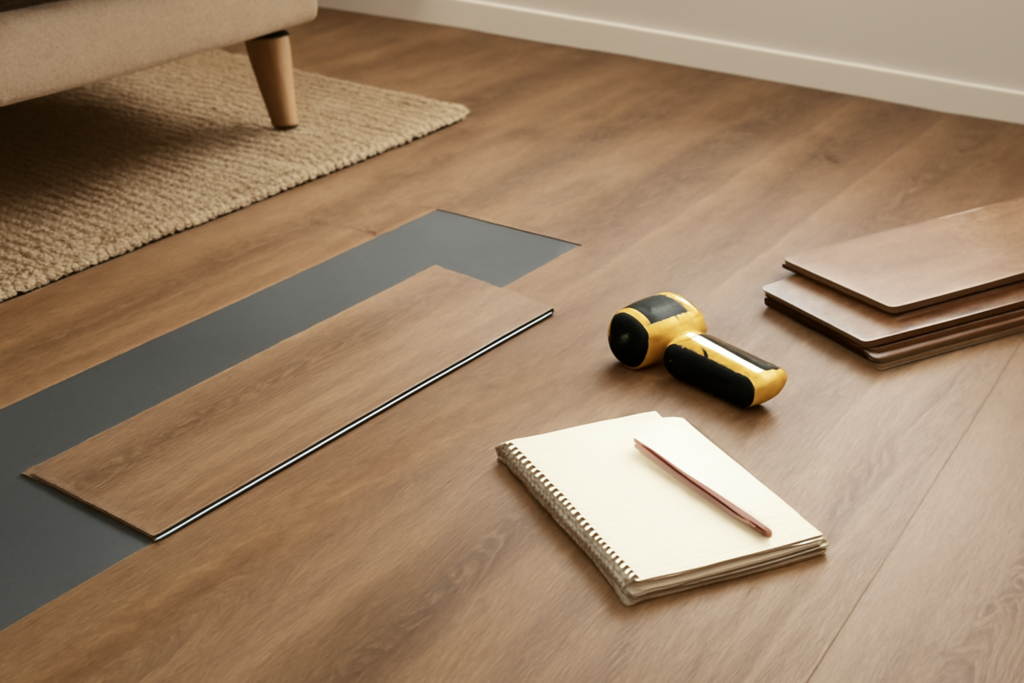
SPC installs as a floating floor with click-lock edges. The two installation factors that derail more projects than anything else:
Subfloor flatness. SPC requires the subfloor flat to within 3/16 inch over a 10-foot span. Self-leveling compound on concrete and sanded plywood on framed floors are both standard prep steps. Skip this and you’ll have hollow-sounding spots and locking mechanism failures within months.
Expansion gaps. Even though SPC is dimensionally stable, every floating floor needs 1/4 to 3/8-inch perimeter expansion gaps. Skipping or shortcutting these gaps causes buckling when the floor warms up in summer or when furniture pins down a plank that’s trying to expand.
Where SPC Works Best
SPC excels in conditions that destroy other flooring:
- Kitchens with frequent water exposure
- Bathrooms (use silicone caulk at perimeter for waterproofing)
- Mudrooms and entryways with dirt, salt, and snow
- Basements with seasonal humidity swings
- Pet households with messes and clawing
- Rental properties needing durability per dollar
It’s less ideal in formal living rooms where you want a softer underfoot feel, in bedrooms where carpet warmth is preferred, and in homes where the buyers will specifically want real hardwood for resale value.
Cost Breakdown
For a 600-square-foot project:
- Mid-tier SPC at $3 per square foot: $1,800 in materials
- Underlayment if not attached: $250 to $400
- Trim and transitions: $120 to $250
- Self-leveling compound (if needed): $100 to $300
- DIY total: $2,170 to $2,750
- Professional installation adds $2 to $4 per square foot, bringing the total to $3,400 to $5,150
Maintenance and Care
SPC is the lowest-maintenance hard flooring on the market. Sweep or vacuum (no beater bar) regularly, and damp-mop with a pH-neutral cleaner like Bona Hard Surface Cleaner. Avoid steam mops — heat plus moisture eventually breaks down the wear layer at seam edges. Use felt pads on furniture even though SPC resists denting; concentrated load on a single point can still leave marks over years.
Final Thoughts
SPC has become the default recommendation for kitchens, basements, and homes with kids or pets because it genuinely outperforms hardwood, laminate, and tile in the conditions where most floors fail. Pay attention to wear layer, total thickness, and brand reputation — and the floor will outlast most of the rest of the renovation.
Prefer to explore on your own?
See how new flooring looks in your actual room in seconds — free, no signup.
Try the free Floor Studio →