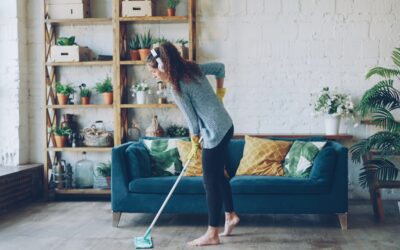
Flat mops and spray mops get all the attention these days, but a good sponge mop still outperforms them for certain jobs. Scrubbing textured tile grout, soaking up spills on vinyl, and deep-cleaning kitchen floors with a proper cleaning solution are tasks where the absorbent, scrubbing head of a sponge mop delivers results that microfiber pads cannot match. The trick is choosing the right one, because cheap sponge mops fall apart in weeks while quality models last years.
Types of Sponge Mops
Roller Sponge Mops
The classic design with a cellulose sponge head and an integrated roller wringer built into the handle. You squeeze a lever to press the rollers across the sponge, wringing out dirty water without bending over or touching the mop head. Roller sponge mops are the most common type and work well on smooth tile, vinyl, and linoleum. The O-Cedar and Libman brands dominate this category.
Butterfly (Squeeze) Sponge Mops
Instead of rollers, these mops fold the sponge in half like butterfly wings when you pull the handle mechanism. This wringing method is more aggressive and extracts more water than roller designs, making butterfly mops better for hardwood and laminate floors where excess moisture is a concern. They also tend to last longer mechanically because the folding mechanism has fewer moving parts than roller assemblies.
Scrub Sponge Mops
These feature a dual-sided head with a soft sponge on one side and an abrasive scrubbing pad on the other. Flip the mop head to switch between gentle mopping and aggressive scrubbing. Ideal for kitchens with textured tile floors where grease and food residue build up in the texture pattern. Casabella makes a well-regarded scrub sponge mop.
Top Sponge Mop Picks for 2026
Best Overall: O-Cedar Easy Wring Roller Mop
O-Cedar’s roller mop has earned its reputation through years of consistent performance. The cellulose sponge head absorbs and releases water evenly, and the roller wringer works smoothly with one hand. Replacement heads cost $6-$8 and swap in seconds without tools. The telescoping handle adjusts from 46 to 51 inches. Priced around $15-$18 for the complete mop, it is the most practical value in the category.
Best for Hardwood: Libman Nitty Gritty Roller Mop
The Nitty Gritty combines a standard cellulose sponge with a built-in scrubbing strip for stubborn spots. Its roller wringer squeezes the sponge drier than most competitors, which is crucial for hardwood floors that warp from excess moisture. The wider 12-inch head covers more floor per pass. At about $14, it outperforms mops twice its price on sealed hardwood and engineered wood flooring.
Best for Tile: Casabella Infuse Squeeze Mop
Casabella’s butterfly-style mop includes a refillable cleaning solution reservoir in the handle that dispenses solution as you mop. The sponge head features a scrubbing texture on the bottom that works grout lines and textured tile without scratching. At $25 with a starter cleaning pod, it costs more upfront but eliminates the need for a separate mop bucket for routine cleaning.
Best Budget: Libman Wonder Mop (Sponge Alternative)
While technically a strip mop rather than a true sponge mop, the Libman Wonder Mop at $10 deserves mention because its microfiber-and-sponge hybrid strips absorb like a sponge and release in the built-in wringer basket. It cleans effectively across all floor types and is machine-washable. For buyers who want sponge-like performance under $12, this is the best available option.
Sponge Mop vs. Flat Mop: When to Use Each
Flat microfiber mops excel at daily quick-cleaning of lightly soiled floors. They are lightweight, dry faster, and leave less moisture behind. For routine maintenance mopping 2-3 times per week, a flat mop is the more efficient tool.
A sponge mop earns its place for deeper cleaning sessions. When the floor has sticky spots, grease buildup, dried spills, or ground-in dirt that a flat mop just pushes around, the sponge head’s absorbency and scrubbing ability get the job done. Most households benefit from owning both: a flat mop for quick daily passes and a sponge mop for weekly or biweekly deep cleans.
How to Use a Sponge Mop Properly
- Sweep or vacuum first. Loose dirt and debris turn into muddy streaks under a wet sponge mop. Always start with a dry cleaning pass
- Fill the bucket with warm water and cleaner. Use a pH-neutral floor cleaner for hardwood and laminate. Tile and vinyl tolerate stronger solutions. Follow the dilution ratio on the cleaner label, as more is not better and leaves residue
- Dip and wring thoroughly. Submerge the sponge, then wring until the mop is damp rather than dripping. Excess water damages hardwood, leaves puddles on vinyl, and takes forever to dry on any surface
- Mop in sections. Work a 4×4-foot area at a time, using overlapping strokes. Rinse and wring the mop after each section to avoid redistributing dirty water
- Change the water when it gets murky. Mopping with dirty water just spreads grime. In a typical kitchen, you may need to change water 2-3 times
Sponge Mop Maintenance
Rinse the sponge head thoroughly after every use and wring it as dry as possible. Store the mop head-up so it can air dry completely. A damp sponge stored head-down against the floor grows bacteria and develops a foul odor within days.
Disinfect the sponge weekly by soaking it in a solution of 1 tablespoon of bleach per quart of water for 5 minutes, then rinsing thoroughly. This kills bacteria and mildew that build up in the porous cellulose material. Replace the sponge head every 2-3 months with regular use, or sooner if it starts to crumble, smell, or lose its shape despite cleaning.
Best Floor Cleaners to Pair With a Sponge Mop
- Tile and vinyl: Bona Hard-Surface Floor Cleaner ($8/34 oz) or a simple solution of 1/2 cup white vinegar per gallon of warm water
- Sealed hardwood: Bona Hardwood Floor Cleaner ($8/34 oz). Avoid vinegar on hardwood, as the acidity can dull polyurethane finishes over time
- Laminate: Black Diamond Wood and Laminate Floor Cleaner ($10/32 oz). Use minimal water since laminate core boards swell from moisture penetration at seams
- Heavily soiled floors: A few drops of Dawn dish soap in warm water cuts grease effectively. Rinse with clean water after to prevent a slippery residue
Avoid using oil-based cleaners like Murphy Oil Soap with a sponge mop on any floor type. These products leave a buildup over time that attracts more dirt and creates a hazy film, particularly on tile and laminate surfaces.