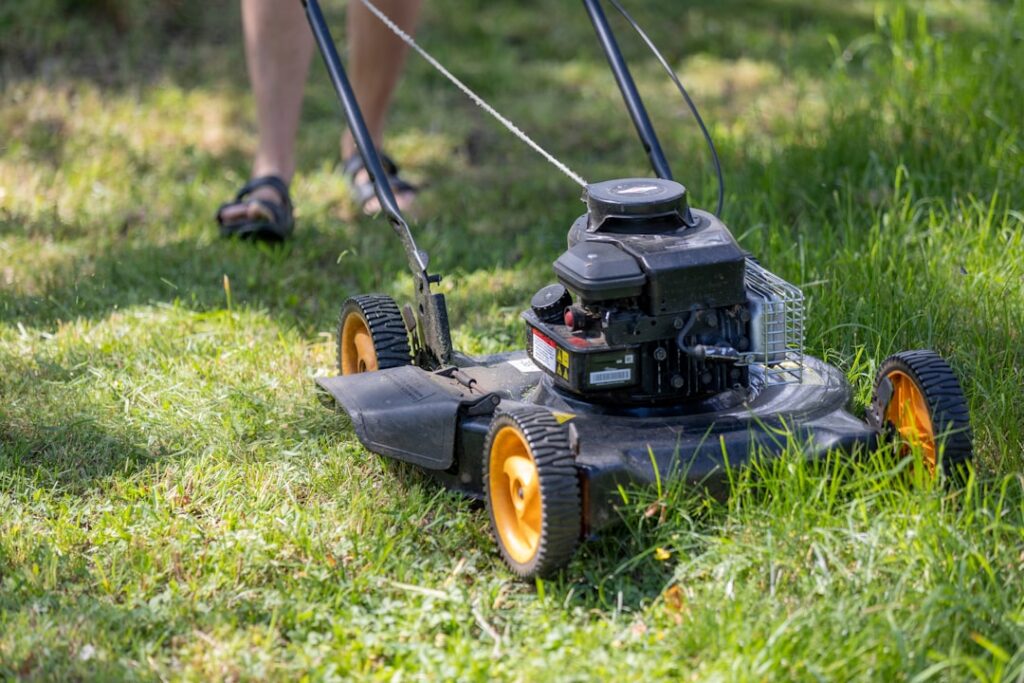
A standing lawn mower, often called a stand-on mower, puts the operator on a rear platform instead of a seat, combining the speed of a zero-turn with a compact footprint and better visibility. Landscapers and homeowners with large properties increasingly choose a standing lawn mower because it mows fast, gets on and off quickly, and handles rough terrain with confidence. This guide covers how they work, costs, and who should buy one.
- How Stand-On Mowers Work
- Stand-On vs. Zero-Turn vs. Lawn Tractor
- Deck Sizes and Cutting Capacity
- Engines and Build Quality
- Hillside and Rough-Terrain Performance
- What It Costs
- Who Should Buy One
- Productivity: Why Pros Choose Them
- Comfort and the Standing Question
- Attachments and Accessories
- Maintenance and Safety
- Buying New vs. Used
- The Bottom Line
How Stand-On Mowers Work
Like a zero-turn, a stand-on uses two independent hydrostatic drives, one per rear wheel, controlled by lap bars. Push both bars forward and you go straight; pull one back and the mower pivots on the spot. The difference is you stand on a rear platform rather than sit, which shifts your weight over the drive wheels for traction and lets you step off instantly at gates or obstacles.
That standing position also gives a commanding view over the deck, so you can see the cut edge and spot obstacles a seated operator would miss.
Stand-On vs. Zero-Turn vs. Lawn Tractor
Each riding style has a niche. Understanding the tradeoffs helps you pick.
- Stand-on: compact, fast, great visibility, easy on-off, better on hills and rough ground. Costs more; standing all day tires some operators.
- Zero-turn (seated): comfortable for long sessions, similar speed, but a longer footprint and lower sight line.
- Lawn tractor: cheapest, tows attachments, but slower and less maneuverable.
The stand-on’s shorter length fits on a trailer more easily and turns in tighter spaces, which is why landscapers who load and unload all day favor it.
Deck Sizes and Cutting Capacity
Stand-on decks typically range from 32 to 61 inches. A 36-inch deck fits through standard gates for backyard work; a 52 or 60-inch deck mows open acreage fast. Bigger decks cover more ground per pass, so a 60-inch machine can cut several acres per hour at full speed, but a narrow deck is more versatile for tight, fenced yards.
Ground speeds run 8 to 12 MPH on commercial units, far faster than a lawn tractor’s 5 to 7 MPH, which is a big part of why they save time on large properties.
Engines and Build Quality
Most stand-ons use commercial-grade engines from Kawasaki, Kohler, or Vanguard in the 20 to 37 HP range. These are built for daily runtime with heavy air filtration and robust cooling. Decks are usually fabricated (welded) steel, thicker and more durable than the stamped decks on budget riders. Commercial hydraulic transmissions and larger drive wheels handle continuous use that would wear out a residential machine.
Hillside and Rough-Terrain Performance
One real advantage of standing is control on slopes. With your weight over the drive wheels and your body free to shift, you keep traction and can bail off instantly if the machine slides. Many operators find stand-ons more confidence-inspiring on hills than a seated zero-turn, where you’re strapped into a fixed position. That said, all riding mowers have slope limits, so respect the manufacturer’s maximum grade and mow across slopes carefully.
What It Costs
Stand-on mowers are commercial machines, and the prices reflect that.
- Entry commercial stand-on: $5,000 to $7,000 for a 36 to 48-inch deck.
- Mid-range: $7,000 to $10,000 with larger decks and higher-spec engines.
- Premium: $10,000 to $13,000-plus for 60-inch, high-horsepower flagship units.
Leading brands include Wright (which pioneered the category with the Stander), Toro GrandStand, Scag V-Ride, Ferris SRS, Gravely Pro-Stance, and Bob-Cat. For a homeowner with several flat acres, the cost only makes sense if you value the speed and durability; for smaller lawns a residential zero-turn is far cheaper.
Who Should Buy One
Stand-on mowers earn their price for commercial landscapers who mow all day and load a trailer dozens of times, and for homeowners with three-plus acres, hilly ground, or lots of obstacles where quick on-off and tight turning save real time. If you have a small, flat lawn, this is far more machine than you need.
Productivity: Why Pros Choose Them
The economics of a stand-on come down to time. A commercial crew that mows dozens of properties a day loads and unloads a trailer constantly, and a stand-on’s short 5 to 6-foot footprint fits alongside other equipment and slides on and off a ramp faster than a longer seated zero-turn. The quick step-off lets an operator hop down to move a toy, open a gate, or clear a branch without shutting the machine down and climbing out of a seat. Multiply those seconds across a full day and the stand-on can meaningfully increase how many lawns a crew finishes, which is why the productivity argument, not comfort, drives most commercial purchases.
Comfort and the Standing Question
The obvious question is whether standing all day is tiring. In practice, many operators find that standing on a well-designed platform, with the knees slightly bent acting as natural suspension, is less jarring than being bounced in a seat over rough ground. Quality stand-ons include cushioned, adjustable platforms and hip pads to lean against, which reduce fatigue. That said, personal preference matters, and some operators simply prefer to sit. Test-driving both a stand-on and a seated zero-turn before buying is the only way to know which suits your body and your mowing hours.
Attachments and Accessories
Stand-on mowers accept a range of accessories that extend their usefulness. Baggers and grass-catching systems collect clippings for a clean finish, mulching kits chop and return clippings to the lawn, and some units accept striping kits that roll the grass to create the manicured light-and-dark stripes seen on ballfields. Aftermarket suspension seats aren’t relevant here, but shock-absorbing platform upgrades and larger, more aggressive tires can improve the ride on rough properties. Check what the manufacturer offers for your specific deck size before assuming an accessory fits.
Maintenance and Safety
Commercial mowers need regular upkeep to justify their cost, and every service job starts with the same safety step. Before you clean the deck, change a blade, or reach under the machine, shut off the engine, remove the key, and disconnect the spark plug wire so it cannot start.
- Change engine oil and filter per the hour-meter schedule, often every 50 to 100 hours.
- Grease spindles and pivot points on the interval in the manual.
- Sharpen or replace blades regularly; commercial decks dull faster from heavy use.
- Keep the operator-presence system working; it stops the blades when you step off the platform, and it’s a critical safety feature, so never bypass it.
- Never refuel a hot engine and never run the machine in an enclosed space.
- Mow across slopes, respect the grade limit, and keep bystanders clear of discharge.
Buying New vs. Used
Given the $5,000-plus price of a new stand-on, the used market tempts many buyers. A well-maintained used commercial stand-on can be a strong value, since these machines are built for thousands of hours and a unit with a few hundred hours may have most of its life ahead. Check the hour meter, inspect the deck spindles and hydraulic drives for leaks or play, look for even, healthy tires, and confirm the operator-presence safety system works. Commercial engines from Kawasaki and Kohler are robust, but ask about service history and whether blades, belts, and filters have been maintained. For a homeowner who wants stand-on capability without the full new price, a lightly used dealer trade-in can be an excellent buy, though you give up the warranty a new machine carries.
The Bottom Line
A standing lawn mower blends zero-turn speed with a compact frame, excellent visibility, quick on-off convenience, and confident hillside control, which is why it dominates among professional crews. The tradeoff is a commercial price starting around $5,000 and the fatigue of standing through long days. If you mow large or hilly acreage often, or you run a landscaping business, a stand-on is one of the most efficient machines you can own. For a modest, flat lawn, stick with a residential zero-turn or lawn tractor and put the savings elsewhere.