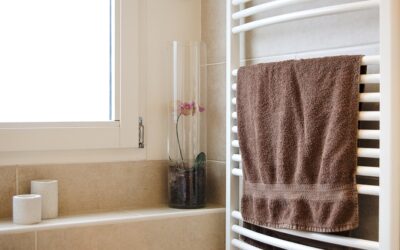
A heated towel after a shower is the kind of luxury that costs less than people assume. A quality small towel warmer runs $80-$300, plugs into a standard outlet, and uses about as much electricity as a 60-watt light bulb when it’s running. The catch is that compact-sized models vary widely in build quality, wattage, and finish durability. The cheapest options on Amazon are charming-looking failures by year two, while a few well-designed units genuinely last a decade in daily use.
- What Counts as "Small" in This Category
- Top Compact Models Worth the Money
- Hardwired Versus Plug-In
- Heating Element Types
- Wattage and Operating Cost
- Installation Tips for Wall-Mounted Models
- Finish Choices That Hold Up to Steam
- Real Use Cases Where a Compact Warmer Shines
- Should You Spring for a Built-In Timer?
What Counts as “Small” in This Category
The compact category covers freestanding, wall-mounted, and over-the-door warmers under 30 inches in either dimension. They’re sized for half-baths, RVs, college dorms, master bathrooms with limited wall space, or any room where a full-size 40 inch ladder warmer is too tall.
The smallest reasonable model holds a single bath towel and one hand towel — about 16 inches wide by 24 inches tall. The biggest still-compact models hold two bath towels and run roughly 20 inches by 28 inches. Anything bigger crosses into mid-size territory.
Top Compact Models Worth the Money
- Amba Sirio S-2933 — about $250, 24×33 inches, hardwired or plug-in. Stainless steel construction, polished or brushed finish, 10-year warranty.
- WarmlyYours Tovie 4-Bar — $180, 18×21 inches, plug-in only. Brushed nickel finish, low-watt design suited for small spaces.
- Brookstone Compact Bucket Warmer — $100, 13×10 inches, drops a folded towel inside rather than hanging it flat. A good fit for tiny half-baths.
- Conair Free-Standing Towel Warmer — $80, 35 inches tall but only 13 inches wide and 13 inches deep. The renter-friendly choice — no installation required.
- Mr. Steam Aria Plug-In — $300, 24×29 inches, hardwired upgrade option. Premium build, 10-year warranty.
Hardwired Versus Plug-In
Plug-in warmers are easier to install and easier to take with you when you move. They use a standard 110V outlet, draw 80-150 watts, and can be installed in under an hour by an average DIYer. The cord shows along the wall, which some homeowners hide behind furniture or paint over.
Hardwired warmers connect directly to the home’s electrical system through a junction box. The result is a clean wall with no visible cord, but installation requires a licensed electrician in most jurisdictions, adding $150-$400 to the total cost. For renters and apartment dwellers, plug-in is the obvious choice. For homeowners who want a permanent fixture, hardwired looks better and resells better.
Heating Element Types
Most small towel warmers use one of two heating systems. Liquid-filled units circulate a glycol or oil mixture through the bars, providing even, gentle warmth across the entire surface. They take 15-30 minutes to fully heat up but stay warm for hours after shutoff.
Dry electric units have a heating element directly inside each bar. They warm up in 5-10 minutes and cool down equally fast. Dry units are typically cheaper but show more uneven heat distribution — the hottest spots can hit 150°F while the coolest sit around 110°F. For most users, either system works fine. Pick based on whether you value fast warm-up (dry) or even heat (liquid-filled).
Wattage and Operating Cost
Compact models draw 80-150 watts. At the US average of $0.16 per kilowatt-hour, running a 100W warmer continuously for 8 hours a day costs about $4 a month. Even at full-time operation it rarely exceeds $12 monthly. That’s less than a single Starbucks habit.
Most quality models include a built-in timer or can be paired with a $20 outlet timer for plug-in versions. A two-hour-on cycle in the morning and another in the evening uses one-quarter the electricity of leaving the unit running 24/7 with no noticeable comfort loss.
Installation Tips for Wall-Mounted Models
Wall mounts must hit a stud or be supported with proper anchors rated for the unit’s full weight, typically 10-15 lbs for compact models. Toggle bolts work in drywall when no stud is present. Set the bottom of the warmer 28-32 inches above the floor for typical adult use — too low and it crowds the floor space, too high and the towels drag against the wall.
Maintain at least 12 inches of clearance on all sides from combustibles, especially shower curtains and TP rolls. The exterior bars hit 110-130°F during operation — warm enough to dry a towel quickly but well below the 195°F danger threshold for fabrics.
Finish Choices That Hold Up to Steam
Bathroom humidity destroys cheap finishes within a year. Stainless steel — either polished, brushed, or PVD coated — is the most durable. Avoid plated chrome at the budget end of the price range; the plating bubbles and pits within 12-18 months in a steamy bath.
For a warm bathroom palette, oil-rubbed bronze and matte black powder coats over stainless steel hold up well. Pair the warmer’s finish with the rest of the bathroom hardware for a cohesive look — mismatched finishes are the easiest tell of a budget renovation.
Real Use Cases Where a Compact Warmer Shines
- Half-baths and powder rooms — A 13-15 inch wide unit holds a single hand towel without crowding the room.
- Master baths with built-in linen closets — Mount the warmer inside the closet to warm towels without using wall space.
- RVs and tiny homes — A freestanding 12V or low-wattage 110V unit takes the chill off morning towels in cold-climate travel.
- Pool and spa areas — Compact warmers near hot tubs or pools dry wet towels overnight, reducing mildew.
- Mudrooms and laundry rooms — Drying small items like washcloths, gym towels, or pet towels.
Should You Spring for a Built-In Timer?
Models with built-in timers cost $30-$60 more than basic versions but pay back the difference in electricity within the first year of regular use. Programmable models let you sync warm-up with your morning shower so the towel is ready when you step out. For plug-in units, a basic outdoor outlet timer at $15 does the same job.
A small towel warmer is one of those bathroom upgrades that surprises people with how much they use it once installed. The first morning of cold weather after install is usually the moment people stop second-guessing the purchase. Pick a quality model from a reputable brand and it’ll outlast the bathroom around it.