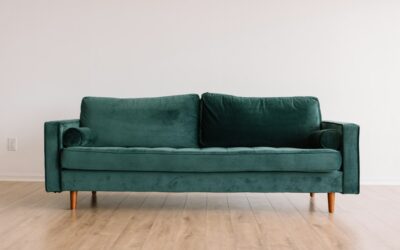
A typical three-seat sofa holds roughly 12 pounds of dust, dander, and dead skin per year, and most of it sinks well below the cushion surface. That is why homeowners choose to steam clean couch upholstery rather than rely on surface-level vacuuming alone. Done correctly, steam loosens body oils, kills dust mites, and lifts coffee or pet stains from synthetic fabrics. Done incorrectly, it can leave watermarks, mildew, or permanent fiber damage.
Check the Upholstery Tag First
Before you touch a steamer, flip a cushion and find the cleaning code stitched onto the deck or skirt. The four codes are W (water-based cleaning safe), S (solvent only), WS (either method), and X (vacuum only). Steam is a form of water-based cleaning, so it is appropriate for W and WS fabrics only. Linen, silk, rayon viscose blends, and most velvets carry an S or X code and will spot or shrink under hot moisture.
If the tag is missing, dab a hidden area with a damp white cloth. Color transfer or a dark watermark after drying means stop. Polyester, microfiber with a W code, olefin, and most performance fabrics like Crypton handle steam beautifully.
Pick the Right Steam Cleaner
Not every steamer is built for upholstery. Carpet extractors like the Bissell Little Green Pro Heat (around $130) inject and immediately vacuum out water, which is the safest approach for foam-filled cushions. True dry-vapor steamers like the McCulloch MC1275 ($170) emit superheated steam at roughly 200°F with very little moisture, ideal for spot work.
- Bissell SpotClean Pro 3624 — 5.7 amp motor, 3/4 gallon tank, $160. Best all-around upholstery pick.
- Hoover PowerDash Go Pet — compact, $130, good for apartment-size sofas.
- Dupray Neat — pure dry steam, $200, no extraction but safer for delicate fabrics.
- Bissell ProHeat 2X Revolution — full-size, $300, includes a 6-inch upholstery tool.
Prep the Sofa Before You Spray
Vacuum every surface with a soft brush attachment, including under cushions and along the welting. Loose grit will turn into mud once steam hits it. Pretreat heavy stains with a 1:1 mix of warm water and white vinegar, or a fabric-safe enzymatic cleaner like Folex. Let it sit for 10 minutes but never longer than 20, since acids can lift dye if left to dry.
Move the couch 18 inches from any wall so you can work all sides, and lay an old bath towel underneath to catch drips. Open a window or run a fan, because the goal after cleaning is fast evaporation.
Steam Cleaning Step by Step
Fill the reservoir with distilled water if your tap water is hard above 7 grains per gallon. Mineral deposits clog the spray nozzle and leave white halos on dark fabric. Add the manufacturer-approved upholstery solution at the dilution printed on the bottle, usually one capful per tank.
- Test on the back panel of the sofa first. Wait 15 minutes and check for shrinkage or color change.
- Hold the upholstery tool half an inch above the fabric. Pull the trigger as you push forward, release as you pull back. The vacuum should remove most of the water in a single stroke.
- Work in 12-inch sections. Overlap each pass by about 2 inches.
- Make a second dry pass with no spray to pull out residual moisture.
- Repeat on cushions, arms, and skirt. Do not soak the seams.
Drying Without Mildew
A correctly extracted couch should feel barely damp, not wet. Run a box fan on medium pointed at the cushions for at least 6 hours, and aim for full dryness within 12. Stand cushions upright on their edges so air reaches the bottom panel. In humid regions, set a dehumidifier nearby and target 45 percent relative humidity.
Avoid sitting on the sofa, replacing throw pillows, or covering it with blankets until it passes the back-of-hand dryness test. Trapped moisture is the single biggest cause of musty odors after steaming.
Tackling Specific Stains With Steam
Different messes need different prep before the steamer touches them. Old set-in coffee responds best to a pretreatment of one tablespoon dish soap, one tablespoon white vinegar, and two cups warm water. Pet urine needs an enzymatic cleaner like Nature’s Miracle worked in for 10 minutes before steam, otherwise the heat can permanently bond the proteins.
- Red wine — blot, sprinkle salt, vacuum, then steam with a vinegar solution.
- Grease and food oil — dust with cornstarch for 20 minutes, vacuum, then steam.
- Vomit — scrape solids, apply enzymatic cleaner, then steam in two passes.
- Ink — dab with isopropyl alcohol on a cotton ball before steaming. Never steam ballpoint marks first, as the heat sets them.
Common Pitfalls to Avoid
The biggest mistake is over-wetting. Pressing the trigger continuously while moving slowly will saturate foam, which then takes three days to dry and often grows mildew inside the cushion core. Another common error is using carpet shampoo in an upholstery extractor. Carpet detergents leave a residue that attracts dirt within weeks.
Skip steam entirely on leather, faux leather, and any fabric labeled S or X. Heat softens leather adhesives and warps the backing on bonded vinyl. Finally, never steam directly over zippers or wood feet, since the moisture loosens glue joints and rusts staples.
How Often to Steam Clean
For a household with two adults and no pets, every 12 to 18 months is plenty. Add a small child or shedding dog and the interval drops to every 6 months. Spot-treat spills within 10 minutes, and run a handheld vacuum across the cushions weekly. With this rhythm, a quality sofa easily lasts 12 to 15 years before the upholstery needs professional restretching or replacement.