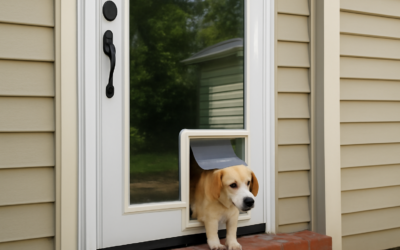
Every dog owner knows the doorman routine: up from the couch, open the door, let the dog out, sit down, and repeat ninety seconds later when the dog wants back in. A storm door with pet door ends that cycle by building a self-service flap right into the protective outer door, letting your pet come and go freely while the storm door keeps doing its real jobs, shielding your main entry door, adding insulation, and letting in light and fresh air. Combining both functions in one door is more elegant than cutting a hole in your expensive front door, and it opens up options renters and homeowners alike can appreciate.
Part of our Windows & Doors guide — explore the full guide →
- Why Put a Pet Door in a Storm Door
- Types of Storm Doors With Pet Openings
- Sizing the Pet Door to Your Animal
- Insulation and Weather Sealing
- Security and Control Features
- Installation Basics
- Material and Glass Options for the Storm Door
- Maintenance and Weatherproofing Over Time
- Getting Your Pet to Use It
Why Put a Pet Door in a Storm Door
A storm door is the outer, secondary door that protects your primary entry door from weather while allowing ventilation and light. Installing the pet flap here, rather than in your main door, has real advantages.
First, it preserves your good front door, an expensive item you may not want to cut into and that affects resale. Second, storm doors are typically aluminum or vinyl, far easier and cheaper to modify or replace than a solid wood or fiberglass entry door. Third, you retain full control: your main door can stay open behind the storm door in nice weather, giving the pet free access, then be closed and locked when you want the house sealed. It is the flexible, reversible way to add pet access.
Types of Storm Doors With Pet Openings
You have two main routes to a storm door with a built-in pet flap, and the right one depends on your DIY comfort and budget.
- Factory pre-installed pet door models: storm doors that ship with a pet door already built into the lower panel, professionally sealed and warranty-backed
- Retrofit pet door kits: a separate flap unit you cut into an existing or new storm door yourself
Pre-installed models cost more but guarantee a clean, weather-tight fit and preserve the door’s structural integrity. Retrofit kits are cheaper and let you add a flap to a storm door you already own, but they demand careful measuring and cutting, and a sloppy job can compromise the door’s rigidity or seal. For most people, a factory model is worth the premium.
Sizing the Pet Door to Your Animal
Getting the flap size right is critical for your pet’s comfort and safety. Measure your pet at the widest point of the shoulders or hips for width, and measure the height at the shoulder while standing. The flap opening needs to comfortably clear both.
Also measure the step-over height, the distance from the floor to the bottom of the flap. Your pet should be able to step through without an awkward jump. Small dogs and cats need a low step-over; larger dogs can manage a higher one. Manufacturers publish sizing charts by pet weight and breed, so measure your actual animal rather than trusting the breed average. If you have multiple pets or a growing puppy, size for the largest. Too small a flap and the pet refuses to use it; too large and you sacrifice insulation and security.
Insulation and Weather Sealing
The whole point of a storm door is energy efficiency, so a poorly sealed pet flap undermines it. Quality pet doors use a flexible flap with magnetic closures around the edges that snap shut and seal against drafts, rain, and insects.
Look for a double-flap design in cold climates, which traps an insulating air pocket between two flaps for far better efficiency than a single flap. Weatherstripping around the flap frame matters too. In very cold or hot regions, a well-sealed double-flap unit dramatically reduces the energy penalty of having an opening in your door. Cheaper single-flap models are fine for mild climates but let in noticeable drafts where winters are harsh. Match the flap quality to your weather.
Security and Control Features
A pet door is, by definition, a hole in your home’s exterior, so security deserves thought. Better pet doors include a locking cover or slide-in panel that seals the opening when you are away or at night, blocking intruders, wildlife, and weather.
For higher security, electronic pet doors read a microchip or a sensor on your pet’s collar and unlock only for your animal, keeping out raccoons, stray cats, and neighborhood critters. These cost more and need batteries, but they solve the classic problem of uninvited guests wandering in. At minimum, choose a model with a solid locking panel you can insert when needed. Position the door where an intruder cannot easily reach through to the main door’s lock, and keep your entry door locked when the storm door pet flap is not actively supervising access.
Installation Basics
Installing a pre-made storm door with pet door follows the same process as any storm door: mount the hinge rail to the door frame, hang the door, and adjust the closer and sweep. Most kits install in two to three hours with basic tools, and the pet flap arrives ready to use.
For a retrofit into an existing storm door, you will trace the template provided with the kit onto the lower panel, cut the opening with a jigsaw, and mount the flap frame from both sides with the included hardware. Measure twice and cut once, keeping the opening low enough for your pet but high enough to preserve the door’s lower rail strength. Seal the cut edges to prevent moisture intrusion into the door core. Take your time on the layout, since a crooked or oversized cut cannot be undone.
Material and Glass Options for the Storm Door
The storm door itself comes in a range of materials and configurations, and the right combination affects durability, light, and how well the pet door integrates. Aluminum frames are the most common, lightweight, rust-resistant, and easy to modify for a pet flap, while vinyl and composite frames offer better insulation. Both handle a pet door well as long as the lower panel is solid enough to mount the flap securely.
Consider the glass and ventilation setup above the pet door too. Full-view storm doors maximize light and let you see out, while ventilating models have retractable screens so you can let in a breeze. Since the pet door occupies the lower panel, choose a design where the flap sits in a solid kick-plate area rather than interrupting the glass. A solid lower panel gives the flap a sturdy mounting surface and looks cleaner than trying to fit a pet door into a glass section. Match the frame color, white, bronze, or black, to your entry door and trim for a finished appearance.
Maintenance and Weatherproofing Over Time
A pet door is a moving part exposed to weather, so it needs occasional upkeep to keep sealing and operating well. The flap and its magnetic closures take daily abuse, and over months the magnets can weaken or the flap can develop a permanent curl, breaking the weather seal. Inspect the flap seasonally and replace it when it no longer snaps flat, since replacement flaps are inexpensive and sold for most models.
Clean the flap and frame regularly, because dirt and pet hair build up on the magnetic edges and along the track, degrading the seal and letting in drafts. Wipe the weatherstripping and check that the storm door’s sweep and closer still function, adjusting the closer speed so the door does not slam. In winter, confirm the double-flap seal is intact to preserve efficiency. A few minutes of maintenance each season keeps the pet door weather-tight and extends the life of both the flap and the storm door, protecting the energy savings you installed it for.
Getting Your Pet to Use It
Even the perfect door does nothing if your pet is afraid of it, and many animals hesitate at first. Prop the flap open initially so they can see through, and coax them with treats from the other side. Practice in short, positive sessions until they push through confidently on their own.
Most dogs and cats learn within a few days with patient encouragement. Once trained, a storm door with pet door transforms daily life, no more constant door duty, and your pet enjoys the independence of coming and going. Combined with a securely locked main door when needed and a properly sealed, correctly sized flap, it delivers convenience and comfort without giving up the protection and efficiency a storm door provides.