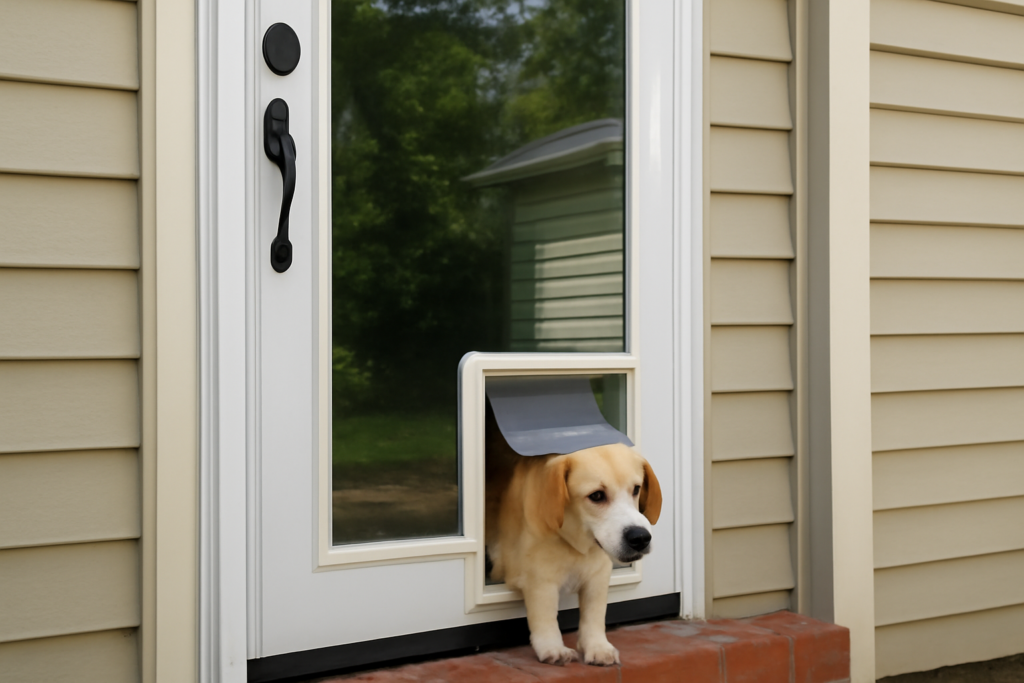
A storm door with dog door solves a problem every pet owner knows: you want the fresh air and light a storm door brings, and you want your dog to let itself out without you playing doorman all day. Combining the two into one door is efficient and clean-looking, but there’s real decision-making involved — built-in versus retrofit, flap size, weather sealing, and how it plays with your main entry door. Here’s the full rundown so your pet gets its freedom and your entry still keeps out weather and drafts.
- Two Ways to Get One
- Can Your Storm Door Take a Pet Door?
- Sizing the Dog Door to Your Pet
- Weather Sealing and Energy Loss
- Security and Locking
- Installing a Retrofit Pet Door
- Costs
- Training and Living With It
- What About the Main Entry Door?
- Weather, Drafts, and Efficiency Tips
- Frequently Asked Questions
Two Ways to Get One
You have two paths to a storm door with a pet door, and they suit different situations:
- Factory-built (integrated): A storm door manufactured with the pet door already installed in the lower panel. Cleanest look, best seal, engineered to fit. Brands like Larson and PetSafe/Ideal offer these. Higher cost but no guesswork.
- Retrofit (DIY-installed): A pet-door insert you cut into an existing storm door’s bottom panel or kickplate. Cheaper if you already have a storm door, but requires cutting and a solid lower panel with room for the flap.
If you’re buying a new storm door anyway, the factory-built option is usually worth it. If you have a good storm door already, retrofitting a quality insert saves money.
Can Your Storm Door Take a Pet Door?
Not every storm door can host a pet door. The lower section needs to be a solid, flat panel tall and wide enough for the flap plus mounting frame. Full-view glass storm doors have no solid lower panel to cut, so they can’t be retrofitted without a special kit. Mid-view or high-view doors with a solid bottom panel are the right candidates. Measure the solid area carefully before you buy an insert — the pet door frame needs clearance from the door edges and the door’s own hardware.
Sizing the Dog Door to Your Pet
Getting the flap size right is the most important step — too small and your dog won’t use it or will hurt itself; too big wastes weather-sealing and weakens the door. Size by two measurements:
- Width: Measure your dog at its widest point (usually the shoulders or hips) and add a couple inches.
- Height (step-over): Measure from the floor to the top of the shoulders/back. The flap opening should be at least this tall so your dog doesn’t have to crouch.
- Rise: The bottom of the flap should sit no higher than your dog’s belly/elbow so it can step through comfortably.
Pet doors are sold in small, medium, large, and extra-large. When in doubt between sizes, size up — but not so much that a large flap flaps around in wind. For puppies, size to the adult dog they’ll become.
Weather Sealing and Energy Loss
The whole point of a storm door is blocking drafts, so a poorly sealed pet flap defeats the purpose. Quality pet doors address this with:
- Double or triple flaps that create insulating air pockets and seal better against wind.
- Magnetic closures along the flap edges that snap it shut behind the pet.
- Weatherstripping around the frame.
- A locking cover panel you slide in to seal the opening completely when you’re away or in bad weather.
In cold or windy climates, choose a dual-flap model with strong magnets. A single thin flap will let winter air pour in and undo the storm door’s benefit.
Security and Locking
A pet door is a potential entry point, and it’s worth taking seriously. Good models include a rigid locking panel that slides into the frame to block the opening when the door is unused. For larger pet doors, consider an electronic option — a flap that only unlocks for a collar-mounted RFID chip or your pet’s microchip, keeping out stray animals and intruders. Position matters too: a pet door low in a storm door is harder for someone to reach through to the main door’s lock than one in the main door itself, which is a modest security plus of putting it in the storm door.
Installing a Retrofit Pet Door
Cutting a pet door into an existing storm door is a careful but doable DIY job:
- Confirm the solid lower panel is large enough for the flap frame plus margin.
- Use the included template to mark the cutout, centered and at the right height for your pet’s step-over.
- Drill starter holes at the corners, then cut the opening with a jigsaw, keeping the line clean.
- Fit the interior and exterior frame halves through the opening and screw them together, sandwiching the door panel.
- Check that the flap swings and seals freely, and test the locking panel.
Aluminum storm door panels cut easily; go slow to avoid bending or scratching. If your door has a thin or hollow panel, a mounting adapter or a sturdier insert may be needed.
Costs
Budget accordingly to your route. A quality retrofit pet-door insert runs $40 to $150 depending on size and flap quality, and you install it yourself. A factory-built storm door with dog door runs $250 to $600-plus, plus $150 to $350 if you have it professionally installed. Electronic/microchip pet doors add $100 to $250 over a standard flap. Weigh the convenience of a factory unit against the savings of retrofitting a door you already have.
Training and Living With It
Even the best door does nothing if your dog won’t use it. Prop the flap open at first, coax your pet through with treats from both sides, and gradually lower the flap so they learn to push. Most dogs get it within a few days. Keep the flap and magnets clean so it seals and swings smoothly, and slide the locking panel in during storms, extreme cold, or when you’re away. Done right, a storm door with dog door gives your pet independence, keeps your home ventilated and protected, and spares you a hundred trips to the door every day.
What About the Main Entry Door?
Putting the pet door in the storm door raises an obvious question: your dog still can’t get through the solid entry door behind it. This setup works in one of two ways. Either you leave the main door open (with the storm door closed and latched) for ventilation while your pet comes and goes — the most common arrangement in mild weather — or you install a matching pet door in the main door too, so your dog passes through both. Many owners run a storm-door pet flap seasonally, opening the interior door on nice days for airflow and the pet’s freedom, and closing everything up in extreme weather. Decide which mode fits your climate and habits before you cut anything.
Weather, Drafts, and Efficiency Tips
A pet flap is a hole in your door, so seal it well or lose the storm door’s benefit. In cold or windy regions, choose a dual- or triple-flap model with strong magnetic edges — the layered flaps trap air and resist gusts far better than a single thin flap. Position the door out of the direct wind line where you can. Use the rigid locking panel not just for security but for insulation during cold snaps and storms. And check the flap seasonally: magnets weaken and flaps develop cracks or curls over years of use, breaking the seal. A worn flap is cheap to replace and restores both the draft protection and the quiet close.
Frequently Asked Questions
Can any storm door take a dog door?
No. It needs a solid, flat lower panel large enough for the flap and frame with margin around it. Full-view glass storm doors have no solid area to cut, so they can’t be retrofitted without a specialty kit.
How do I size the flap for my dog?
Measure your dog’s widest point (shoulders or hips) and its shoulder height, then choose a flap a couple inches larger. The flap bottom should sit no higher than your dog’s belly so it can step through comfortably. Size for the adult dog if you have a puppy.
Is a pet door a security risk?
It can be, so use the rigid locking panel when you’re away, and consider an electronic flap that only unlocks for your pet’s microchip or collar tag to keep out strays and intruders.